How We Build Progressive Web Apps for Rogers Park
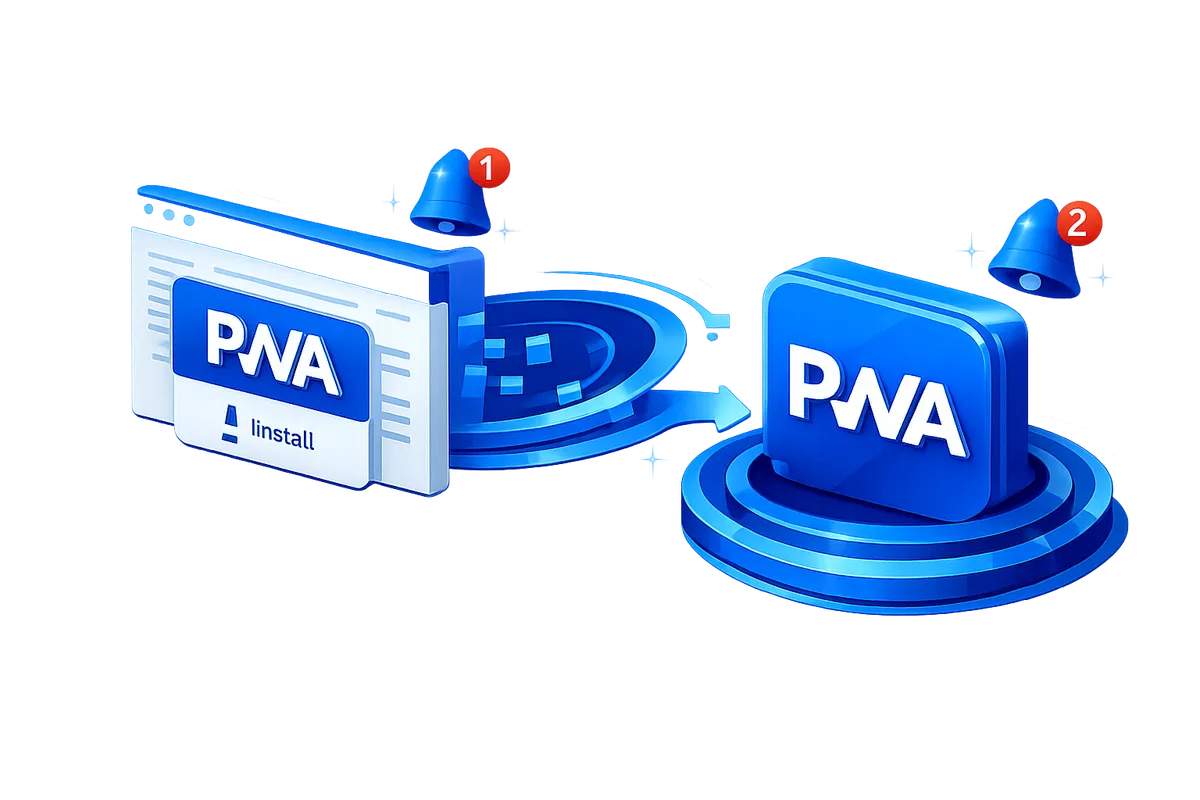
PWA development starts with the user journey, not the feature list. We map how Rogers Park residents actually use your service: what they need to do quickly, what they'll do offline, what notifications they'd actually want, and what the first two seconds of loading needs to show them to keep them from bouncing. For a Rogers Park nonprofit, that mapping looks different than for a Loyola-adjacent coffee shop.
The service worker is the engine of a PWA, and its design determines how well the app works offline and how fast it loads. We implement service workers that cache intelligently: the content your users need offline gets cached immediately, the content that requires fresh data doesn't, and the caching strategy adapts to your specific usage patterns. A co-op member checking their balance needs the UI to load instantly even without connectivity; the actual balance data requires a connection but should display gracefully while loading.
Performance engineering is built in from the start. Rogers Park's older housing stock means older devices in many households. A PWA that loads instantly on a new iPhone but takes eight seconds on a three-year-old Android is only serving half the community. We test on the full device spectrum and optimize for real-world performance, not benchmark performance.
Industries We Serve in Rogers Park
Community organizations and nonprofits including RPCAN, A Just Harvest, and tenant advocacy groups use PWAs to deliver program information, connect residents with services, collect intake data offline during field work, and push timely notifications about community meetings and advocacy events. A PWA serves these needs without requiring the community to download an app they may not trust or have space for.
Food cooperatives and community markets like the Rogers Park Food Co-op deploy PWAs for member account access, equity balance checks, product ordering, and event information. Members who shop weekly benefit from a home-screen shortcut that loads instantly rather than navigating the full website every visit.
Restaurants and cultural businesses along Clark Street and Howard Street use PWAs for reservation management, loyalty programs, menu access, and promotional push notifications. A Howard Street restaurant launching a weekend special can notify opted-in customers at the right moment without paying for SMS delivery.
Healthcare and social services organizations near Sheridan Road use PWAs to provide appointment information, health resources, and intake forms that work in areas with intermittent connectivity. Offline form submission that queues until connectivity returns makes field health outreach more reliable.
Loyola-adjacent businesses serving the student population near the Lake Shore Campus deploy PWAs for ordering, booking, and loyalty systems that students will actually engage with. Students who spend four years near Loyola build habits around the businesses that serve them well digitally.
What to Expect Working With Us
1. Discovery and user mapping. We map the specific journeys Rogers Park users take through your service, identify which steps need offline capability, and define the notification types your users would actually want. The Rogers Park user journey for a nonprofit looks very different from a restaurant, and we start by understanding yours specifically.
2. Architecture and service worker design. We design the PWA architecture including caching strategy, offline data model, push notification system, and performance targets before writing a line of code. Rogers Park organizations serving multilingual communities get localization architecture built in from the start, not added later.
3. Development and performance testing. We build the PWA and test it on the full device spectrum relevant to Rogers Park users. That means Android devices across price ranges, older iOS devices, and real-world network conditions including the dropped connections common near the Howard terminal.
4. Launch and notification setup. We handle app installation prompting, push notification onboarding, and home screen experience for all major platforms. We also configure analytics so you can see how users are engaging with the installed PWA versus the website, which notification types drive return visits, and what the offline usage patterns look like.