How We Build POS Systems for Rogers Park
Our process begins with operational observation. We spend time in your business watching how transactions actually happen, where the current system creates friction, what workarounds your staff has built, and what data your current POS fails to capture. For an Ethiopian restaurant on Howard Street, that observation might reveal that 60% of orders involve communal dishes that require custom splitting logic the current system can't handle.
We then design a system architecture that addresses the actual operational pattern. For restaurants, that means building around your specific menu structure, order flow, table management approach, and kitchen communication needs. For retail, it means matching your inventory categorization, your customer loyalty or membership system, and your multi-tender payment needs. For the co-op model, it means building cooperative membership into the core transaction logic rather than treating it as an add-on.
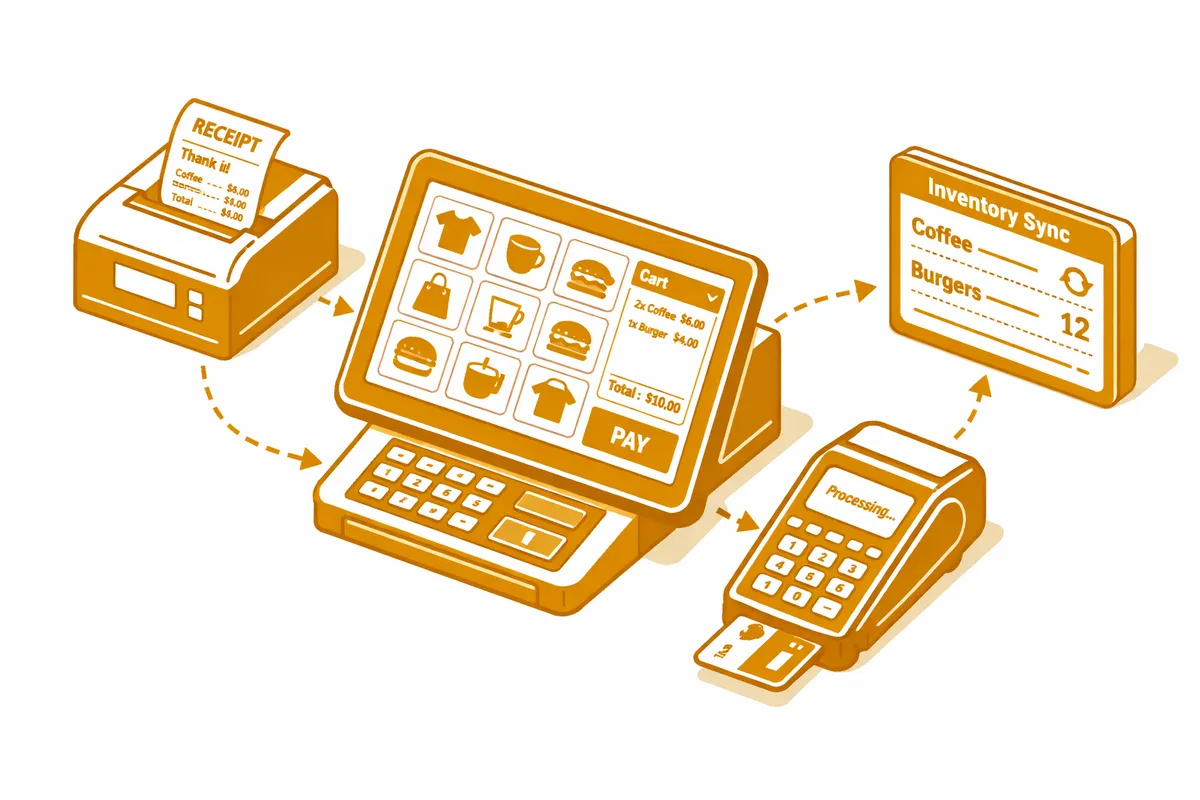
Hardware selection comes after software design, not before. The POS terminal, receipt printer, kitchen display, and payment hardware are chosen to fit the system, not the other way around. Rogers Park businesses often operate in older commercial spaces with layout constraints, limited countertop space, and infrastructure that doesn't support certain hardware configurations. We account for the physical environment during design.
Industries We Serve in Rogers Park
Ethiopian, Eritrean, and East African restaurants along Howard Street and scattered through the neighborhood need POS systems that handle injera-based communal dishes, split billing for group tables, and the ordering patterns specific to their service style. We build around how the kitchen actually works and how guests actually eat.
Independent cafes and bookstores near Loyola's Lake Shore Campus and along Morse Avenue serve a mixed academic and neighborhood clientele. Armadillo's Pillow and similar establishments need POS systems that handle book inventory, event ticketing, and cafe transactions in a single system without requiring staff to switch between platforms.
Pakistani, Vietnamese, and Mexican restaurants representing the neighborhood's broader culinary diversity need systems that support their specific menu structures, handle high-volume family service, and provide reporting in the formats their owners and accountants actually use.
Food cooperatives and community markets need POS systems that integrate member management, handle cooperative pricing structures, support multiple payment methods including SNAP and WIC, and generate the reporting that cooperative governance requires.
Rogers Park retail businesses from Clark Street boutiques to specialty grocery stores need inventory-connected POS systems that reduce shrinkage, automate reorder, and connect to the e-commerce presence that more neighborhood businesses are building to serve customers beyond walking distance.
What to Expect Working With Us
1. Operational discovery. We observe your current operation, document transaction types, identify friction points, and interview your staff about what the current system gets wrong. For a busy Morse Avenue restaurant, that means understanding how orders move from table to kitchen to check without making assumptions about what the process should look like.
2. System design and specification. We design your POS architecture before selecting hardware or software platforms. The specification documents every feature, integration, and reporting requirement with enough detail that your team can review and confirm before we build anything.
3. Build, test, and staff training. We build the system in a test environment using real menu items, real inventory categories, and real transaction scenarios. Staff training happens in the test environment before the system goes live, so the first real transaction isn't also the first time your team has touched the new system.
4. Go-live and ongoing support. We run parallel systems through the transition period and stay available during the first high-volume period after launch. Rogers Park restaurants that go live before a weekend or a Loyola event weekend get additional support coverage during that first peak.