How We Build No-Code Platforms for Rogers Park
Platform selection is the first consequential decision in every no-code implementation. Different platforms have different strengths, and the wrong platform choice creates limitations that are difficult to address without starting over. Airtable is excellent for structured data with relational database needs and visual views. Notion is excellent for combined documentation and lightweight data management. Glide or Softr are excellent for building simple mobile apps from structured data. Webflow is excellent for complex marketing websites without ongoing developer dependency. Make and Zapier are excellent for workflow automation connecting multiple applications. We assess use case requirements and recommend the platform with the best fit rather than defaulting to whichever platform we have most recently implemented.
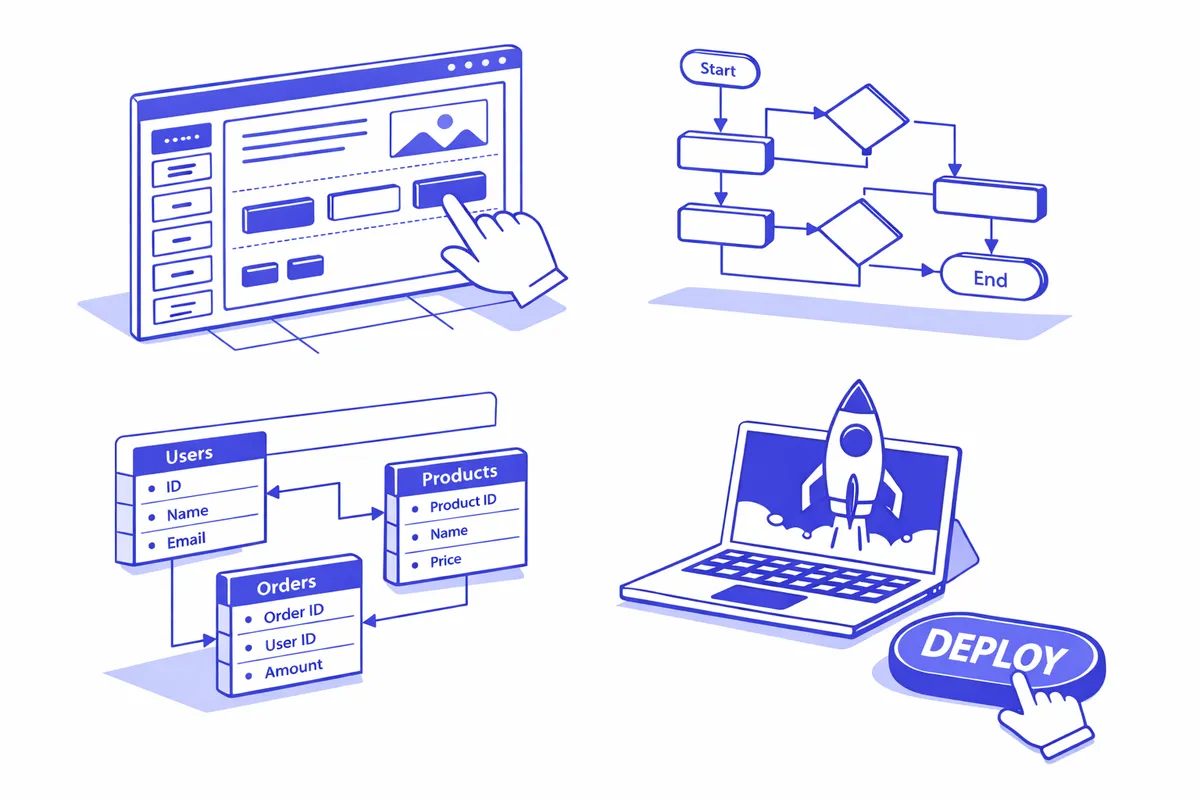
Data architecture design for no-code platforms requires the same rigor as database design for custom software. Poorly designed data architecture in Airtable produces the same problems as poorly designed database architecture in custom software: data inconsistency, difficulty querying the information needed, and scaling problems as the data volume grows. We design data architecture for no-code implementations with the same intentionality we bring to custom development.
Workflow design translates operational processes into automation logic. For a Rogers Park nonprofit, this means mapping the full lifecycle of a client interaction, volunteer coordination process, or grant management workflow, then designing the automation rules that replace manual steps. Workflow design is where we invest significant time because the quality of this design determines how much operational value the automation delivers.
Training and documentation are what distinguish an implementation that gets adopted from one that gets abandoned. We train Rogers Park organizations on not just how to use the platform, but on how to maintain and extend it as organizational needs evolve. Documentation we produce covers the data architecture decisions and their rationale, the workflow logic and its operational context, and the maintenance procedures that keep the system functional over time.
Industries We Serve in Rogers Park
Nonprofits and social service organizations are the most frequent no-code platform clients in Rogers Park because the gap between generic software and specific operational needs is widest in this sector. Program tracking, volunteer management, client referral systems, grant management databases, and event planning tools are all strong no-code implementation use cases for Rogers Park nonprofits.
Community organizing and advocacy organizations including RPCAN use no-code platforms for constituent relationship management, campaign tracking, event coordination, and the data management that community organizing strategy requires. The organizing context requires data tools that reflect community relationships rather than commercial CRM logic.
Independent businesses along Clark Street and the neighborhood's commercial corridors use no-code platforms for operations they cannot find appropriate generic software for: custom order management, event booking, vendor relationship management, and the specific workflows their particular business model requires.
Arts and cultural organizations including theater companies and galleries use no-code platforms for production management, venue booking, audience relationship management, and the organizational data management that sustains complex programming.
Healthcare and health-adjacent organizations use no-code platforms for administrative workflows, referral tracking, and the operational data management tasks that fall outside their clinical software. HIPAA considerations constrain which platforms can be used for workflows involving PHI, and we advise explicitly on compliance requirements.
What to Expect Working With Us
1. Needs assessment and platform selection. We assess your specific operational needs, evaluate the platforms best suited to address them, and recommend an implementation approach with clear rationale for the platform choice. We consider your team's technical capacity, budget, and anticipated future needs in making platform recommendations.
2. Architecture and workflow design. We design the data architecture, view structure, and automation workflows before building anything. Design documentation is shared with your team for review to ensure the implementation reflects how your organization actually operates rather than how we imagine it operates.
3. Build, test, and iterate. We build the implementation according to the approved design, test it with realistic data and operational scenarios, and iterate based on what the testing reveals about gaps between the design and operational reality. We test specifically for the edge cases your team will encounter in real operation.
4. Training, documentation, and handoff. We train your full team, including both administrators and everyday users, produce documentation that covers both operational use and maintenance, and complete a formal handoff that confirms your team is confident managing the platform independently.