How We Build Inventory Management for Rogers Park
System selection for Rogers Park businesses considers the product type (standard SKUs versus one-of-a-kind or batch inventory), the sales channels (physical only, ecommerce only, or both), the existing point-of-sale and accounting systems, and the organization's technical capacity to maintain the system after implementation. Common platforms we implement include Shopify with integrated inventory management for retail businesses already on that platform, Square for Retail for brick-and-mortar focused businesses using Square's POS, Lightspeed for retail businesses with more complex inventory requirements, and Restaurant365 or MarketMan for food businesses managing ingredient-level inventory.
Barcode and SKU structure design is foundational work that determines inventory accuracy over time. Businesses that have been tracking inventory informally or with inconsistent product identification schemes need this structure established before they can use any inventory management system reliably. We design product identification systems that work for your specific product catalog and can be maintained by your team without requiring specialist knowledge.
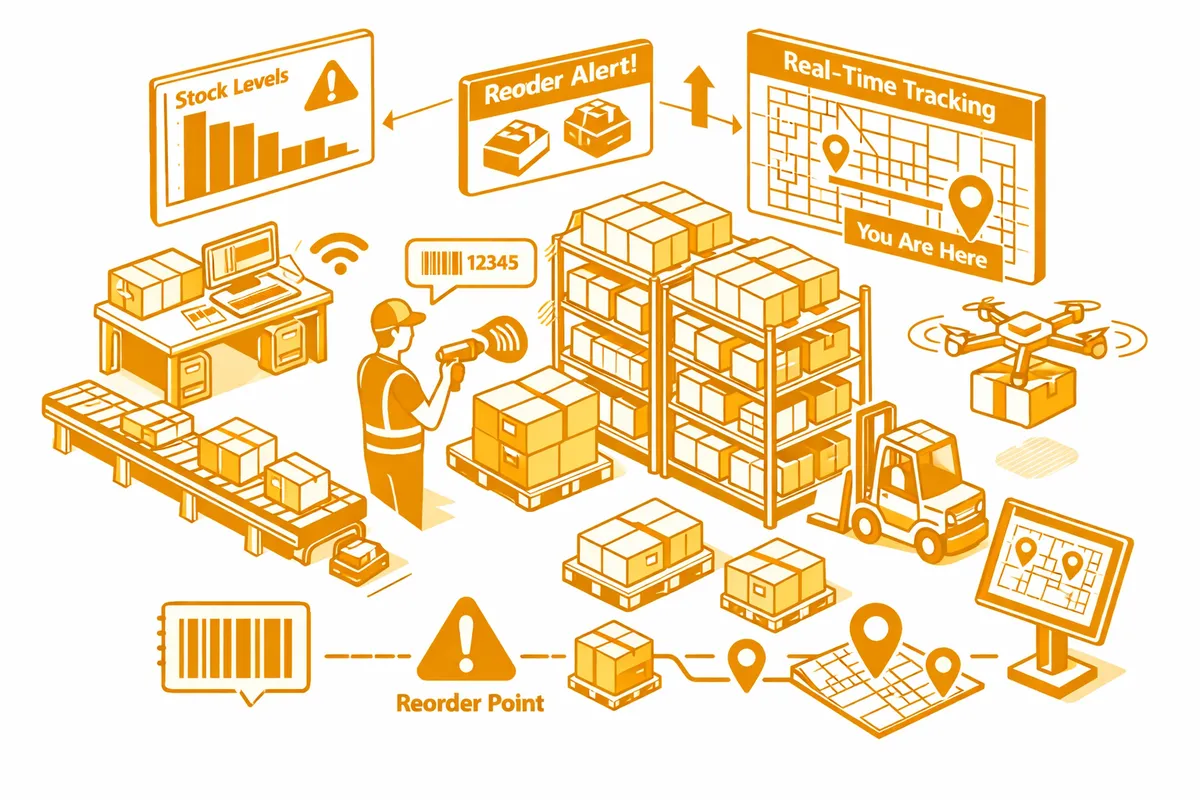
Reorder point configuration automates the purchasing trigger that prevents stockouts. When inventory for a product reaches the configured minimum level, the system generates a purchase order or alert rather than relying on someone to notice the count is getting low. For Rogers Park businesses managing specialty products with longer lead times, reorder points are set to account for the expected time from order to delivery so the business does not run out during that window.
Supplier management connects inventory records to the supplier relationships that restock them. We configure supplier contact information, lead times, minimum order quantities, and pricing in the inventory system so the information needed to restock a product is accessible immediately when the reorder trigger fires rather than requiring staff to look up a supplier's contact information separately.
Integration with POS and ecommerce systems is the connection that makes inventory management real-time rather than periodic. Every sale, whether at the counter or through an online store, should decrement inventory immediately and automatically. We build and test these integrations thoroughly because an integration that works 95% of the time is not acceptable in an inventory context where the 5% failure rate produces the stockout and oversell problems the system is supposed to prevent.
Industries We Serve in Rogers Park
Specialty food businesses and ethnic grocery managing imported ingredients, specialty products, and culturally specific goods with variable availability need inventory management that tracks both current stock and the lead time uncertainty associated with specialty suppliers. Accurate inventory prevents the embarrassing and revenue-costing experience of promising a dish or product that cannot be delivered.
Independent retail shops along Clark Street and the Glenwood Arts District selling physical goods need inventory management that connects to their POS and ecommerce channels with accurate, real-time stock visibility. Armadillo's Pillow's model of used and vintage inventory requires solutions that handle unique items appropriately.
Restaurants and food service businesses manage ingredient-level inventory with variable consumption rates, perishability timelines, and recipe-based cost accounting requirements. Ingredient inventory management for restaurants is distinct from retail inventory and requires platforms designed for the food service context.
Arts supply and craft businesses serving Rogers Park's artistic community manage specialty materials, tools, and consumables with specific supplier relationships and demand patterns tied to the arts calendar.
Nonprofit and community businesses including the Rogers Park Food Co-op manage member-centric inventory with cooperative business logic: member pricing, equity tracking, and cooperative dividend calculations that standard retail inventory systems may not natively support.
What to Expect Working With Us
1. Inventory audit and system assessment. We assess your current inventory, product catalog structure, sales channels, supplier relationships, and existing software to design the inventory management solution appropriate for your Rogers Park business. We identify the specific pain points your current approach creates and confirm that the proposed solution addresses them.
2. System configuration and product setup. We configure the inventory management platform with your product catalog, supplier information, reorder points, and the integrations your sales channels require. For businesses without organized product identification, we design the SKU and barcode structure that makes the system function accurately.
3. Integration development and testing. We build and test integrations with your POS, ecommerce platform, and accounting system. Testing includes stress testing the integrations under realistic transaction volume and verifying that edge cases like returns, partial shipments, and manual adjustments are handled accurately.
4. Staff training and go-live support. We train your team on daily inventory management processes, physical count procedures, purchase order management, and the monitoring practices that keep inventory data accurate over time. We provide close support during the first weeks of live operation to address issues before they become habits.