How We Build HR Automation for Rogers Park
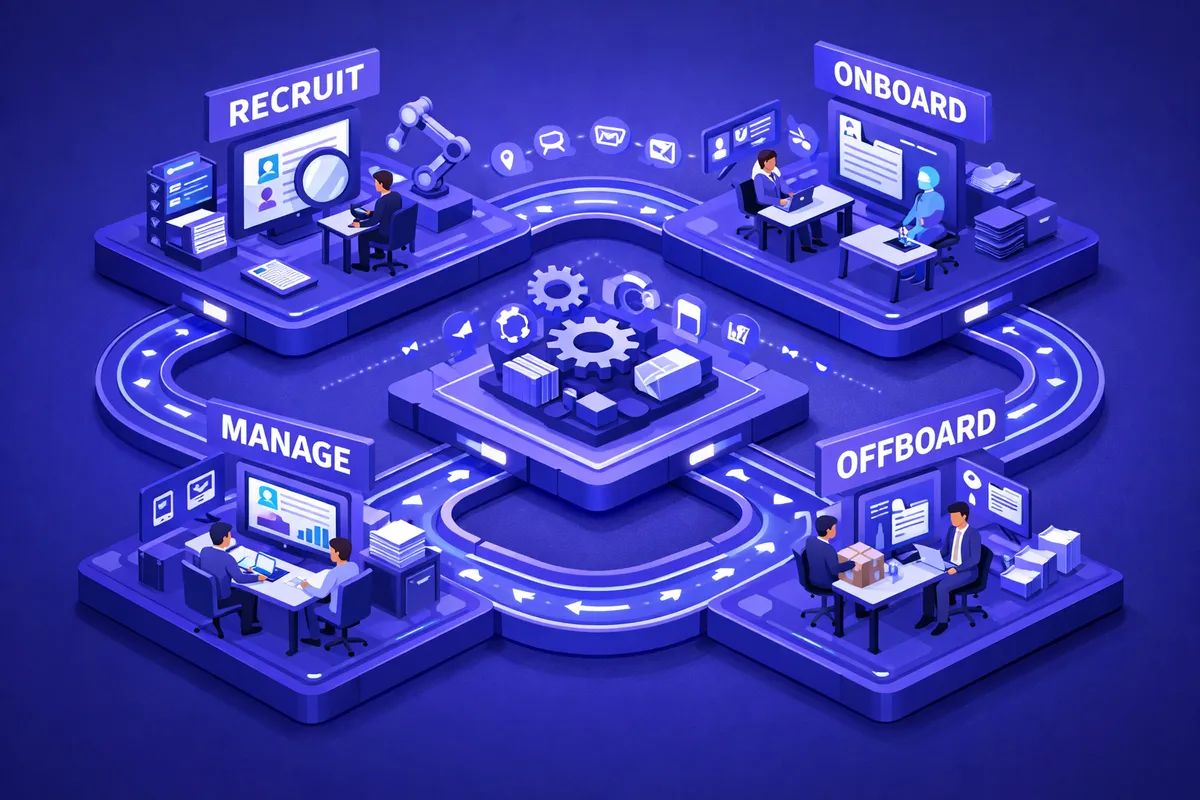
HR automation assessment begins with a process audit. We map every recurring HR process your organization runs: onboarding, offboarding, time and attendance, performance review cycles, benefits administration, compliance documentation, and training management. For each process, we assess current execution (manual, semi-automated, or fully automated), the frequency and volume of activity, the staff time currently required, and the compliance or quality risks associated with current execution.
Platform selection for Rogers Park organizations considers the organization's size, the employee population characteristics (full-time vs. hourly, multilingual requirements, union vs. non-union), the existing payroll and HRIS platforms, and the budget available for HR technology. Common platforms we implement include Gusto for small businesses and nonprofits, Rippling for organizations that want deep workflow automation and system integration, BambooHR for organizations with more developed HR programs, and Paycor for organizations with complex scheduling and compliance requirements. We match platform to organizational context rather than defaulting to a single recommendation.
Workflow design is the automation work that requires the most domain knowledge. An onboarding workflow that works for a full-time salaried employee at a nonprofit on Lunt looks different from an onboarding workflow for an hourly restaurant worker on Clark Street or a credentialed clinical staff member at a health clinic near Howard Brown. We design workflows that match the real complexity of your employment classifications rather than applying a single generic process to a workforce that is not generic.
Integration with payroll and scheduling systems completes the automation picture. An HR automation implementation that requires manual data entry to keep payroll current has not eliminated the administrative burden. It has just moved it. We connect your HR automation to your payroll processor, scheduling tool, and benefits administration so data flows between systems without requiring human intervention at each handoff.
Industries We Serve in Rogers Park
Nonprofits and social service organizations with staff certification and training requirements, grant-required documentation, and multilingual workforce needs benefit substantially from HR automation that handles compliance documentation, training tracking, and multilingual onboarding without requiring a dedicated HR coordinator.
Healthcare and health services providers including clinical practices and health organizations like Howard Brown Health manage credentialing requirements, continuing education tracking, HIPAA training, and the complex onboarding that clinical and administrative staff require. HR automation for healthcare includes the compliance documentation management that regulatory environments demand.
Restaurants and hospitality businesses along Clark Street and the neighborhood's food corridor manage high-volume hourly workforce onboarding, schedule management, tip credit documentation, and the turnover-driven repetitive processes that benefit most from automation. Each new hire should not require the same manual effort as the last.
Retail and service businesses managing seasonal staffing fluctuations, part-time employment, and varying shift schedules use HR automation for scheduling optimization, time and attendance tracking, and the onboarding volume that seasonal hiring creates.
Educational and Loyola-adjacent organizations with academic staff, administrative staff, and student workers manage multiple employment classifications, benefit eligibility tiers, and academic calendar-driven scheduling patterns that HR automation handles with fewer errors and less staff time than manual processes.
What to Expect Working With Us
1. HR process audit and automation opportunity assessment. We map every recurring HR process, identify which ones are candidates for automation, and estimate the staff time and compliance risk reduction automation would produce. The audit also surfaces compliance gaps that automation should address.
2. Platform selection and configuration. We recommend the HR automation platform best suited to your organization, configure it for your specific employment classifications, compliance requirements, and multilingual needs, and build the workflows that handle your most important recurring processes.
3. Integration and testing. We connect the HR automation platform to your payroll, scheduling, and any other systems it needs to exchange data with. We test every integration and workflow with real scenarios from your operations before go-live.
4. Training and adoption. We train administrators and managers on the platform, document the workflows so processes are clear even when the people who designed them are not available, and monitor the first weeks of live operation to catch and correct any issues before they become embedded habits.