How We Build ERP Integration for Rogers Park
Integration design begins with a data flow audit. We map every data category that currently moves between your systems, identify whether that movement is automated or manual, and assess the business processes that depend on accurate, timely data in each system. For a Rogers Park nonprofit, this audit typically covers the flows between fund accounting, donor management, program data, payroll, and grant reporting. For a food business, it covers flows between purchasing, inventory, production, sales, and accounting.
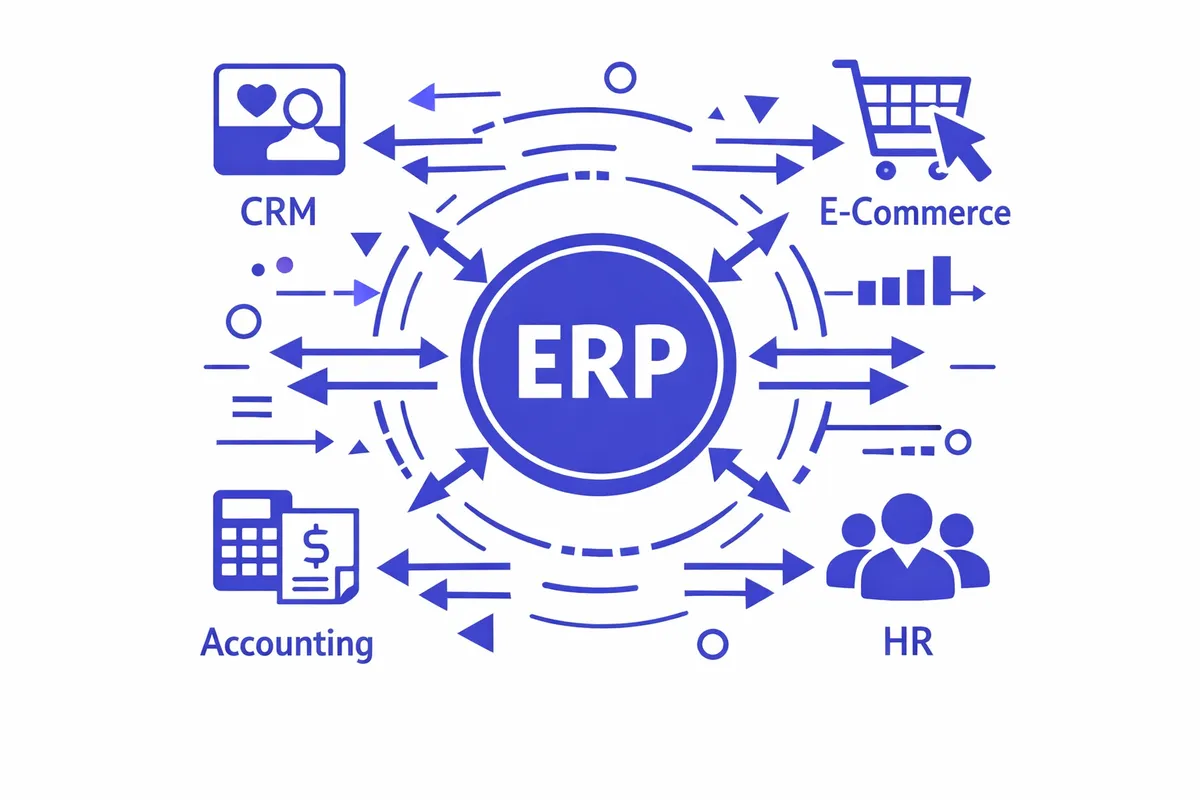
Integration architecture choices depend on your ERP platform, the systems it needs to connect with, and the volume and frequency of the data flows involved. Some integrations are best served by the ERP platform's native API, connecting directly to your ecommerce platform or CRM without middleware. Others require an integration platform that orchestrates complex multi-system flows with error handling, retry logic, and monitoring. We select the right approach based on technical requirements rather than a preference for any particular architecture pattern.
Error handling and monitoring are where integration implementations succeed or fail long-term. An integration that moves data successfully 99% of the time and silently drops or corrupts the remaining 1% creates more problems than it solves because those errors are invisible until they surface as accounting discrepancies or inventory shortages. We build monitoring into every integration from the start, with alerting that notifies your team when data flows fail so problems are caught and corrected before they compound.
Data transformation is often the most technically demanding part of ERP integration. The same piece of information frequently has different field names, formats, and data types in different systems. A customer's account number in the CRM may be formatted differently than the customer identifier in the ERP. Transforming data reliably across these format differences requires both technical precision and deep understanding of the business logic that governs how the data should be interpreted on each end.
Industries We Serve in Rogers Park
Nonprofits and social service organizations with fund accounting requirements are the most common ERP integration clients in Rogers Park. Connecting NetSuite, Sage Intacct, or QuickBooks Enterprise to donor management platforms, program management systems, and grant reporting tools is the integration challenge that most directly reduces administrative burden and improves financial accuracy for mission-driven organizations.
Food businesses and specialty food producers in the neighborhood manage ingredient purchasing, production, inventory, and sales across systems that frequently need integration. Connecting a purchasing system to inventory management, and inventory to accounting, eliminates the manual tracking that currently introduces errors and delays into cost accounting for small food producers.
Healthcare and health services organizations including Howard Brown Health and affiliated clinical services use ERP-adjacent platforms for revenue cycle management, billing, and operational expense tracking that need to connect to HR, payroll, and clinical systems. Integration in this environment requires HIPAA-compliant data handling throughout the connection architecture.
Arts and cultural organizations including theater companies near the Mayne Stage manage production expenses, donor revenue, ticket sales, and operational costs across accounting, ticketing, and donor management systems that benefit from integration to reduce the manual reconciliation burden on small administrative teams.
Independent businesses along Clark Street and Morse Avenue that have grown beyond entry-level accounting software and adopted more capable ERP systems face the classic integration challenge of connecting those systems to ecommerce platforms, point-of-sale systems, and CRM tools that the business also depends on.
What to Expect Working With Us
1. Data flow audit and integration design. We map your current data flows, identify the manual processes that integration should replace, and design an integration architecture that addresses the highest-value connections first. This audit produces a documented integration plan that your team can review before any development begins.
2. Integration development and testing. We build the integration connectors, transformation logic, and error handling based on the approved architecture. Testing is rigorous: we validate data accuracy across integration points, test error scenarios to confirm that failures surface alerts rather than silent data loss, and run parallel operation of old and new processes before cutover to verify the integration performs as designed.
3. Deployment and monitoring setup. We deploy the integration to your production environment and configure monitoring dashboards and alerting that give your team visibility into data flow health. You should be able to see at a glance whether all your integrations are running correctly without needing technical expertise to interpret the status.
4. Documentation and handoff. We document the integration architecture, the business logic embedded in transformation rules, and the procedures for monitoring and troubleshooting. Your team should understand how the integration works well enough to manage routine issues without depending on us for every support request.