How We Build Data Analytics & AI for Rogers Park
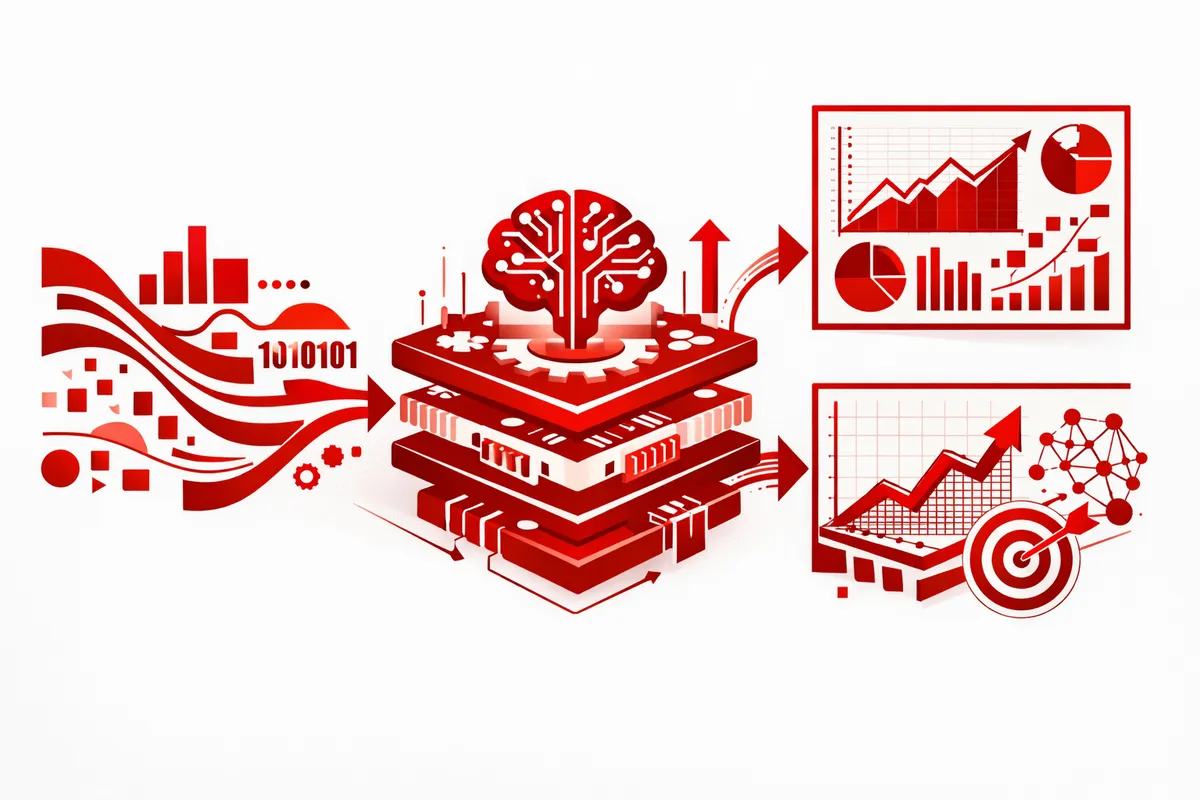
Discovery in Rogers Park begins with an audit of every data source your organization produces and every question your leadership team cannot currently answer reliably. For a nonprofit on Jarvis, that audit might reveal that program data lives in one system, donor data lives in another, and financial data lives in a third, and that the executive director spends two days every quarter trying to reconcile them manually for board reporting. The analytics infrastructure we design eliminates that reconciliation work and delivers board-ready reporting automatically.
Data warehouse design connects your source systems to a single, reliable repository. We select and configure the appropriate data warehouse solution for your organization's scale: lightweight tools appropriate for small nonprofits and businesses, more robust infrastructure for organizations with larger data volumes and more complex reporting requirements. The warehouse becomes the foundation for every analytics application you build on top of it.
Dashboard design prioritizes the metrics that drive decisions. A Morse Avenue restaurant owner needs to see table turns, average check, and daily cover counts by daypart. A Rogers Park nonprofit program manager needs to see client enrollment versus capacity, service delivery rate, and outcome achievement by program type. We design dashboards around the decisions users make with them, not around the data that happens to be available. Dashboards that nobody uses because they do not map to actual decision-making responsibilities are a common failure mode that careful design prevents.
AI applications for Rogers Park organizations range from practical automation to predictive modeling. Donor retention models for nonprofits predict which donors are at risk of lapsing and allow development staff to intervene before the relationship goes cold. Customer churn models for subscription businesses identify at-risk customers early enough to save the relationship. Demand forecasting models for retail and food businesses reduce inventory waste and improve in-stock rates for the products customers actually want.
Industries We Serve in Rogers Park
Nonprofits and social service organizations are the analytics clients with perhaps the highest return on investment in Rogers Park. Grant reporting, program outcome tracking, donor analytics, and operational efficiency measurement produce both funder credibility and organizational clarity about what is working and what is not. Organizations like RPCAN and A Just Harvest operate in competitive funding environments where data quality is a competitive advantage.
Healthcare and health services organizations including Howard Brown Health and the neighborhood's network of clinics and wellness providers use analytics for patient outcome tracking, operational efficiency measurement, and population health insights. HIPAA-compliant analytics infrastructure that connects clinical and operational data enables evidence-based care management at scale.
Independent retail and food businesses along Clark Street, the Glenwood Arts District, and near the Morse Red Line stop use customer analytics, inventory analytics, and demand forecasting to operate more efficiently and compete with larger chains that have built-in data advantages.
Educational and Loyola-adjacent organizations generate operational, enrollment, and program performance data that analytics infrastructure converts into decision support for administrators and program directors who otherwise rely on manual reporting.
Arts and cultural organizations including Mayne Stage, Lifeline Theatre, and the neighborhood's smaller venues and galleries use attendance analytics, donor analytics, and program performance data to make programming and fundraising decisions with evidence rather than intuition.
What to Expect Working With Us
1. Data audit and strategy. We inventory your current data sources, assess data quality, identify the gaps between what you have and what you need to answer your most important operational questions, and design an analytics strategy that addresses those gaps in priority order.
2. Infrastructure design and build. We design and implement your data warehouse and ETL pipelines, connecting your source systems and establishing the reliable data foundation that makes everything else possible. Infrastructure decisions are matched to your organization's scale and budget.
3. Dashboard development and deployment. We design and build the dashboards your team will actually use, calibrated to the decisions those team members make. We train your staff on interpretation and use, and design for the reality that most users are not data specialists.
4. Model development and optimization. For organizations ready for predictive analytics or AI applications, we design, train, validate, and deploy models that answer specific business questions. All models receive ongoing monitoring to detect performance degradation as underlying data patterns shift.