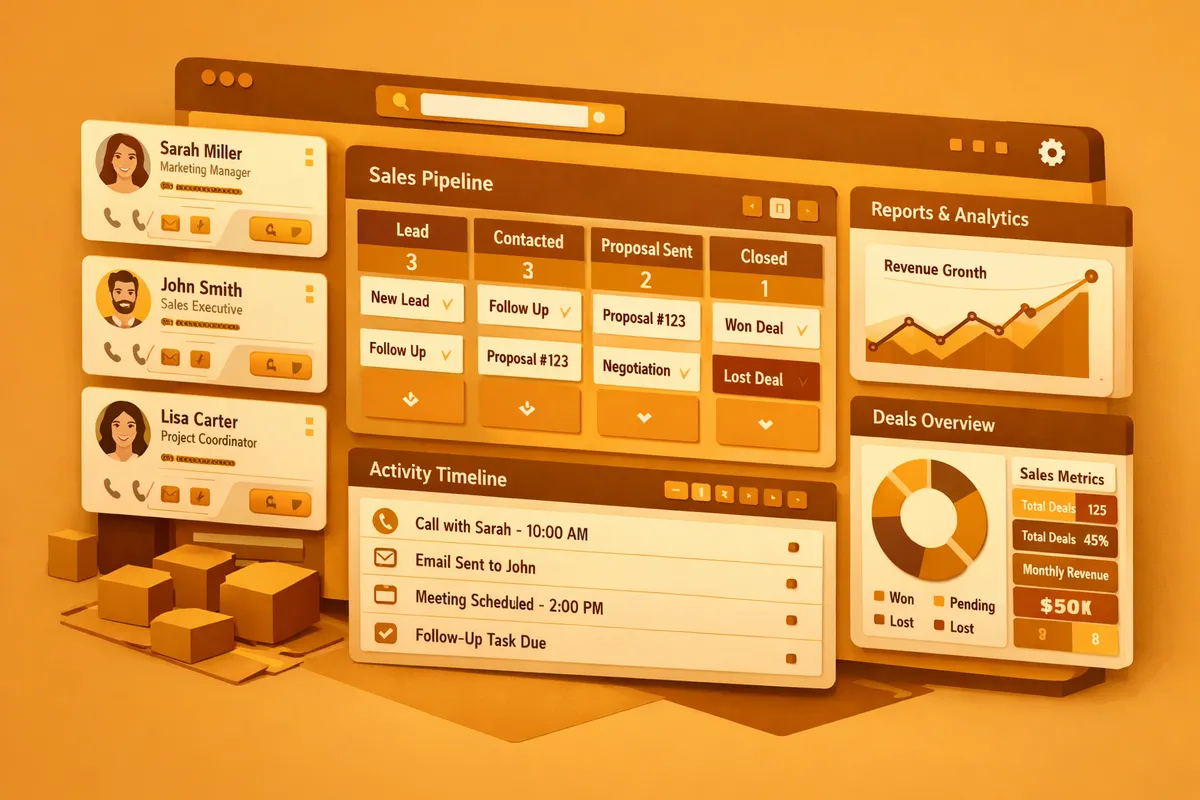
How We Build Custom CRM for Rogers Park
Custom CRM development starts with relationship mapping, not data modeling. We interview the people who manage relationships in your organization to understand who they track, what they need to know about each person or entity, how relationships connect, and what questions they need to answer about their relationship portfolio. The data model follows from this understanding, not the other way around.
For Rogers Park organizations with complex relationship networks, we invest time in mapping the relationship types that matter: program participants and their household connections, donors and their board or volunteer relationships, audience members and their patron history, community members and their organizational affiliations. CRM data models built from this understanding are dramatically more useful than data models imposed from a generic platform's assumptions about what a CRM should track.
We build custom CRM on technology that your organization can maintain sustainably. This means choosing platforms with enough longevity to trust, building with clear documentation so anyone can understand what was built, and designing the admin interface so non-technical staff can manage users, update configurations, and generate reports without engineering involvement.
Industries We Serve in Rogers Park
Community health and social services organizations along Howard Street need CRM systems that track community members across multiple programs, record multilingual communication history, manage household units, and generate the program reporting that grant funders require. Howard Brown Health's patient and community relationship complexity is a clear example of the kind of relationship management challenge that custom CRM addresses.
Arts and cultural organizations including Lifeline Theatre and Mayne Stage need CRM systems that connect audience, donor, subscriber, and volunteer relationships in a unified patron view that supports both development work and audience engagement programming.
Nonprofit and advocacy organizations including RPCAN and A Just Harvest need CRM systems that track member relationships, supporter engagement, volunteer involvement, and the organizational relationship history that advocacy campaigns draw on for mobilization.
Restaurants and food businesses on Clark Street and Devon Avenue with catering operations or loyalty programs need CRM systems that manage regular dining customer relationships alongside catering client relationships without data fragmentation between platforms.
Retail and cooperative businesses near Glenwood and Sheridan Road need CRM systems that track member relationships, purchase history, community engagement, and the organizational relationships that co-op governance requires.
Loyola-adjacent professional services providers need CRM systems designed for professional service relationship management: client history, engagement tracking, referral networks, and the relationship intelligence that drives business development in professional services contexts.
What to Expect Working With Us
1. Relationship mapping workshops. We conduct structured workshops with your team to document who you track, what you need to know about them, how relationships connect, and what questions you need your CRM to answer. This is the foundation for the entire system design.
2. Data model and architecture design. We design the data model based on your relationship structure, define the user interface approach, and plan integrations with existing tools. You review and approve the architecture before development begins.
3. Phased build. We build core functionality first and deliver it within eight to ten weeks of project start. Subsequent phases add complexity, integrations, and reporting capabilities. You have a working system before the full implementation is complete.
4. Training, documentation, and handoff. We train the staff responsible for using and administering the CRM, document every system configuration decision, and provide the access and knowledge your team needs to maintain and extend the system independently.