How We Build Computer Vision for Rogers Park
Our approach to computer vision in Rogers Park starts with a realistic feasibility conversation. Not every visual problem is ready for AI solution. The feasibility depends on data availability, image quality, the consistency of what is being detected, and the accuracy required for the application to be useful. We assess these factors before recommending development, and we are honest when a use case is not ready for AI vision or when simpler tools would serve better.
For document processing, the starting point is usually excellent because modern large language models with vision capability handle document extraction without requiring custom model training. We can often deploy a working document extraction system within two to three weeks of project start because the underlying AI capability is already well-developed for the types of documents Rogers Park organizations work with.
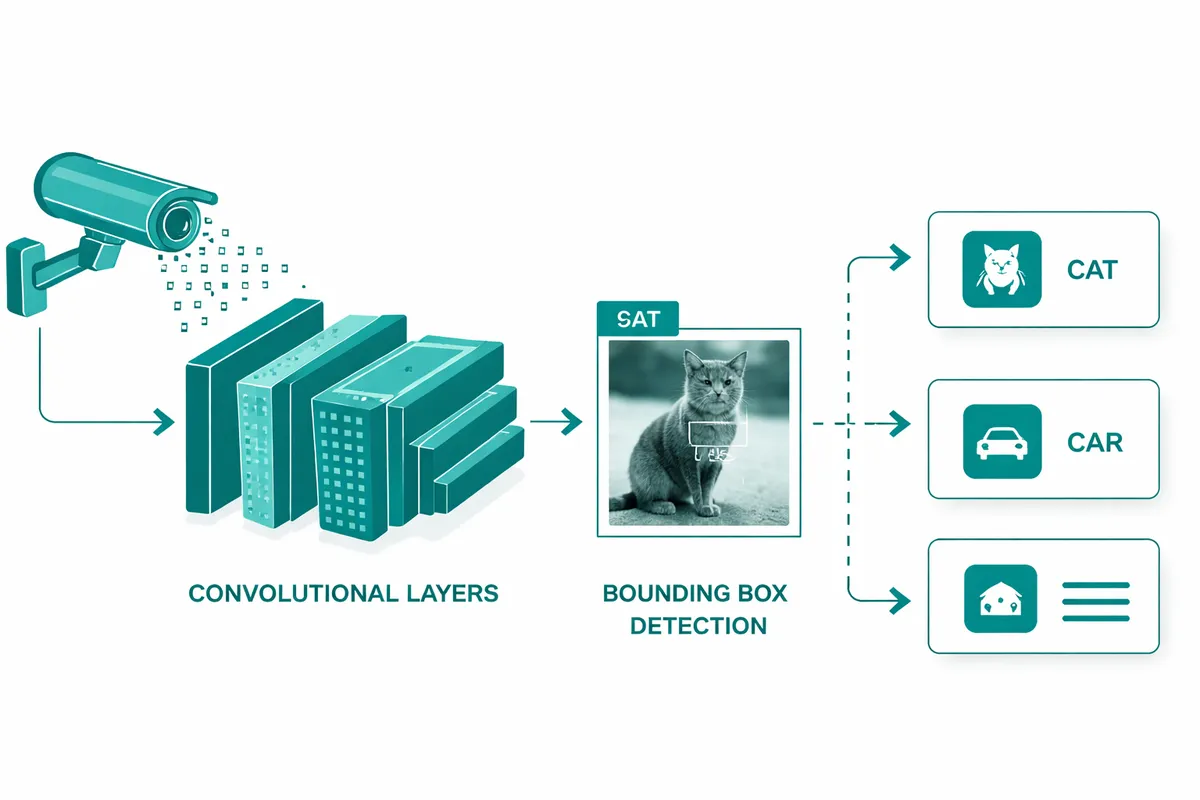
For custom visual inspection or object detection applications, we assess the training data available, design the data collection and labeling process if additional data is needed, and build and validate a custom model against your specific visual requirements. We test against your actual production images before deployment and establish accuracy expectations honestly so organizations know what they are getting before they commit to production deployment.
Industries We Serve in Rogers Park
Community health and social services organizations along Howard Street use computer vision for patient intake document extraction, insurance form processing, clinical record digitization, and the document classification that currently requires manual staff review.
Restaurants, catering operations, and food businesses on Clark Street and throughout the neighborhood use computer vision for supplier invoice processing, inventory count automation, delivery receipt extraction, and food quality documentation that supports both operational efficiency and food safety compliance.
Arts and cultural organizations including Lifeline Theatre use computer vision for archive digitization, historical production material organization, script and document classification, and the visual content management that supporting an active artistic organization's institutional memory requires.
Nonprofit and advocacy organizations handle grant documents, program intake forms, and reporting paperwork in volumes where computer vision extraction reduces the data entry burden significantly. Organizations like A Just Harvest that process food access eligibility documentation benefit from extraction automation that keeps data current without staff time investment.
Retail and cooperative businesses near Glenwood and Sheridan Road use computer vision for inventory management, shelf monitoring, and product condition assessment that supports the purchasing and stocking decisions that co-op retail operations require.
Loyola University-adjacent research ventures conducting data analysis involving images, documents, or visual content use computer vision tools to process visual research data at scales that manual analysis cannot match.
What to Expect Working With Us
1. Feasibility assessment. We evaluate your specific visual data challenge, assess the quality and availability of relevant training data, and provide an honest assessment of what computer vision can deliver for your use case at what accuracy level and what cost. We do not recommend computer vision when simpler tools serve better.
2. Solution design. We design the complete system: the computer vision approach, data pipeline, integration with downstream systems, output format, and review process for low-confidence predictions that need human verification.
3. Build and validation. We build the system, validate accuracy against your actual production data, and establish monitoring that tracks accuracy metrics over time. You see real performance data against your actual content before committing to full production deployment.
4. Integration and handoff. We integrate computer vision outputs into your existing workflow and systems, train the staff responsible for managing the system, and provide documentation covering the system architecture, known limitations, and routine maintenance procedures.