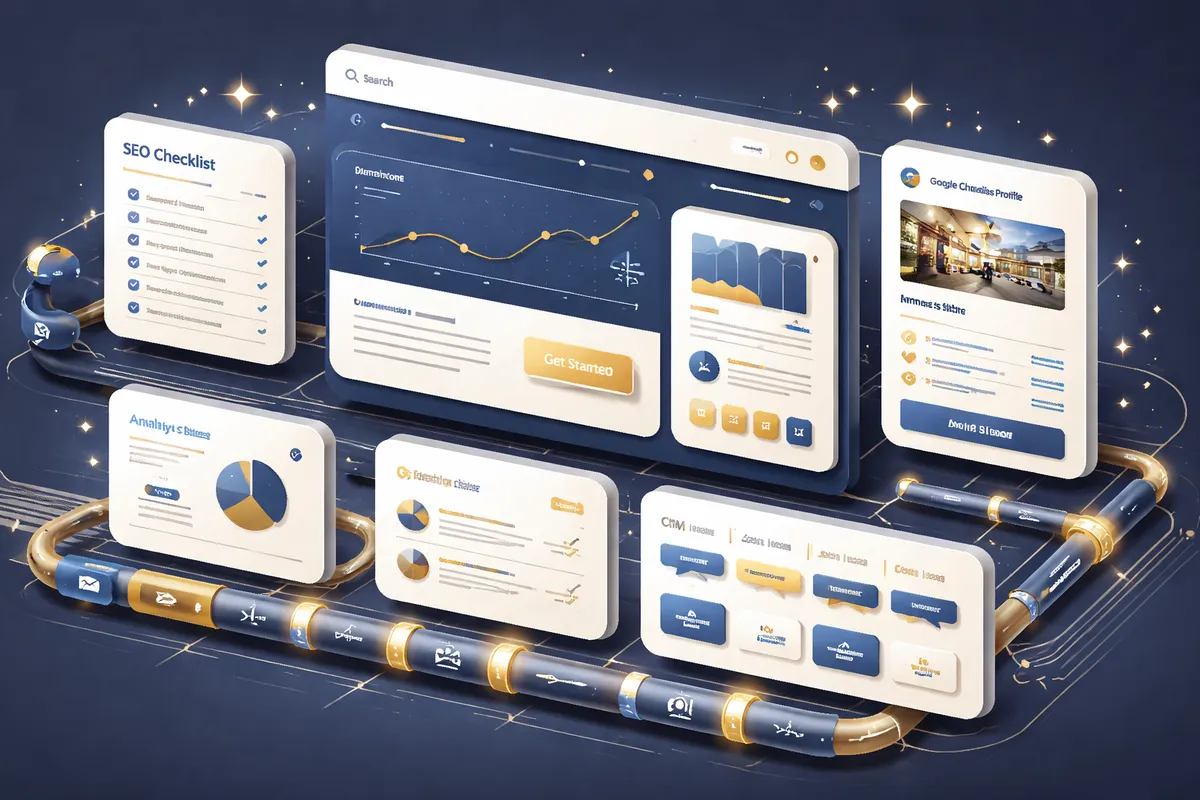
How We Build Business Websites in Rogers Park
Our website development process starts with understanding who visits the site and what they need to find. For a Rogers Park restaurant, the primary visitor is a potential customer who has found the restaurant through Google and wants to know hours, view the menu, and get directions or make a reservation. The secondary visitor is a food journalist, a delivery platform representative, or a catering client who needs different information quickly. We design information architecture that serves both visitors efficiently.
For nonprofits and community organizations, the primary website visitors are often funders and grant reviewers who need to assess organizational credibility and program effectiveness quickly. The secondary visitors are the community members the organization serves, who need to find services and contact information easily. And the tertiary visitors are potential donors who need to understand the organization's impact well enough to feel confident giving. We design for all three without making the site cluttered or confusing.
Technical quality is not negotiable. Every website we build loads fast, renders correctly on mobile devices, meets basic accessibility standards that allow people with disabilities to use it, and is structured for search engine visibility. These are not optional features. They are the baseline below which a website does not serve its basic purpose for Rogers Park's diverse user population, which includes many people who access the web primarily through smartphones with variable connectivity.
Industries We Serve in Rogers Park
Restaurants and specialty food businesses on Clark Street, Morse Avenue, and Devon Avenue get websites with beautiful food photography integration, mobile-first menu display, online ordering or reservation integration, hours and location clarity, and the visual storytelling that makes a new customer's decision to visit feel inevitable rather than risky.
Community health and social services organizations along Howard Street and throughout the neighborhood get websites that communicate organizational credibility, program scope, and community impact clearly to funders, partners, and community members, with service information organized for easy access by people who need help.
Arts and cultural organizations including Lifeline Theatre and Mayne Stage get websites that capture the energy and quality of their productions, make ticket purchase straightforward, communicate upcoming season information clearly, and build the donor and subscriber relationships that sustain the organization.
Nonprofit and advocacy organizations including RPCAN and A Just Harvest get websites that communicate mission, demonstrate impact, make donation and volunteer engagement easy, and serve as platforms for the ongoing content and campaign communication that advocacy organizations generate.
Retail and cooperative businesses near Sheridan Road and Glenwood get websites that reflect their values-driven business models, communicate product and membership information clearly, and support the community ownership narrative that distinguishes co-ops from conventional retail.
Loyola-adjacent professional services providers including therapists, tutors, consultants, and accountants get professional websites that establish credibility, communicate services clearly, and make inquiry or scheduling easy for potential clients who found them through Google.
What to Expect Working With Us
1. Discovery and sitemap. We begin by understanding who visits your site, what they need to find, and what action you want them to take. We produce a sitemap and content outline that you review before any design begins, ensuring the information architecture makes sense before visual work starts.
2. Design and content development. We design the visual system for your site, drawing on your brand identity or developing basic brand elements if your identity is not yet defined. We work with your existing content or help develop new copy that communicates clearly and reflects your organization's voice.
3. Development and mobile testing. We build the site on a robust platform, test across devices and browsers, confirm load speed meets performance standards, and verify accessibility for users with disabilities. These are non-negotiable checks that happen before any site launches.
4. Training and handoff. We train the person responsible for maintaining your site on how to update content, add new pages, and manage any dynamic elements like menus or event listings. Every site comes with documentation that ensures you can maintain it without needing to call us for routine updates.