How We Build AI Sales Intelligence for Rogers Park
Our process starts with your CRM data, whatever form it takes. For Rogers Park businesses, that sometimes means a well-organized spreadsheet and a contact list instead of a formal CRM. We assess your historical win and loss data, identify the characteristics of your best client relationships, and build scoring models grounded in what has actually worked in your specific market context. A Loyola-adjacent professional services firm has different win signals than a Clark Street retail business or a Howard Street nonprofit services provider.
We then layer buyer intent monitoring calibrated to the categories your prospects research. For Rogers Park businesses serving community organizations and mission-driven institutions, that means tracking grant announcements, funding disclosures, hiring signals, and program expansion announcements that indicate budget availability and decision-making momentum. For Rogers Park technology consultants serving small and midsize businesses, it means monitoring the search and content engagement signals that indicate a prospect is actively evaluating vendors in your category.
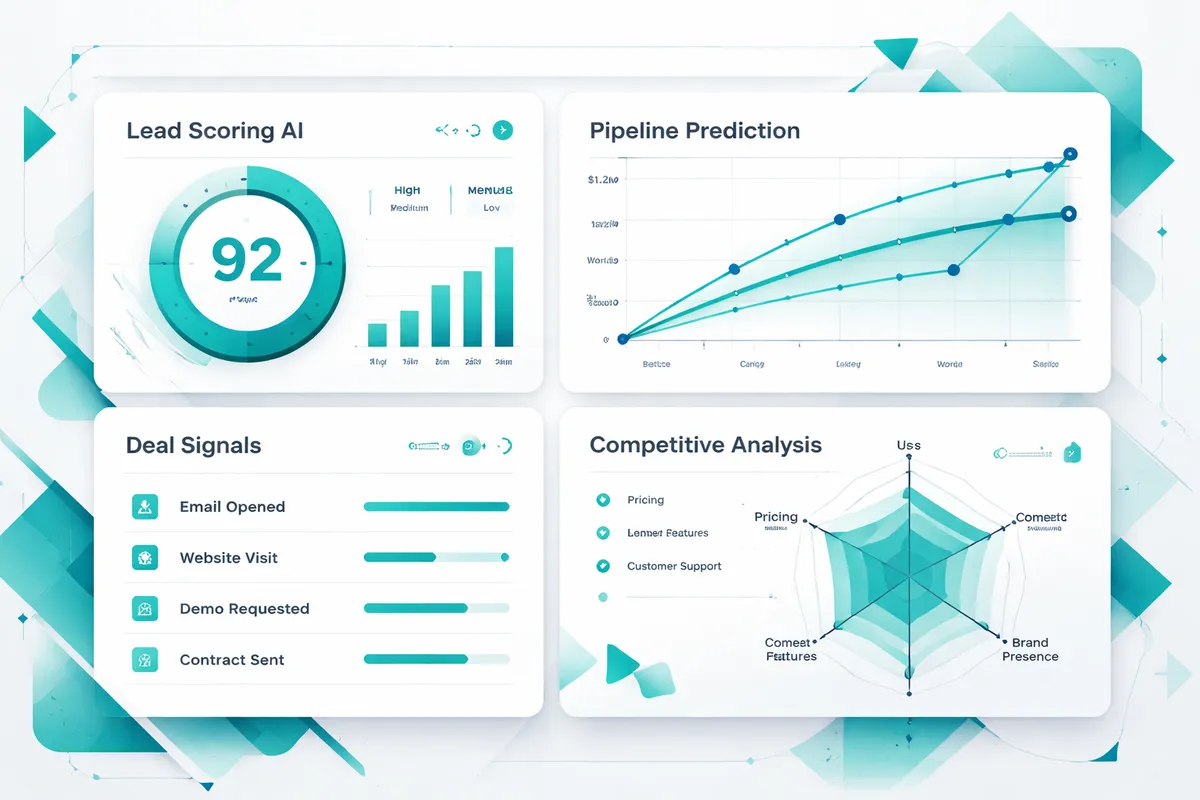
Deal forecasting for Rogers Park businesses is built to handle the irregularity that characterizes relationship-based selling. We build probability-weighted pipeline models that account for the slower, trust-first sales cycles common in community-oriented markets, so your revenue forecast reflects realistic close timing rather than optimistic deal count. Dashboards surface the accounts that need attention this week, the relationships showing warm signals, and the deals at risk of going cold, all in a format that a solo operator or small team can act on without a dedicated sales ops function.
Industries We Serve in Rogers Park
Community organizations and nonprofits along Howard Street and throughout Rogers Park need sales intelligence that helps development teams identify which donor, grant, and institutional partnerships are showing readiness for deeper engagement. For organizations like A Just Harvest and RPCAN, AI that tracks prospect engagement, surfaces timing signals, and helps prioritize relationship investment is as relevant as it is for any commercial business.
Professional services and consulting firms working near Loyola's Lake Shore Campus serve clients who value expertise and trust. AI lead scoring surfaces prospects whose digital behavior and organizational signals match the profile of clients who convert and retain, helping Rogers Park consultants focus business development on relationships likely to become long-term engagements.
Independent technology providers and freelancers in Rogers Park compete for project work against larger agencies. AI that monitors when small businesses and nonprofits in the neighborhood are showing software evaluation or project planning signals gives independent providers a timing advantage that referral networks alone cannot deliver.
Health and wellness businesses on Clark Street and Sheridan Road benefit from intent monitoring that identifies when community members are actively researching services in their category, converting awareness into timely, relevant outreach before a competitor makes the first move.
Educational and tutoring services clustered near Loyola can use AI scoring to identify which prospective students and institutional partners are at the highest conversion readiness, timing outreach for enrollment windows and program decision cycles rather than blanketing the community year-round.
What to Expect Working With Us
1. CRM audit and data assessment. We evaluate your contact and opportunity data, assess what scoring models can be built reliably, and identify any data quality improvements needed before model development begins. We give you an honest assessment of expected accuracy based on your actual data, not a best-case projection.
2. Model design and scoring framework. We build predictive scoring calibrated to your specific buyer profiles and market context. For Rogers Park businesses with diverse client segments, we build segment-specific models so scoring reflects the different signals that predict conversion in each part of your market.
3. Intent monitoring and alert configuration. We configure intent signals relevant to your category and deploy monitoring that alerts your team when target accounts show research and engagement behavior indicating active evaluation. Alerts are actionable, not noisy: you receive signals worth acting on, not raw data to interpret.
4. Dashboard delivery and coaching. You receive production dashboards showing your scored pipeline, intent signals, deal health, and forecast. We walk your team through how to use the system in real workflows and stay available for questions as the system becomes part of how you sell.