How We Build AI Receptionists for Rogers Park
Every engagement starts with call pattern analysis. We look at your actual call history: what callers ask, how calls should be routed, what information needs capturing, what calls genuinely require a human versus what can be resolved by the AI. For a medical practice, this typically reveals that 55 to 70 percent of calls are scheduling-related, 15 to 25 percent are insurance or prescription questions, and the rest are clinical questions that must route to staff. For a home services operator, the split is usually between emergency dispatch, regular scheduling, and pricing questions. For a law office, intake screening, practice area routing, and existing client calls have different handling requirements.
We then build the knowledge base and conversation flows. The AI learns your services, hours, providers or staff, insurance acceptance (for healthcare), service areas (for home services), pricing, and policies. For legal and healthcare practices, we define clear boundaries between what the AI can answer and what must route to a human. For multilingual deployments, which most Rogers Park businesses benefit from, we build knowledge in each required language with native speaker review. An AI responding in Amharic or Urdu needs to sound natural, not like machine translation, and that requires actual linguistic work up front.
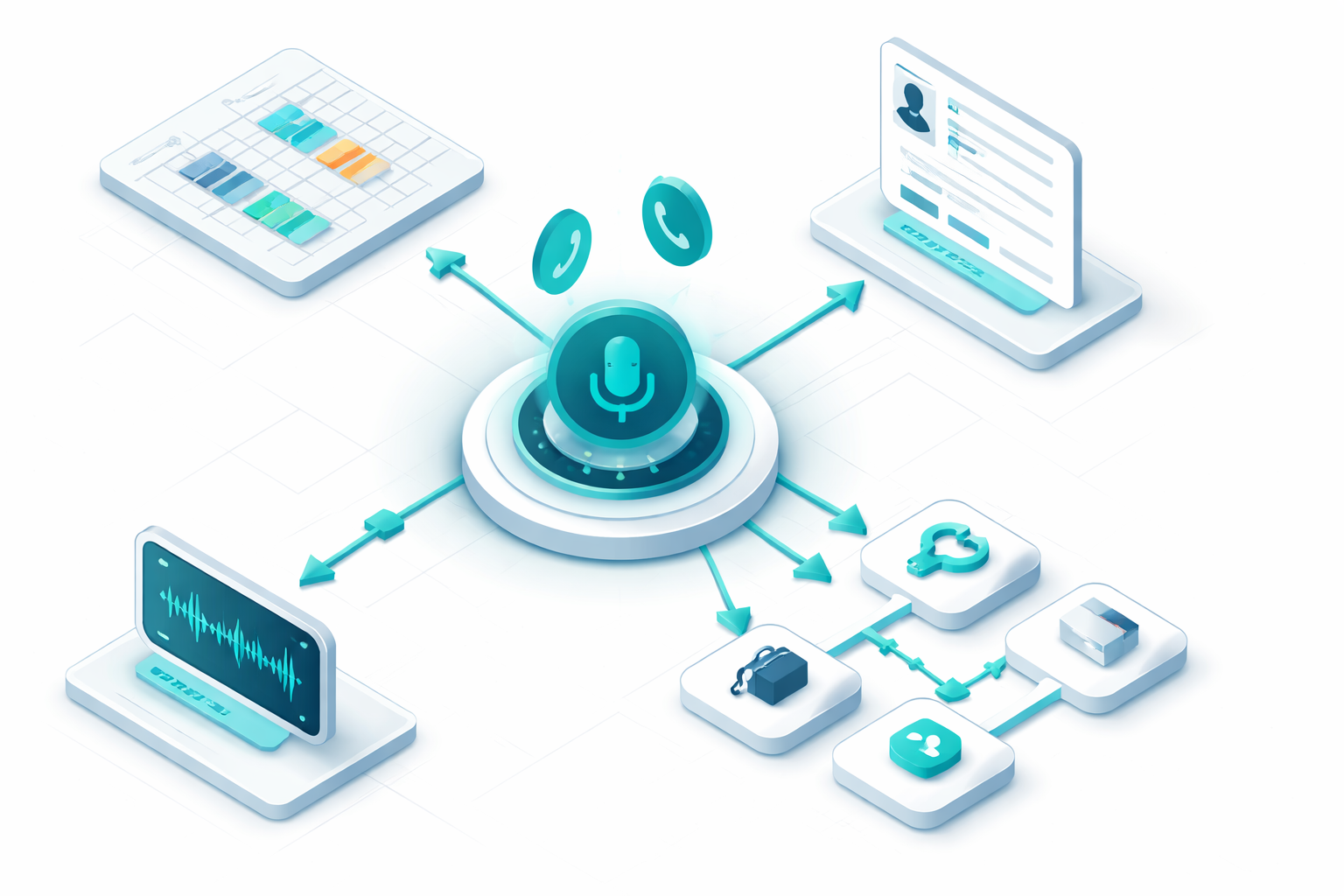
Integration with scheduling and operational systems is where the real value lives. The AI checks real-time availability in Calendly, Acuity, common EHR scheduling systems, and property management platforms. It books appointments directly into the calendar. It creates CRM records with the caller's information and the details of the call. It creates maintenance tickets in the property management system. It dispatches emergency calls to on-call staff with structured call details. Without integration, the AI becomes just a smart answering service. With integration, it actually operates as a team member.
Escalation rules are critical. Every deployment has clear logic for when the AI must transfer to a human. Clinical concerns. Emergency situations. Regulatory or legal triggers. Situations the AI identifies as outside its confidence. Callers who explicitly ask for a human. These rules are designed with your team and tested against real scenarios before launch. When escalation happens, the AI captures everything the caller has shared so your staff can pick up without making the caller repeat themselves.
Testing and monitoring complete the build. We run test calls covering common scenarios, edge cases, and stress situations before going live. During the first week of operation, we review every call transcript with your team to confirm the system meets your standards and adjust anything that feels off. Ongoing monitoring tracks booking accuracy, call outcomes, caller satisfaction indicators, and escalation patterns. Monthly reviews identify new call types, routing adjustments, and knowledge base additions.
Industries We Serve in Rogers Park
Medical and dental practices along Greenleaf, Lunt, Jarvis, and the broader Rogers Park healthcare corridor use AI receptionists for appointment booking, insurance verification questions, prescription refill routing, new patient intake, and after-hours triage. EHR integration means appointments land directly in provider schedules. Multilingual capability reaches patients across the neighborhood's diverse communities.
Mental health and therapy practices serving Rogers Park and the Loyola student population use AI receptionists for intake screening, insurance verification, initial scheduling, and provider matching. The neighborhood has a specific density of practices serving LGBT populations, immigrant populations, and college students, and each has specialized intake workflows that the AI can be configured for.
Law offices and legal aid providers along Devon Avenue, Clark Street, and Howard Street serving immigration, family law, personal injury, and community legal needs use AI receptionists for intake screening, practice area routing, conflict checking, and scheduling. Multilingual handling for Spanish, Urdu, Arabic, and other community languages is core to serving the Rogers Park client base.
Home services businesses operating out of Rogers Park including plumbers, HVAC contractors, electricians, cleaners, and handypersons use AI receptionists for emergency dispatch, regular scheduling, quote requests, and customer follow-up. Urgency assessment routes genuine emergencies immediately to on-call staff while scheduling non-urgent work automatically.
Property management and housing services across Rogers Park's dense residential base use AI receptionists for maintenance ticket creation, showing scheduling, application inquiries, rent payment questions, and tenant communication. Multilingual handling matters because tenants are not always most comfortable in English.
Restaurants and hospitality operations along Clark Street, Morse Avenue, and the neighborhood dining scene use AI receptionists for reservation management, catering inquiries, event booking, and hours and menu questions. The AI handles volume that would otherwise interrupt dinner service.
Small professional services firms including accountants, tax preparers, tutors, and consultants based in Rogers Park use AI receptionists for intake, scheduling, and client communication without adding administrative payroll.
What to Expect Working With Us
1. Call pattern analysis. We review your call history and current handling to understand caller needs, common questions, routing requirements, and the languages your callers actually use.
2. Configuration and integration. We build the AI voice agent with your business knowledge, voice and tone, routing rules, and multilingual capability. We integrate with your scheduling system, CRM, EHR, or property management platform so the AI has real-time data.
3. Testing and launch. We run realistic call scenarios covering common cases and edge cases. Launch is monitored closely, with your team reviewing transcripts during the first week to confirm quality.
4. Ongoing monitoring and optimization. Every call produces a transcript and summary. We monitor quality, booking accuracy, and escalation patterns. Monthly reviews identify new call types, routing adjustments, and knowledge base additions as your business evolves.