How We Build AI Product Photography for Rogers Park
Every engagement starts with reference collection. We need reference material for each product: existing photos (even smartphone quality works), professional photos if you have them, 3D renders for products still in development, or physical samples that we photograph once. The more reference material we have, the more accurate and varied the output. For most Rogers Park businesses, we recommend 3 to 5 reference images per product as a minimum, capturing different angles and lighting conditions. A bookstore might provide front cover, back cover, and spine shots. A food producer might provide packaging, product contents, and serving context shots. A jewelry maker might provide close-up, moderate distance, and scale reference shots.
Calibration is where the real work happens. Color accuracy matters enormously. An Ethiopian spice mix needs to show as its actual color on your Shopify page, not as a generic red or brown. A jewelry piece needs to reflect its actual gold or silver tone rather than a generic metallic. A bookstore needs covers that match the actual book colors. We calibrate the AI pipeline to produce output that matches your real products before any production run begins. Lighting calibration is next, establishing consistent lighting and shadow quality across your catalog so images feel like they belong to the same brand rather than looking collaged from different sources.
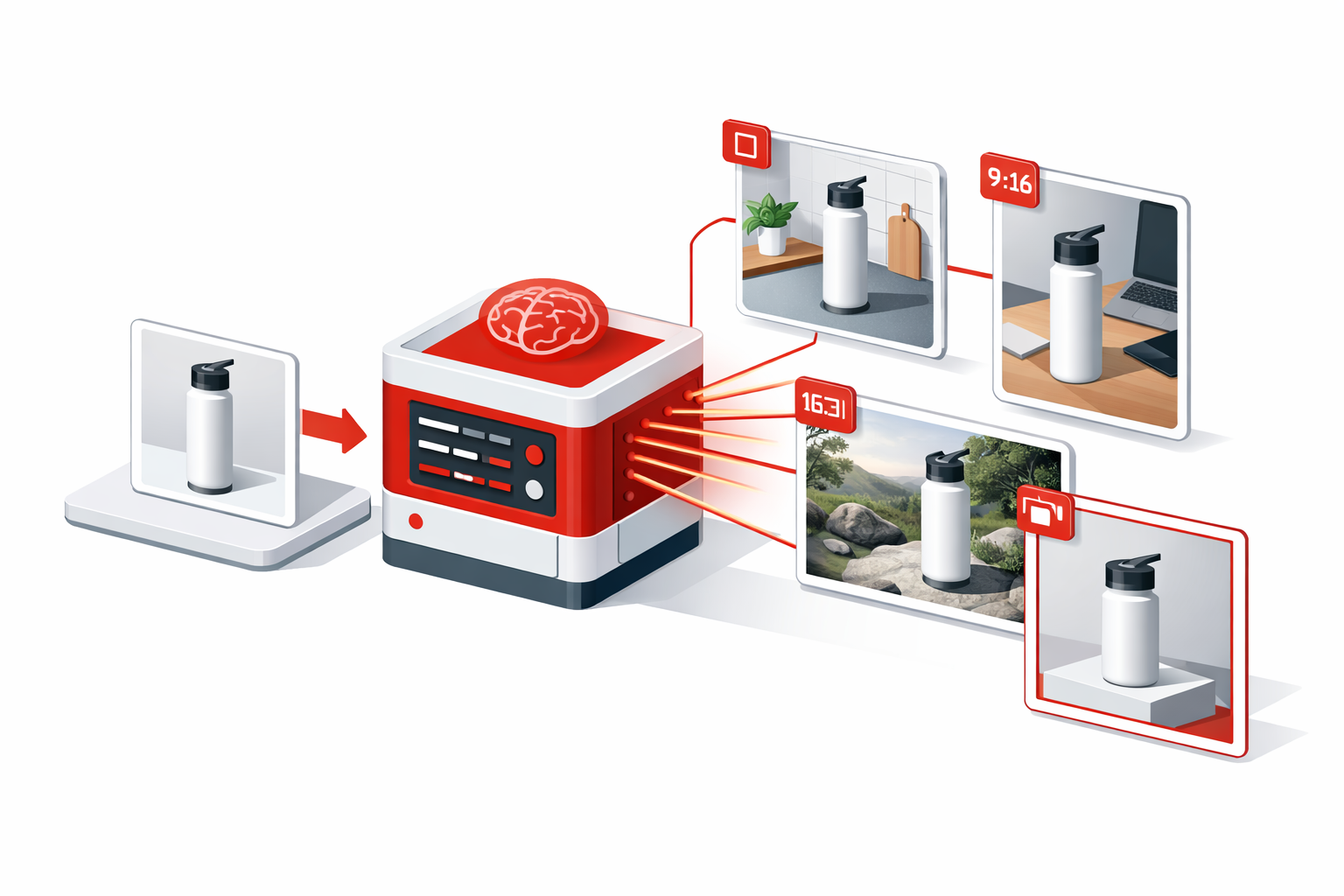
Output specifications lock in the technical requirements of every platform your images will appear on. Amazon requires specific dimensions and background rules. Shopify's recommended aspect ratios differ from Instagram's differ from Pinterest's. Your own website has its own design system. We configure the pipeline to produce images in every required format simultaneously so your team does not spend time cropping and resizing after the fact.
Production runs at volume once calibration is complete. A catalog of 200 SKUs with three variations per SKU is 600 images. Traditional photography might take three weeks of studio time. AI production runs through that volume in days, with your team reviewing and approving batches as they come off the pipeline. Variations can include white-background catalog shots, lifestyle context compositions, seasonal themes, and platform-specific crops, all from the same reference set.
Ongoing production matters for businesses with growing catalogs. For brands adding new SKUs regularly, we build automated pipelines that generate full image sets for new products as they are added to your product database. Monthly production cycles handle new SKU additions, seasonal refreshes, and promotional imagery without requiring fresh engagement each time. Per-image cost drops further at sustained volume.
Industries We Serve in Rogers Park
Independent bookstores and specialty retailers along Morse Avenue and Clark Street use AI product photography to produce display imagery for thousands of titles and specialty items. The catalog breadth that makes Rogers Park's independent retailers distinctive is exactly the breadth that traditional photography cannot serve economically.
Ethnic grocery and specialty food retailers along Devon Avenue, Clark Street, and Howard Street use AI product photography to produce clean product shots, preparation context images, and serving suggestions for hundreds of specialty SKUs. Pakistani, Ethiopian, Mexican, Vietnamese, Russian, and Caribbean groceries all benefit from imagery that helps customers unfamiliar with specific products understand what they are and how they are used.
Independent food and beverage brands based in Rogers Park kitchens, co-packing arrangements, or small-batch production use AI product photography for packaging shots, ingredient detail, serving suggestion context, and delivery platform listings. Restaurant groups and food producers tied to the Glenwood Sunday Market and neighborhood food communities need imagery across multiple platforms simultaneously.
Makers, artisans, and small-batch producers operating out of Rogers Park home studios and shared creative spaces use AI product photography to produce lifestyle compositions, scale reference shots, and seasonal context imagery for their handmade goods. Jewelry makers, ceramicists, printmakers, textile artists, and craft producers all benefit from imagery volume that traditional shoots cannot support at their scale.
Restaurants and food service businesses along Clark Street, Morse Avenue, and the broader neighborhood dining scene use AI product photography for menu dish imagery, cocktail and drink photography, and social media content. Ethiopian Diamond II, neighborhood pizzerias, Vietnamese phở houses, kosher delis, and Caribbean kitchens all benefit from consistent, high-quality dish imagery without disrupting kitchen operations.
Apparel and accessory designers working out of Rogers Park use AI product photography for flat lays, lifestyle context, detail shots, and seasonal campaign imagery. Small-batch production and one-of-a-kind pieces particularly benefit because traditional studio photography at that scale is economically impossible.
What to Expect Working With Us
1. Reference collection and calibration. We collect product references from your existing photos, 3D renders, or physical samples. We calibrate color accuracy and lighting consistency to match your actual products before any production run begins.
2. Specification mapping. We configure output specifications for every platform your images appear on: Amazon, Shopify, Instagram, Pinterest, your website, print catalog, email marketing. Each platform gets images at the required resolution, aspect ratio, and format.
3. Production and review. Variations are generated in minutes rather than hours. Your team reviews batches as they come off the pipeline, requests adjustments where needed, and approves finals. Approved images are delivered in platform-ready formats organized by SKU and use case.
4. Ongoing production. For brands with growing catalogs, we build automated pipelines that generate full image sets for new SKUs as they are added. Monthly production cycles handle seasonal refreshes, promotional imagery, and new platform requirements.