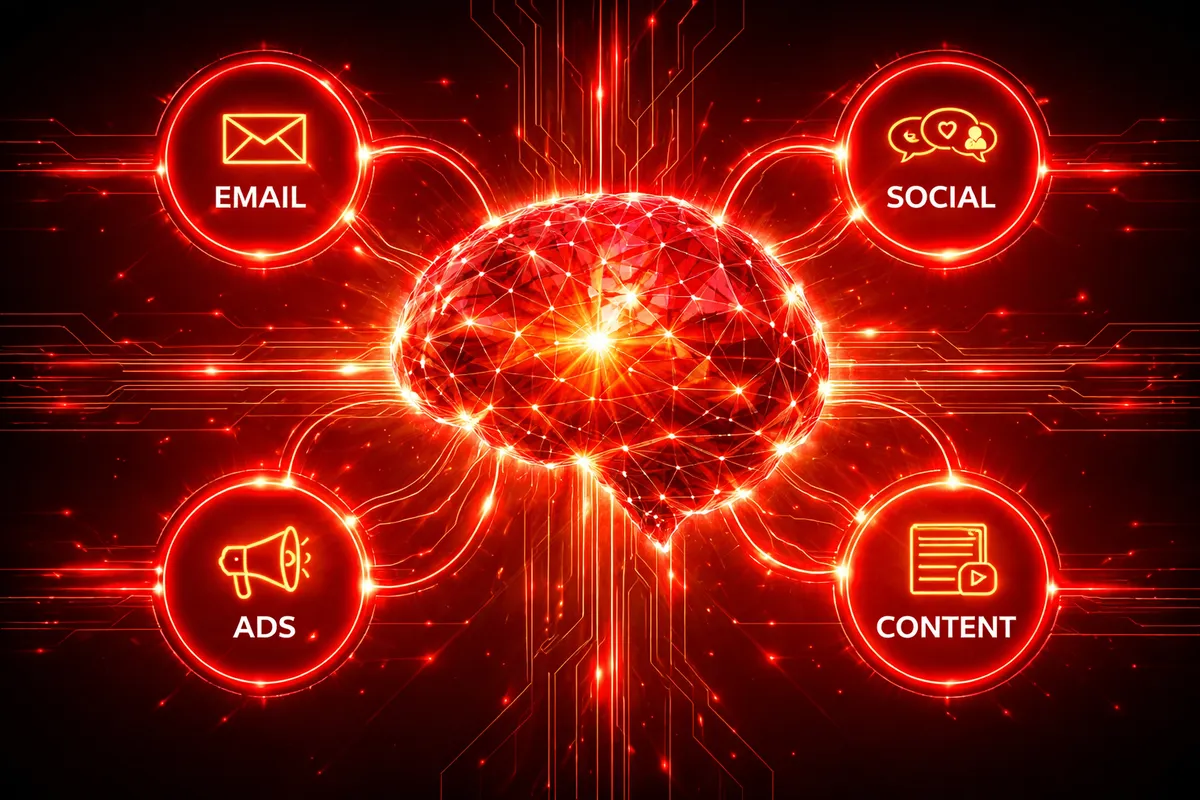
How We Build AI Marketing Automation for Rogers Park
Every engagement starts with an audit of your current marketing stack and customer data. We inventory what you are using for email, SMS, social, and any other marketing channel. We look at how customer data is captured, where it lives, and how fragmented it is across systems. We assess content inventory, meaning the articles, offers, and assets the automation will use, and identify gaps. For a Rogers Park restaurant, that might reveal a Mailchimp list that has not been segmented meaningfully, a Square customer database that never syncs, and a social following that is not tied to any email or CRM record. For a nonprofit, it might reveal four donor email lists that should be one, a volunteer list disconnected from the CRM, and a beneficiary database that nobody markets to intentionally.
We then design the automation architecture. Platform selection depends on your situation. HubSpot works well for most Rogers Park SMBs because it combines CRM, marketing automation, and sales tools in one place with usable interfaces. Klaviyo is the right choice for Rogers Park e-commerce businesses because its data model is built around purchase behavior. Mailchimp remains fine for organizations with lighter automation needs. For nonprofits, we often integrate with Salesforce NPSP's native automation or Mailchimp Nonprofit, depending on scale. ActiveCampaign sits between these options for mid-complexity use cases.
Segmentation is where AI adds the most value. Instead of manual segment rules based on demographics alone, we build AI-driven segments based on predicted behavior: likelihood to purchase, predicted lifetime value, engagement recency, content affinity, and language preference. For a Rogers Park restaurant, that might produce segments like active regulars, lapsing regulars, first-time high-value customers, catering prospects, and language-specific subgroups within each. For a nonprofit, it might produce segments like active volunteers, lapsing donors, major donor prospects, new constituents, and program beneficiaries. Each segment gets sequences designed for them rather than one generic funnel.
Triggered personalization replaces calendar-based sends. Instead of sending a newsletter every Tuesday regardless of what is happening, triggers fire sequences based on customer behavior. A customer who visits your menu page three times without ordering gets a soft nudge. A donor who has given in each of the last three years but has not given yet this year gets a personalized ask from the executive director. A subscriber who has not opened anything in 60 days gets a re-engagement sequence. The AI personalizes the content of each message based on what the customer has engaged with previously, in the language they prefer.
Integration with your operational systems ensures the automation reflects reality. Purchase data from Square or Toast feeds back into segmentation. Case management events from Salesforce NPSP trigger volunteer and donor communications. Appointment data from Calendly or an EHR triggers pre- and post-visit sequences. The marketing automation becomes part of the operational picture rather than a parallel silo.
Industries We Serve in Rogers Park
Independent restaurants and food businesses along Clark Street, Morse Avenue, Devon Avenue, and Howard Street use marketing automation to drive repeat visits, promote events, and manage catering pipelines. Multilingual segmentation reaches the specific ethnic communities each restaurant serves. Triggered sequences re-engage lapsing regulars and convert first-time visitors into repeat customers.
Nonprofits and community organizations along Howard Street, Morse Avenue, and the Rogers Park service corridor use marketing automation for donor cultivation, volunteer engagement, event promotion, and beneficiary communication. Separate sequences for different constituent types, with content and language calibrated to each, replace the one-size-fits-all newsletter that nobody reads.
Independent retailers and bookstores near Morse Avenue and Clark Street use marketing automation for customer lifecycle campaigns, event promotion, special order follow-up, and community-building communications. AI-driven product recommendations personalize email content to what each customer actually reads or buys rather than a generic bestseller list.
Healthcare and service practices along Greenleaf, Lunt, Jarvis, and the Sheridan Road corridor use marketing automation for patient acquisition, reactivation of lapsed patients, appointment reminder sequences, and educational content. HIPAA boundaries are respected throughout, with PHI handled separately from marketing channels.
Theater companies and arts organizations around Lifeline Theatre, Mayne Stage, and the smaller venues tied to the Mile of Murals use marketing automation for subscriber acquisition, season campaign management, single-ticket buyer conversion, and donor cultivation integrated with ticket sales systems.
Small agencies and professional services firms based in Rogers Park use marketing automation for lead nurturing, client cultivation, and content-driven acquisition of new prospects in their specialty areas.
What to Expect Working With Us
1. Marketing stack and data audit. We inventory your current marketing tools, data sources, and content inventory. We interview key team members about the customer journey and identify segmentation opportunities hidden in your current data.
2. Strategy and platform design. We recommend a platform matched to your situation, design the segmentation architecture, and plan the sequences that will drive the highest-impact outcomes first.
3. Build and integration. We configure the platform, build segments and sequences, integrate with your CRM and operational systems, and import and clean your existing customer data.
4. Launch and optimization. Automation goes live with performance baselines established. We optimize based on real engagement and conversion data in the first 90 days, with monthly reviews thereafter.