How We Build AI Integrations for Rogers Park
Every engagement starts with an integration audit. We walk through your current AI use and identify every point where a human is acting as a bridge between an AI tool and a business system. Each of these is an integration opportunity. For a Rogers Park nonprofit, that might be case note documentation, grant narrative drafting, client communication, and board report generation. For an agency along Clark Street, it might be content creation, client deliverable formatting, project scoping, and meeting note capture. For a therapy practice, it might be session documentation, treatment planning support, and insurance communication.
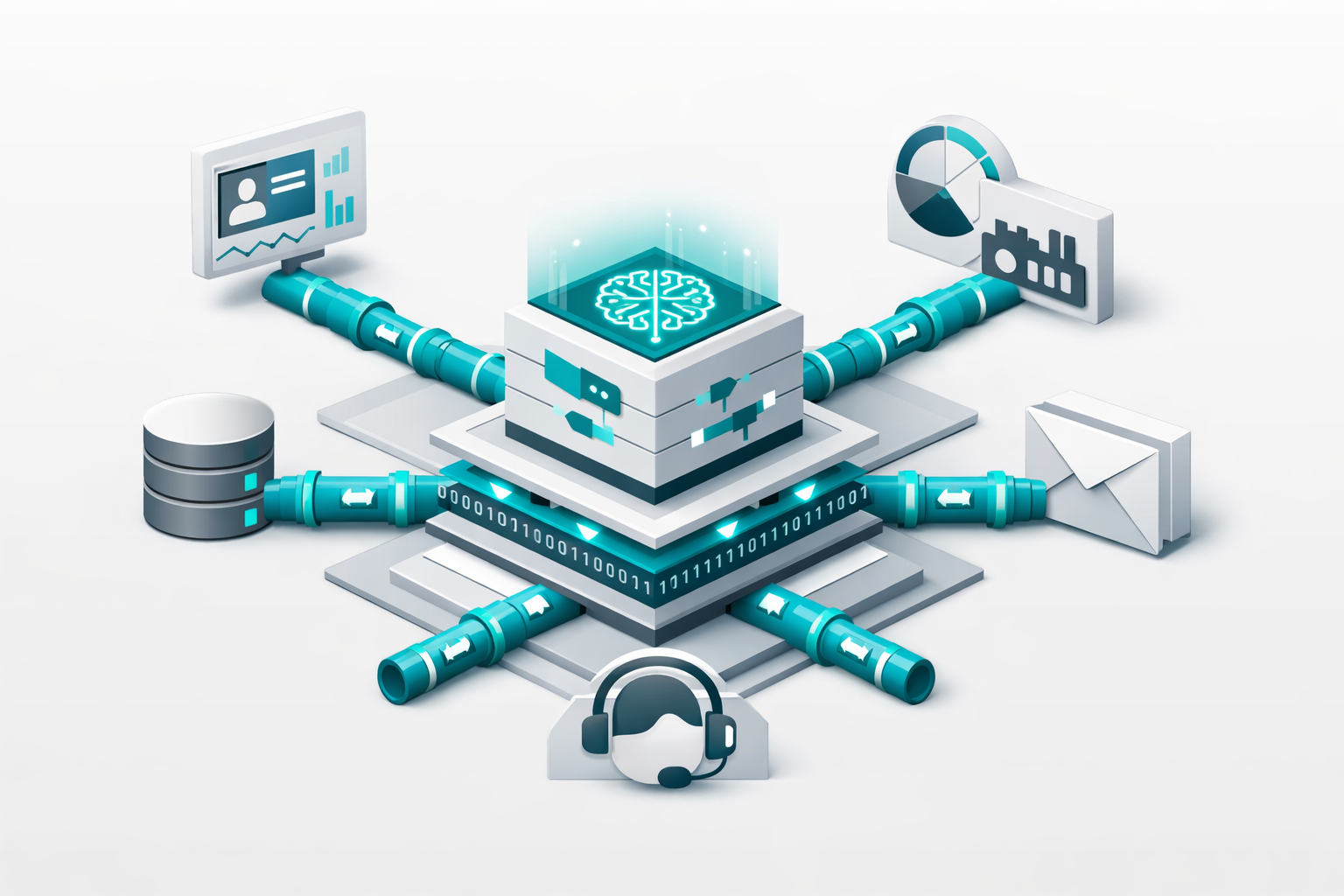
We then design the integration architecture. Each connection has four parts: the trigger (what starts the AI workflow), the AI action (what the model does), the business system destination (where the output lands), and the quality gate (what human review or approval happens before or after). For a case note workflow, the trigger might be a completed session in the scheduling system. The AI action is drafting structured notes based on provider input. The destination is the EHR's clinical note field. The quality gate is provider review and approval before signing. The workflow respects the clinical reality while removing the administrative burden.
Implementation uses the APIs and webhooks your existing systems already support. Salesforce, HubSpot, Monday, Asana, Calendly, Acuity, Stripe, QuickBooks, and most modern EHR and practice management systems expose enough capability to connect AI into their workflows. For systems without strong APIs, we build middleware that handles the bridge. We do not replace your tools. We wire intelligence into them.
Security and privacy handling is specific to each integration. For healthcare integrations, HIPAA compliance is non-negotiable, and we design the integration to keep PHI in controlled environments with proper encryption, access controls, and audit logging. For nonprofit integrations touching client data, we respect funder requirements and any privacy regulations that apply. For agency work, we respect client confidentiality agreements. Each integration goes through a compliance review before launch.
Documentation and handoff matter especially for small Rogers Park teams. You should not need a vendor on retainer to maintain your integrations. We document every workflow in plain English, provide runbooks for common failure modes, and train your team on monitoring and minor adjustments. Most Rogers Park clients take over ongoing operation within a month or two of launch.
Industries We Serve in Rogers Park
Nonprofits and social service organizations along Howard Street, Morse Avenue, and the Rogers Park service corridor use AI integration to embed intelligence into Salesforce NPSP, Apricot, CaseWorthy, and other case management systems. AI-assisted case note drafting, client communication, grant narrative generation, and outcomes reporting happens inside the systems case managers and development staff already use.
Healthcare and behavioral health practices along Greenleaf, Lunt, Jarvis, and the Sheridan Road corridor use AI integration to embed intelligence into EHR and practice management systems. AI-assisted clinical documentation, patient communication drafting, and referral letter generation flows through the clinical workflow rather than requiring separate tools and tab switching. HIPAA compliance is maintained throughout.
Agencies and creative services firms based out of Rogers Park home offices, shared spaces near Loyola, or small storefronts along Clark Street use AI integration to embed intelligence into Monday, Asana, ClickUp, HubSpot, and CMS tools. Content generation, deliverable formatting, project scoping, and client communication happens inside the project management and CRM systems the team already runs.
Independent practices and professional services firms including therapists, consultants, attorneys, accountants, and tutors based in Rogers Park use AI integration to embed intelligence into scheduling, billing, and client management systems. Intake processing, document drafting, session documentation, and invoice generation all run through existing tools rather than requiring parallel AI workflows.
Independent retailers and restaurants along Clark Street, Morse Avenue, and Devon Avenue use AI integration to embed intelligence into Shopify, Square, Toast, Resy, and social scheduling platforms. Product descriptions, customer communication, social content, and operational reporting flow through existing tools without adding systems the team has to remember to check.
Property management and housing services serving Rogers Park's residential base use AI integration to embed intelligence into property management platforms, CRMs, and communication tools. Tenant communication, maintenance ticket triage, lease drafting, and showing scheduling happen inside the systems staff already use.
What to Expect Working With Us
1. Integration audit. We walk through your current AI usage and business systems to identify every workflow where humans are manually bridging AI and other tools. We document the systems, triggers, and data flows involved.
2. Architecture design. We propose a specific integration architecture for the highest-value workflows, with attention to security, privacy, and compliance constraints relevant to your organization.
3. Build and test. Each integration is built with proper error handling, logging, and monitoring. We test with realistic data before going live and establish rollback procedures in case adjustments are needed.
4. Launch and handoff. Integrations go live with monitoring dashboards showing data flow, error rates, and AI performance. Documentation and training ensure your team can operate and extend the integrations independently within a month or two.