How We Build AI Data Pipelines for Rogers Park
Every engagement starts with a mapping session. We walk through every system in your operation that generates or stores meaningful data. Scheduling. Billing. CRM. POS. Survey tools. Spreadsheets. Manual logs. We identify where data lives, how it is structured, who touches it, and what compliance or privacy constraints apply. For Loyola-adjacent research projects, this includes reviewing IRB documentation and consent language. For healthcare practices, this includes HIPAA boundary mapping before any system is touched. For nonprofits, this includes understanding funder reporting requirements that dictate what the pipeline must ultimately produce.
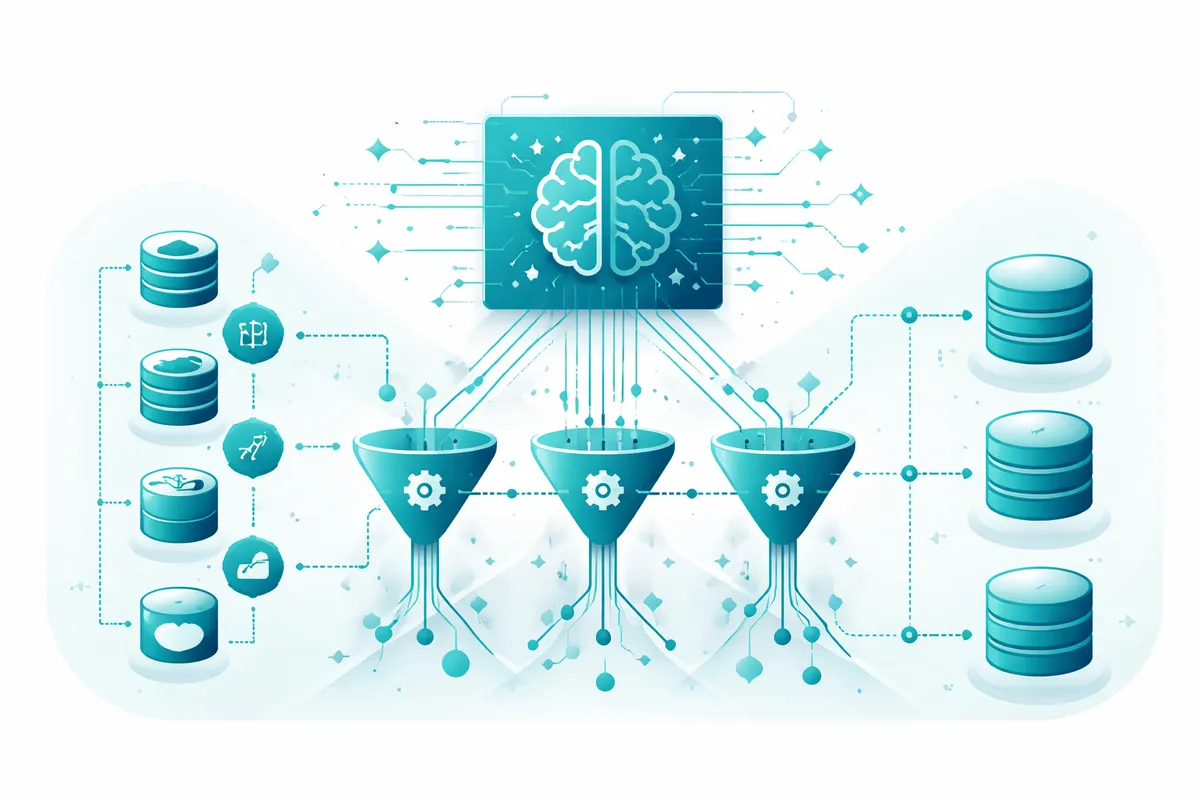
We then design the pipeline architecture. For most Rogers Park organizations, this is a scheduled ETL pattern: extract from source systems on a regular cadence, transform into consistent structure, load into a central warehouse or database that dashboards and analytical tools query. We tend to recommend Postgres or BigQuery as the destination for smaller operations because both are affordable and well-supported. For orchestration, we use Prefect or Airflow depending on team capability and complexity. For transformations, we use dbt because it makes SQL transformations testable and documentable, which matters when a pipeline needs to survive staff turnover at a small organization.
For organizations with streaming data needs, the architecture looks different. A Rogers Park logistics operation tracking real-time inventory or a research project collecting continuous sensor data requires event-driven infrastructure. In these cases, we build around lightweight streaming tools that fit the scale, often just a combination of scheduled webhooks, queue-based processing, and near-real-time loading rather than a full Kafka deployment that would be overkill.
Data quality is built in from the start, not bolted on later. Every pipeline we build has schema validation at the extraction layer, completeness checks after transformation, and anomaly detection on the loaded data. When something breaks, the pipeline halts and alerts the responsible person rather than silently passing corrupted data downstream. For a small Rogers Park team, this matters enormously because there is no dedicated data engineer watching the system full time.
We also document everything. Runbooks for common failure modes. Explanations of every transformation in plain English alongside the SQL. Architecture diagrams that a new executive director or lab coordinator can actually read. The goal is for your team to own the pipeline after we leave, not to depend on us indefinitely. Most Rogers Park organizations we work with take over ongoing pipeline operations within 45 to 60 days of launch.
Industries We Serve in Rogers Park
Research groups and academic-adjacent organizations tied to Loyola's Lake Shore Campus or working with other local institutions need pipelines that handle longitudinal data collection, multi-instrument studies, and compliance with IRB and consent constraints. We build ETL flows that keep consented data joined correctly while respecting the barriers that research ethics require.
Nonprofits and community organizations along Howard Street, Morse Avenue, Clark Street, and the broader Rogers Park service corridor use pipelines to unify intake, case management, outcomes, and funder reporting across disparate systems. Programs at organizations serving immigrant families, youth, food-insecure households, and housing-insecure residents all depend on accurate aggregated data to run and report on their work.
Independent healthcare practices along Greenleaf, Lunt, Jarvis, and the Sheridan Road corridor use pipelines to join scheduling, billing, and clinical documentation into operational dashboards that inform staffing, scheduling, and revenue cycle decisions. HIPAA compliance is maintained at every layer.
Retailers and food businesses along Clark Street, Devon Avenue, and Morse Avenue use pipelines to unify POS, inventory, online orders, and accounting into a single picture that supports actual business decisions rather than end-of-month reconciliation. For independent operators, this is often the first time they have seen a real picture of their margin by product or day part.
Property management and real estate operators serving Rogers Park's dense residential base use pipelines to join lease data, maintenance tickets, payment history, and tenant communication into operational views that surface issues before they become expensive.
Small B2B and professional services firms based out of Rogers Park use pipelines to join CRM, project management, billing, and delivery systems into profitability views that inform which clients and services actually make the business money.
What to Expect Working With Us
1. System mapping and compliance review. We document every data source in your operation, identify integration points and constraints, and establish the compliance framework (HIPAA, IRB, funder requirements, FERPA, BIPA) that governs the pipeline before any code is written.
2. Architecture design. We propose a pipeline architecture sized to your actual scale and team. Rogers Park organizations rarely need enterprise-scale infrastructure. We recommend tools and patterns that your team can operate without hiring a full data engineer.
3. Phased implementation. We build incrementally, delivering value early. The highest-priority data flow goes first, typically within three to five weeks, with quality monitoring in place. Additional flows stack on the same foundation.
4. Handoff and ongoing support. We train your team on operation, document everything, and remain available for strategic support and pipeline evolution. Most Rogers Park organizations take over day-to-day operations within 45 to 60 days.