How We Build AI Compliance and Governance for Rogers Park
Our engagements start with discovery because you cannot govern what you have not mapped. For most Rogers Park organizations, the first audit reveals AI usage that leadership did not know existed. We work through each department, each role, each workflow that might involve AI tools, and we document what is actually happening. The audit becomes the factual foundation for every governance decision that follows.
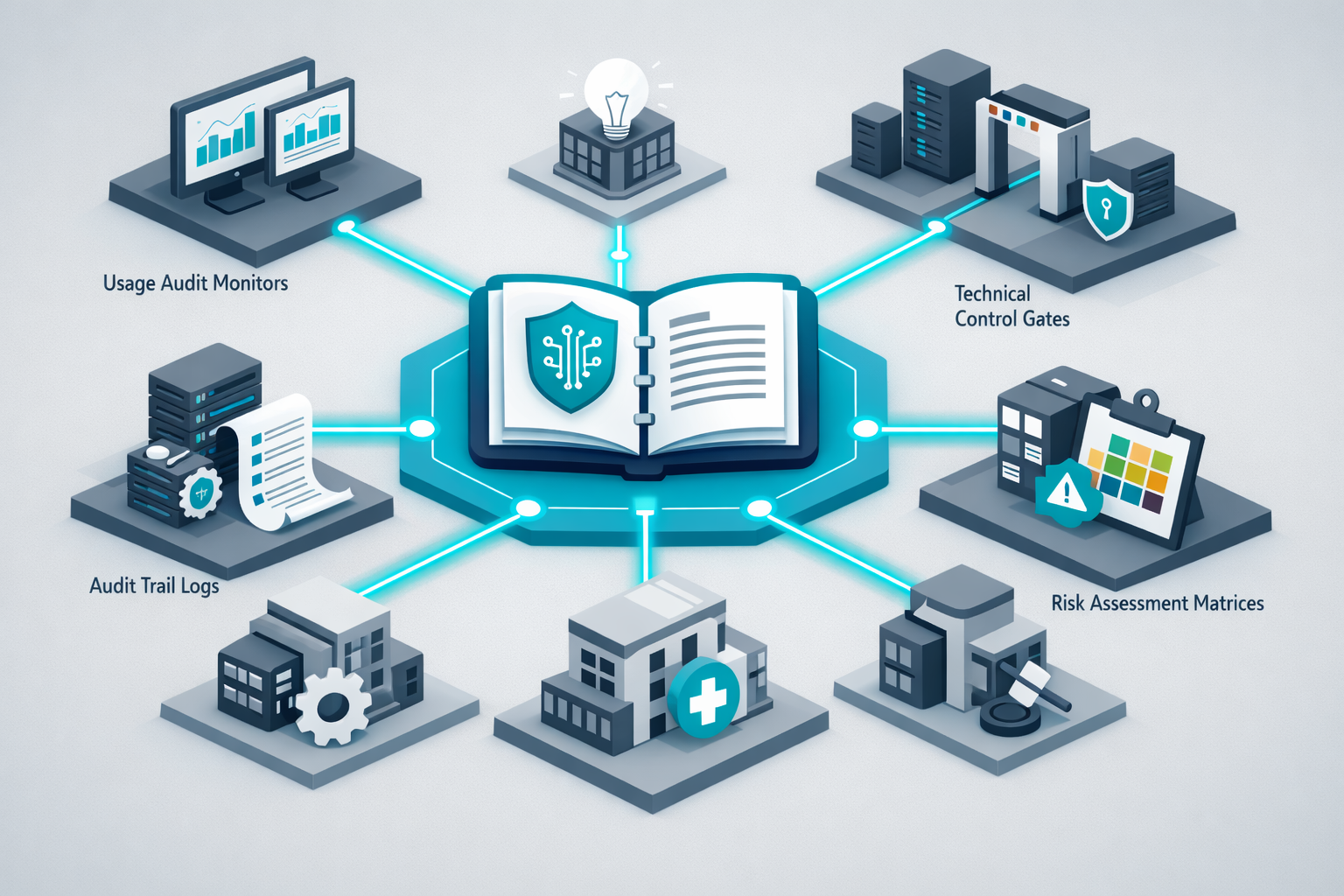
AI usage audit. We interview staff, review software inventories, examine procurement records, and document every AI tool in use across the organization. We map what data flows through each tool, what business purpose each use case serves, what vendor agreements govern the relationship, and what retention and usage policies apply. For a Rogers Park nonprofit, the audit might reveal case management AI that handles client information, development AI that handles donor data, and marketing AI that handles community member information. Each requires different governance treatment.
Risk assessment and regulatory mapping. From the audit, we map each AI use case to the regulatory requirements that apply. HIPAA for health information. BIPA for biometric data. Illinois AI Video Interview Act for hiring applications. Federal research compliance for Loyola-adjacent research programs. Foundation grant compliance for nonprofit donor data handling. The mapping shows leadership exactly where the organization stands relative to actual obligations.
Policy development. We draft AI acceptable use policies, data classification rules defining what data can and cannot be processed through AI tools, output review requirements for AI-generated content, vendor assessment criteria for new AI tools, and incident response procedures for AI-related issues. Policies are written for the specific organization, not generic templates, and they are written to be enforceable rather than aspirational.
Technical controls. Policies without enforcement are suggestions. We implement data loss prevention rules that prevent sensitive data from reaching unauthorized AI tools, approved tool whitelists and blocked tool lists, access controls that limit AI tool access by role, and logging infrastructure that creates the audit trails regulated activities require. For small organizations without enterprise IT infrastructure, we identify affordable technical controls that still provide meaningful protection.
Training and committee setup. We train staff on the governance framework with role-specific guidance covering what AI tools are approved, what data can be processed, and how to handle AI-generated content. For organizations of sufficient size, we help stand up AI governance committees with defined charters, meeting cadence, and decision authority. For smaller organizations, we integrate AI governance into existing compliance or quality functions rather than building parallel infrastructure.
Industries We Serve in Rogers Park
Loyola University Chicago affiliated programs including research labs, clinical programs, continuing education, and faculty ventures need governance that addresses research compliance, FERPA obligations, clinical research requirements, and the institutional data handling standards the university imposes. We work with departments, research centers, and affiliated programs on governance frameworks that meet Loyola's expectations while remaining practical for the actual staff implementing them.
Nonprofits and social services organizations serving Rogers Park's vulnerable populations need governance calibrated to the specific client populations served. Organizations serving undocumented immigrants face data protection stakes that go far beyond typical privacy concerns. Domestic violence services need governance that addresses client safety implications. Organizations working with minors face FERPA and other educational privacy requirements. We scale governance to the population and risk level rather than imposing enterprise frameworks on small organizations.
Community health clinics and mental health practices serving Rogers Park face HIPAA requirements that translate into specific AI governance obligations. Business Associate Agreements, data handling rules for protected health information, documentation requirements for AI-assisted clinical decisions, and audit trails for patient data processing all require governance infrastructure. Practices near Loyola's Lake Shore Campus serving student populations face additional FERPA considerations layered on top of HIPAA.
Legal services and legal aid organizations including immigration legal aid, family law practices, and general legal clinics serving Rogers Park face professional responsibility obligations around client confidentiality and privilege that intersect with AI governance. Governance frameworks for legal organizations address privilege preservation, client consent for AI tool use, and the professional competency standards that apply to AI-assisted legal work.
Educational and youth-serving organizations operating in Rogers Park handle data subject to FERPA and state educational privacy laws. AI tools that process student information, research tools used in educational contexts, and AI-assisted teaching applications all require governance that addresses the specific obligations owed to students and parents.
Employers across Rogers Park using AI in hiring face Illinois AI Video Interview Act requirements including candidate disclosure, consent, data retention limits, and specific handling rules for AI-assessed video interviews. This regulation applies broadly, and Rogers Park employers of all sizes are subject to it.
What to Expect Working With Us
1. AI usage audit. We map what AI tools are being used across your organization, by whom, with what data, and for what purposes. This audit takes two to four weeks depending on organizational size. For many Rogers Park organizations, the audit output is the first comprehensive picture leadership has seen of AI usage within the organization.
2. Risk assessment and policy design. We map each AI use case to the specific regulatory requirements, contractual obligations, and organizational risk tolerances that apply. We draft the governance framework including acceptable use policy, data classification rules, output review requirements, vendor assessment criteria, and incident response procedures. This phase typically takes three to six weeks.
3. Technical controls and training. We implement the technical controls that enforce policies in the workflow: data loss prevention rules, approved tool lists, access controls, and logging. We train your team on the framework with role-specific guidance. Implementation complexity varies by organizational size and existing IT infrastructure. Training rollout typically takes two to four weeks.
4. Governance committee and ongoing support. For organizations of sufficient size, we help establish an AI governance committee with defined charter and authority. For smaller organizations, we integrate AI governance into existing compliance functions. We offer ongoing support arrangements for organizations that want continued advisory as regulations evolve and AI capabilities change.