How We Build ADA Compliance for Rogers Park
Our compliance work follows a disciplined sequence from audit through remediation through ongoing monitoring. We do not sell overlay tools that promise automatic compliance and fail to deliver. We do not produce reports that identify issues without fixing them. We do the actual engineering work that produces genuinely accessible websites.
Automated scanning and preliminary assessment. We start with automated scanning using Axe, Lighthouse, and WAVE to surface the most common issues efficiently. This gives us a preliminary picture within hours and lets us scope the manual testing required. Automated scanning catches about 40 percent of accessibility issues, which is why it is the starting point rather than the endpoint.
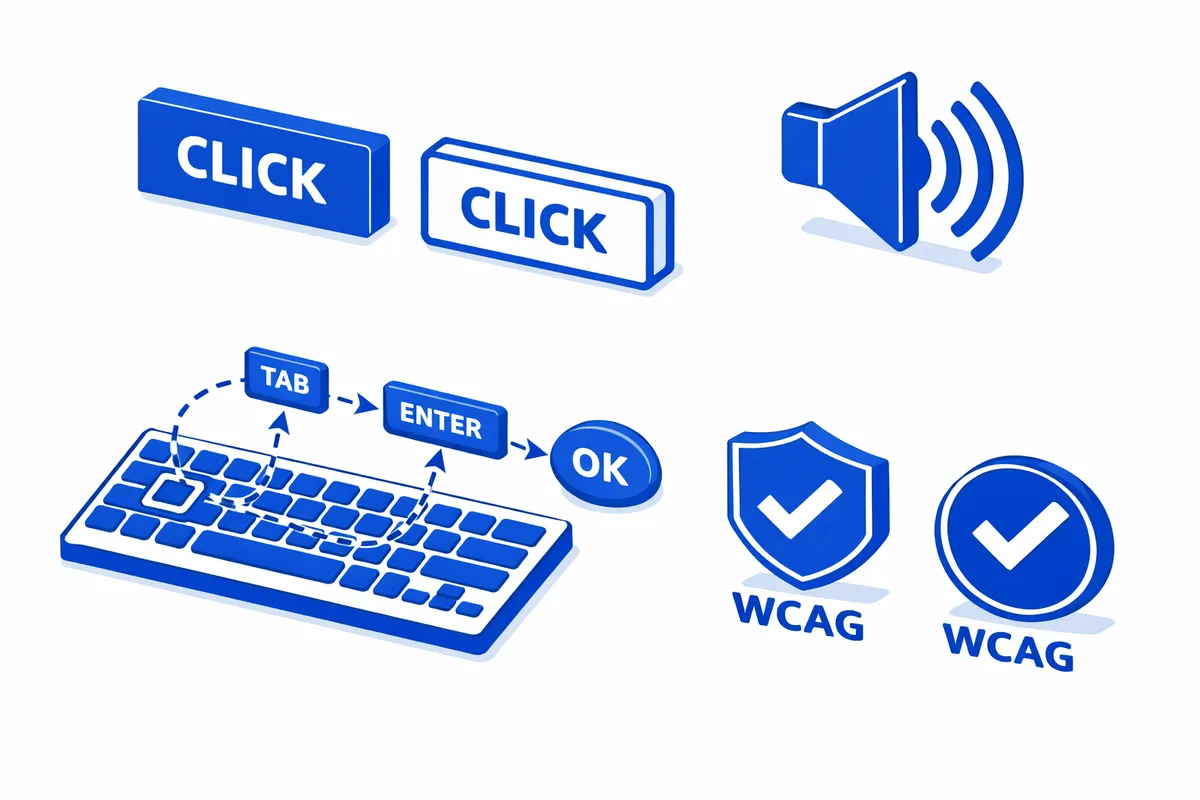
Comprehensive manual testing. We conduct manual testing with keyboard-only navigation on every interactive element. We test with NVDA and JAWS on Windows, VoiceOver on macOS and iOS, and TalkBack on Android. We test with browser zoom up to 200 percent, with high contrast mode active, and with JavaScript disabled to ensure graceful degradation. We test forms, navigation, modals, and any custom interactive components.
Detailed audit report. We deliver a report documenting every issue with its exact location, the specific WCAG criterion violated, its severity level, and the recommended fix. The report is structured so your development team can work from it directly, or we can do the remediation for you. For businesses responding to demand letters, the audit report also serves as evidence of good-faith compliance assessment.
Code-level remediation. We fix at the HTML, CSS, ARIA, and JavaScript level. Real semantic markup, proper ARIA attributes only where needed, keyboard event handling, focus management for modals and dropdowns, color contrast corrections, and alt text for images. For Rogers Park businesses on WordPress, we work within the theme and plugin architecture. For custom builds, we work directly in the codebase.
Accessibility statement and documentation. We draft your accessibility statement following current legal best practices. We provide VPAT or ACR documentation for Rogers Park businesses competing for government and enterprise contracts that require accessibility conformance documentation. We document what was tested, what was fixed, and what known limitations remain.
Monitoring and ongoing compliance. Accessibility is not a one-time project. Content gets added, features get built, and regressions accumulate. We set up monthly automated monitoring to catch new issues as they appear. For sites that change frequently, we add quarterly manual review. We help you establish content creation guidelines so your team does not introduce new issues.
Industries We Serve in Rogers Park
Restaurants and hospitality along Clark Street, Morse Avenue, and the Devon Avenue corridor face ADA web claims targeting online menus, reservation platforms, and ordering systems. E-commerce functionality is heavily targeted in ADA litigation because inaccessibility directly blocks transactions. Rogers Park restaurants with significant online ordering volume through their own sites or delivery integrations have real financial exposure on inaccessible checkout flows.
Healthcare and clinical practices including the community health centers and independent practices serving Rogers Park need accessible patient portals, appointment scheduling tools, intake forms, and health information. Any practice receiving federal financial assistance falls under Section 1557 of the ACA, which imposes accessibility requirements on top of the ADA. Practices near Loyola's Lake Shore Campus serving student populations particularly need accessible digital infrastructure.
Nonprofits and community organizations serving Rogers Park's diverse populations face compounding accessibility obligations. Federal grant recipients are bound by Section 504. Illinois state grants carry state accessibility requirements. Organizations serving disabled clients directly cannot afford websites that exclude those clients from accessing services. We work with organizations like those aligned with RPCAN, immigrant services groups, and the smaller community nonprofits operating along Howard and Touhy.
Legal services and professional firms on Sheridan Road, Greenleaf, and in the Clark Street corridor serve clients who increasingly expect ADA compliance as a baseline of professional quality. Law firms also face professional responsibility considerations around serving clients with disabilities, and an inaccessible website signals a gap in the firm's attention to these obligations.
Loyola-adjacent educational and research programs including continuing education, extension programs, and research labs must meet Title II and Title III accessibility requirements. The Department of Education's Office for Civil Rights actively investigates digital accessibility complaints from students and community members.
Retail and independent shops including bookstores, record stores, specialty grocers, and co-ops along Clark Street and Morse Avenue face the same e-commerce accessibility risks as larger retailers. Online product catalogs, checkout flows, and account management are common targets. The Rogers Park co-op model adds member portal accessibility as a specific consideration.
Arts organizations and performance venues including Lifeline Theatre, Mayne Stage, and smaller performance companies need accessible ticketing, venue information, and event pages. Patrons with disabilities rely on accurate accessibility information to make attendance decisions, and inaccessible ticketing platforms block actual revenue.
What to Expect Working With Us
1. Initial review and scoping. We review your site's current state using automated scanning tools and scope the manual testing required. We deliver a preliminary findings summary within the first week so you understand the scope before committing to a full audit. For Rogers Park businesses responding to demand letters, we can begin remediation work in parallel with the full audit to demonstrate good-faith action quickly.
2. Full audit. Complete manual testing with assistive technology, keyboard navigation verification, visual design review for contrast and focus indicators, and documentation of every issue found. You receive a detailed report that serves as both a remediation roadmap and evidence of compliance assessment for any legal or regulatory context.
3. Remediation. Code-level fixes to every issue identified. We test every fix before marking it complete. For sites with a large number of issues, we prioritize by severity so the highest-risk barriers are resolved first. For businesses under demand letter pressure, we can deliver a critical-issues remediation within two to three weeks and complete the full remediation over a longer timeline.
4. Verification and ongoing monitoring. Post-remediation audit to confirm every issue is resolved. Accessibility statement drafted and published. Monthly automated monitoring set up to catch regressions. Training for your content and development teams so new issues do not accumulate. You have genuine, verifiable compliance, not a claim backed by an overlay plugin.