How We Build Accounting Automation for Rogers Park
Every engagement starts with understanding what the business actually does. For a restaurant on Morse Avenue we sit with the owner during a dinner service and watch what actually happens with orders, payments, and tips. For a nonprofit we review the grant agreements and understand what reporting is required when. For a consulting firm we look at how time tracking connects to invoicing and where the gaps are. This discovery shapes what we build.
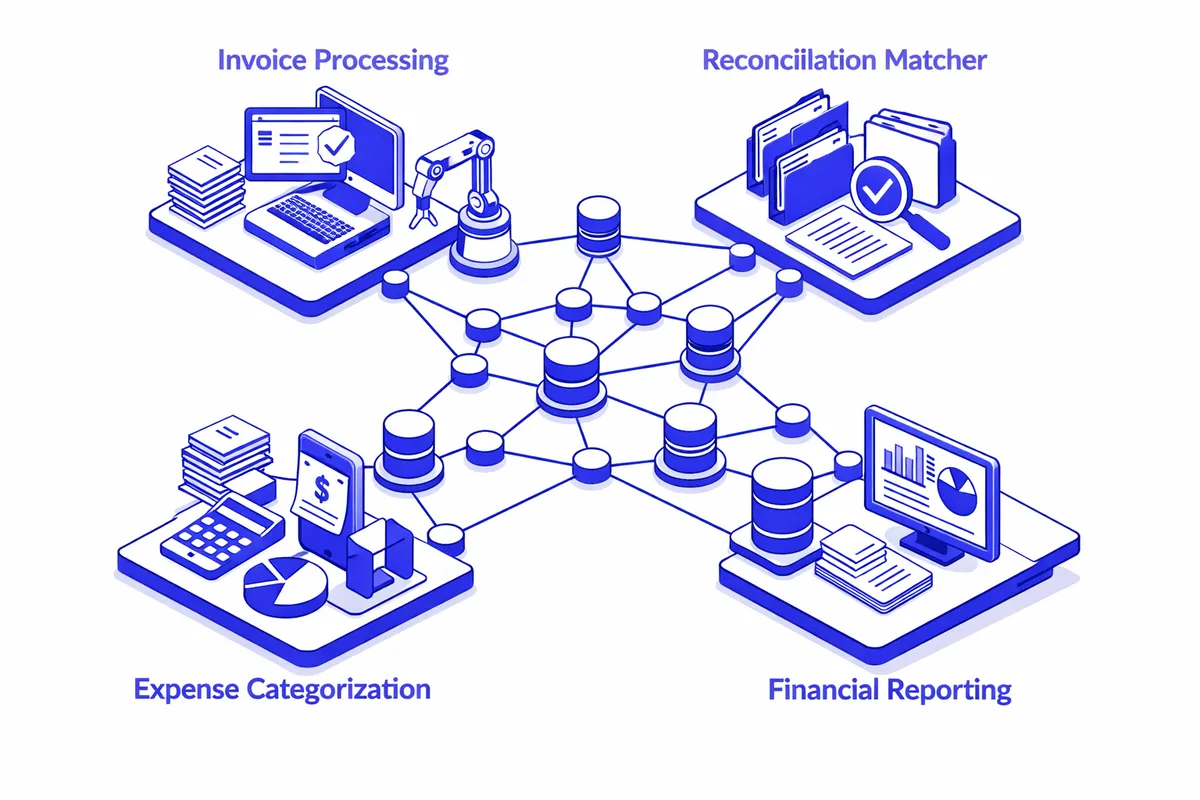
Invoice processing automation. For professional services firms and consultants throughout Rogers Park, we build systems that generate invoices automatically from time tracking or project completion data, send them on schedule, track receipt and opening, follow up automatically on overdue balances, and integrate payments back to the accounting system. The controller or bookkeeper stops chasing invoices manually.
Bank reconciliation. We configure bank feeds, rules-based transaction categorization, and automated matching between bank activity and accounting records. Transactions that match cleanly post automatically. Only exceptions require human review. For a Rogers Park restaurant processing hundreds of transactions daily across multiple channels, this turns a two-hour daily reconciliation into a fifteen-minute exception review.
POS and sales channel integration. For Clark Street restaurants, Devon Avenue retailers, and businesses using modern POS systems like Square, Toast, or Clover, we build integrations that push daily sales into accounting software with proper categorization by revenue type, tax jurisdiction, and channel. Delivery platform reconciliation that accounts for fees, promotions, and settlement timing becomes automatic instead of a weekly headache.
Expense management. Mobile receipt capture that uses OCR to extract data, rules-based expense categorization tied to vendor recognition, automated coding to the chart of accounts, and approval workflows that route expenses to the right reviewer. For Rogers Park businesses with owner-operators who travel, handle petty cash, or manage multiple project expenses, this eliminates the shoebox of receipts approach.
Financial reporting and dashboards. Automated reports that run on schedule and deliver the specific information owners and boards need. Daily flash reports for restaurants. Monthly program-specific reports for nonprofits. Quarterly financial packages for Loyola-adjacent startups preparing for fundraising. Custom dashboards accessible in real time so owners can see how the business is performing without waiting for month-end close.
Industries We Serve in Rogers Park
Restaurants and food businesses along Clark Street, Devon Avenue, Morse Avenue, and the Howard Street corridor face the most complex daily accounting of any small business sector. Multiple sales channels, daily cash reconciliation, tip reporting, vendor invoice volumes, and inventory tracking all demand automation to run well. We work with independent restaurants, family-owned ethnic concept operators, catering businesses, and food retail shops to build accounting operations that keep pace with the business.
Nonprofits and community organizations operating across Rogers Park need fund accounting automation that tracks restricted versus unrestricted funds, allocates expenses to programs, produces grant reports, and maintains the audit trails that funders and state regulators require. Organizations from established operators like A Just Harvest down to small immigrant-serving organizations along Devon and Clark benefit from automation that reduces the administrative burden on limited finance staff.
Independent retail and bookstores like Armadillo's Pillow, record shops, specialty grocers, and the co-ops that anchor the neighborhood need POS integration, inventory-to-accounting sync, and sales tax automation. The co-op model adds member equity tracking, patronage dividend calculation, and governance reporting that standard small business accounting does not handle well.
Professional services consultants including legal aid attorneys, marketing consultants, therapists, and independent professionals operating out of offices on Sheridan Road, Greenleaf, and in the Loyola adjacent blocks need automated time-to-invoice workflows, client retainer management, and project profitability tracking. Solo practitioners and small firms see the biggest time savings because the work was previously consuming their billable hours.
Loyola-adjacent startups and faculty ventures including research spinouts, SaaS companies, and consulting firms founded by university affiliates need accounting that supports fundraising due diligence, SaaS revenue recognition, and the financial reporting that investors expect. Automating the accounting operations early means the business is fundraising-ready when the opportunity arrives rather than scrambling to clean up books during diligence.
Arts organizations and performance venues including Lifeline Theatre, Mayne Stage, and smaller performance companies need ticket revenue reconciliation, donor and grant tracking, production cost allocation, and reporting to boards and funders. Arts accounting often spans fiscal year complexity, capital campaign tracking, and venue rental income that benefit from automation.
Property managers and small real estate operators in Rogers Park's multi-unit buildings and commercial properties need rent collection automation, maintenance cost allocation, vendor payment management, and portfolio reporting. Landlords operating two to twenty units see major productivity gains from automating what was previously manual unit-by-unit bookkeeping.
What to Expect Working With Us
1. Discovery and assessment. We spend the first one to two weeks understanding your current financial operations, software environment, transaction volumes, and specific pain points. We review your chart of accounts, your existing bookkeeping processes, and where time and errors accumulate. We map the workflows that will benefit most from automation before recommending any specific tools or changes.
2. Strategy and prioritization. We deliver a prioritized roadmap with specific time savings and ROI estimates for each automation initiative. We sequence work to deliver quick wins within the first 60 days while building toward a complete automated operation. For Rogers Park businesses with tight budgets, we help you stage investments so each phase pays for the next.
3. Implementation. We configure and connect automation within your existing accounting software. Real integrations with your live systems, real test cases drawn from your transaction history, and hands-on training for your team before anything goes live. We stay engaged through the first full accounting period after launch to address anything that surfaces with real data.
4. Ongoing support and evolution. Rogers Park businesses evolve. New revenue streams, new vendor relationships, new grant sources, new tax requirements. We offer ongoing support arrangements that keep the automation current as the business changes. We also offer one-time engagements for businesses that want to own their automation fully after implementation.