How We Build Workflow Automation for River North
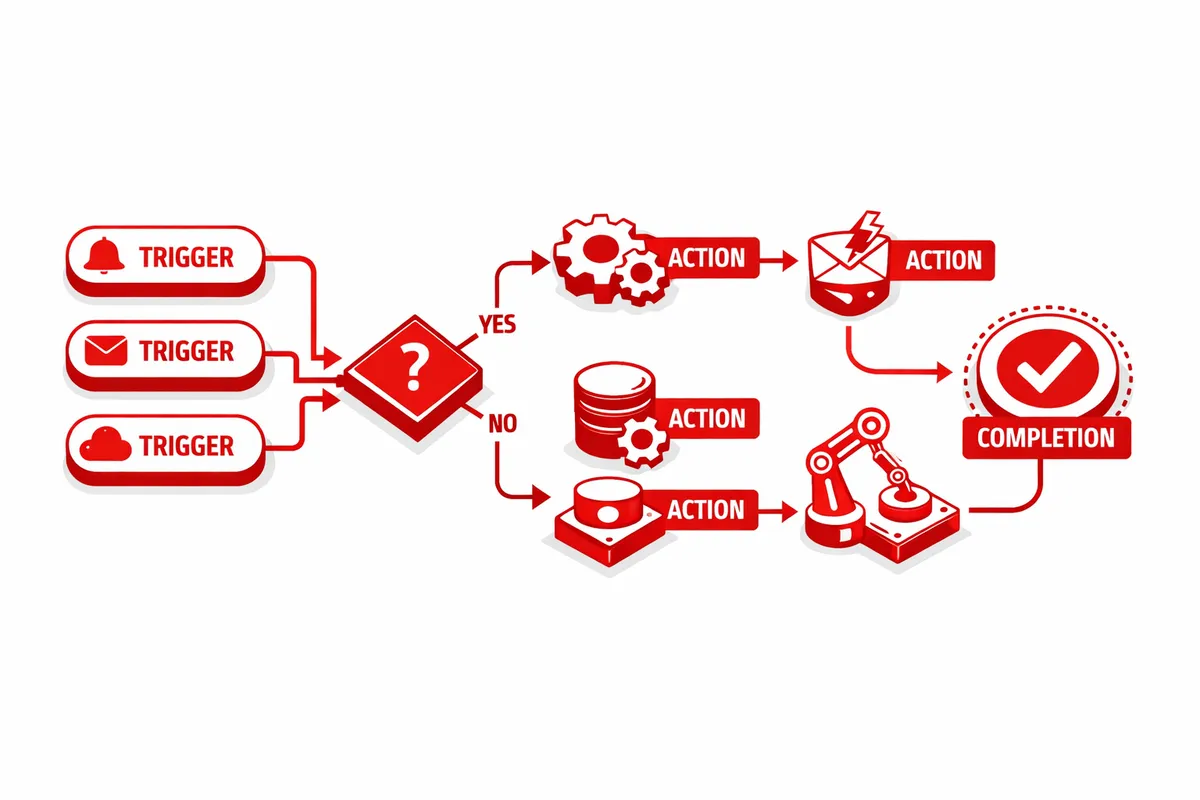
We begin with process mapping: documenting your current workflows step by step, identifying the decision points that require human judgment, identifying the rule-based steps that could be automated, and calculating the time investment in manual execution versus the cost and benefit of automation. Not every workflow is worth automating. We prioritize based on the combination of time savings, error reduction potential, and implementation complexity.
For galleries on Superior Street, the highest-value automation typically involves the exhibition publishing workflow, the collector communication sequences triggered by specific interactions, and the provenance research and documentation workflows that currently require significant manual coordination between systems.
For Merchandise Mart showroom vendors, the highest-value automation typically involves the order intake and entry process, the client communication sequences triggered by order status changes, and the sales pipeline management workflows that currently require manual CRM updates after each client interaction.
We select the automation platform appropriate to your specific tool stack and workflow complexity. Zapier and Make (formerly Integromat) are appropriate for straightforward workflow connections between tools with standard integrations. More complex workflows with branching logic, error handling, and multi-step coordination benefit from more robust orchestration platforms or custom automation development.
We build the automation with explicit error handling: what happens when a step fails, when data is missing or formatted incorrectly, when a downstream system is unavailable. Automation that fails silently is more disruptive than manual processes because the failure goes undetected until the downstream consequence surfaces.
Industries We Serve in River North
Art galleries and dealers on Superior Street receive workflow automation for exhibition publishing coordination, collector communication sequences, provenance research workflow, and the operational processes that currently require manual coordination between gallery management, CRM, website, email, and social systems.
Showroom vendors at the Merchandise Mart receive workflow automation for order intake and entry, client communication sequences triggered by order status changes, lead routing and follow-up, specification request processing, and the operational workflows that currently consume sales and operations staff time on rule-based tasks.
Boutique hotels on Kinzie Street and Ontario Street receive workflow automation for guest communication sequences, housekeeping and maintenance workflow coordination, reporting automation, revenue management data flows, and the operational processes that currently require manual coordination across property management, food and beverage, and guest services systems.
Creative agencies and professional services firms between Clark Street and Ontario Street receive workflow automation for project management workflow, client communication sequences, billing triggers, new business intake processes, and the administrative coordination that currently consumes team time that could be spent on client work.
High-end restaurants on Hubbard Street and Wells Street receive workflow automation for reservation communication sequences, inventory and ordering workflows, payroll data collection, and the operational processes that connect reservation platforms, POS systems, and kitchen management.
Real estate and property management firms near Marina City receive workflow automation for leasing workflow coordination, tenant communication sequences, maintenance request routing, financial reporting, and the property management processes that currently require manual coordination across multiple property systems.
What to Expect Working With Us
1. Process mapping and automation opportunity analysis. We document your current workflows, identify automation opportunities, prioritize by impact and implementation complexity, and produce an automation roadmap with honest estimates of time savings and implementation investment for each opportunity.
2. Automation design and development. We design the automation logic, select the appropriate platform, and build the workflows with explicit error handling and monitoring. We test against real process data before going live, including the edge cases that reveal gaps in the logic.
3. Testing and deployment. We run the automation in parallel with existing manual processes during a validation period, confirm that automated outputs match expected results, and then deploy as the primary process with manual processes retained as fallback during the initial period.
4. Monitoring and expansion. We monitor automation performance, respond to failures, and expand coverage to additional workflow automation opportunities as the initial implementations demonstrate value. Most River North businesses significantly expand their automation coverage in the first twelve months after seeing the operational impact of the first implementations.