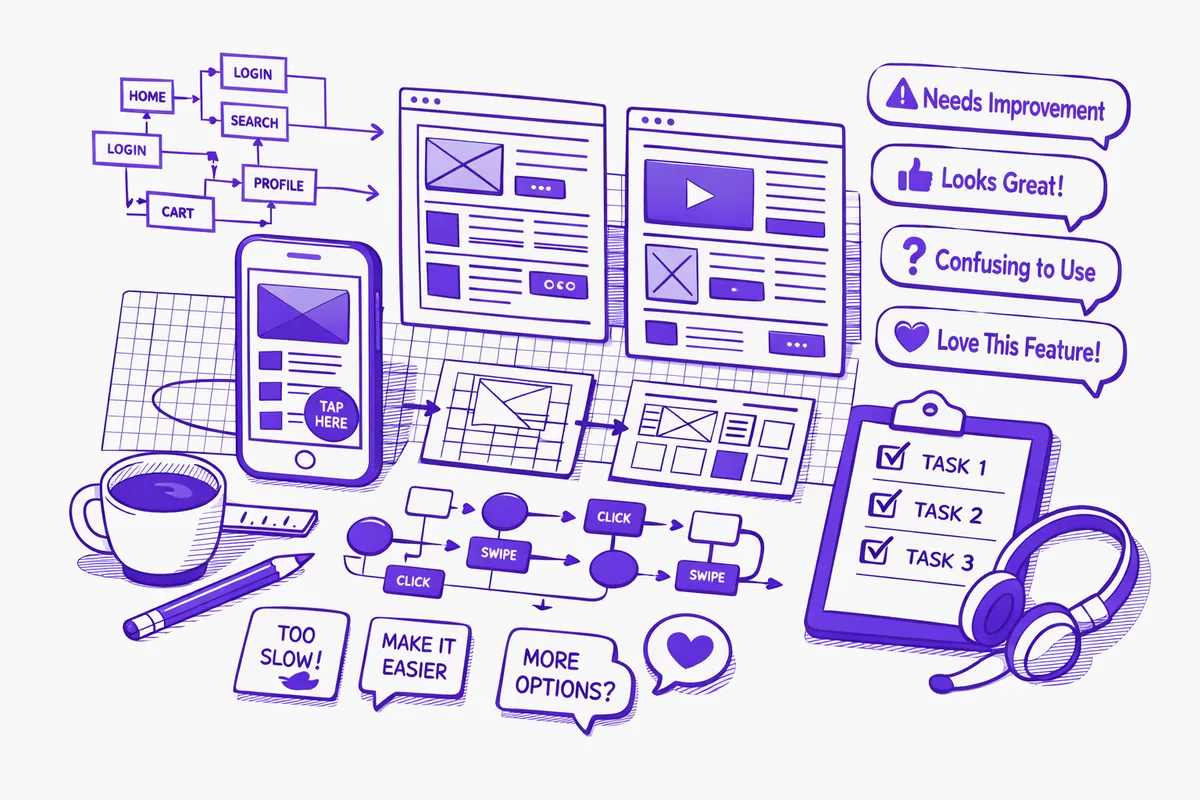
How We Build UI/UX Design for River North
Our process begins with user research, not visual design. Before we sketch a screen, we need to understand who is using your digital touchpoints and what they are trying to accomplish. For a River North gallery, that means understanding how collectors research acquisitions online, what information they need at each stage of the engagement, and where current digital friction causes them to disengage. For a design showroom serving trade accounts, it means understanding how architects and interior designers use specification tools, what documentation they need to support a project submittal, and how the online catalog needs to be organized to mirror how specifiers actually think about product categories.
Research findings inform a clear information architecture before any visual design begins. Content hierarchy, navigation structure, user flows, and interaction patterns are defined in low-fidelity wireframes validated against your target users. For River North businesses with sophisticated audiences, this step prevents beautiful visual design built over a structure that does not serve how users actually move.
Visual design for River North clients operates from the existing brand identity outward. We do not impose a visual system on top of your brand; we build the UI from your established design language. For a gallery, that typically means restraint: generous white space, typographic precision, a color palette that defers to the artwork rather than competing with it. For a design showroom, it might mean the opposite: bold materiality, product-forward layouts, and an interface that communicates the physical quality of the products it represents. For a hospitality brand, it means the warm, considered visual language of the property expressed in digital form.
Every design goes through usability testing with representative users before any development begins. For a boutique hotel near Marina City, that means testing the booking flow with actual travelers. For a gallery collector portal, it means testing the acquisition and inquiry workflow with actual collectors. Issues found before development are inexpensive to fix.
Industries We Serve in River North
Galleries and art organizations on the Superior Street corridor invest in digital experiences that give the work its proper presence online. Collection viewers that display works at full resolution with accurate color profiling, artist profile pages that support long-form critical writing alongside work images, and exhibition archive pages that preserve the gallery's history with the detail collectors and curators expect. The gallery's website is the institution's permanent record; it deserves the same curatorial attention as the physical program.
The Merchandise Mart's design community expects product browsing and specification tools that function at professional standards. Design showrooms and furniture manufacturers need online catalogs that organize products the way designers actually specify: by material, application, collection, and sustainability credential rather than by arbitrary product code. Trade account portals that provide custom pricing, quick-order forms, and project-specific saves reduce the friction that causes design professionals to default to competitors whose digital tools are simpler to use on a deadline.
Boutique hotels and hospitality venues near the riverfront and Marina City compete for direct bookings against OTA platforms that have invested heavily in conversion-optimized booking flows. The counter-strategy is offering a booking experience that the property's design and character make singular. A hotel website that leads with the property's aesthetic and story, with a booking flow that does not feel like an interruption, converts visitors who would otherwise leave for an OTA.
Advertising and creative agencies in River North's commercial corridors need portfolio experiences that show the depth of their work. A case study that exists as a static image gallery does not communicate strategic thinking to a prospective client. An interactive case study with narrative flow and outcome metrics demonstrates the agency's reasoning alongside its execution.
Restaurants and private dining operations on Hubbard Street and Ontario Street need digital experiences that drive reservation intent from the moment of landing. Menu presentation, ambiance communication, private dining inquiry flows, and the overall visual register of the website either earn a reservation or lose it to the next Google result. We design restaurant digital experiences that convert the appetite created by the restaurant's reputation into reservation completions.
Professional services firms along Clark Street and Wells Street use UI/UX design to build client-facing portals, service explainers, and lead qualification flows that reflect the firm's expertise. A law or financial services firm whose digital presence matches its institutional quality closes prospects at a different rate than one whose website looks a decade out of date.
What to Expect Working With Us
1. User research and journey mapping. We conduct structured research with your actual users: interviews, behavioral observation, or analysis of existing analytics data. The output is a documented understanding of who your users are, what they need, and where the current experience fails them. For a Merchandise Mart showroom, this research often surfaces specification workflow needs the current website does not support at all.
2. Information architecture and wireframes. We define the structure before visual design begins: navigation, content hierarchy, user flows, and interaction patterns documented in low-fidelity wireframes you review and approve. Changes at this stage are fast. Changes to developed code are the most expensive. We invest here so later phases move without rework.
3. Visual design and prototype. We produce high-fidelity visual designs and an interactive prototype that you can navigate on the device your users will use. For a gallery collector experience, that means reviewing it on desktop where collectors primarily research acquisitions. For a hotel booking flow, that means reviewing it on mobile where the majority of bookings originate. Usability testing against the prototype before development begins is the standard we hold.
4. Development handoff and quality assurance. We produce developer-ready specifications: annotated designs, component libraries, interaction specifications, and asset exports. If we are building the development, the handoff is internal. If you have an existing team, we provide the full specification package. Post-launch, we conduct a QA review comparing the built experience against specifications and address discrepancies before the site goes live.