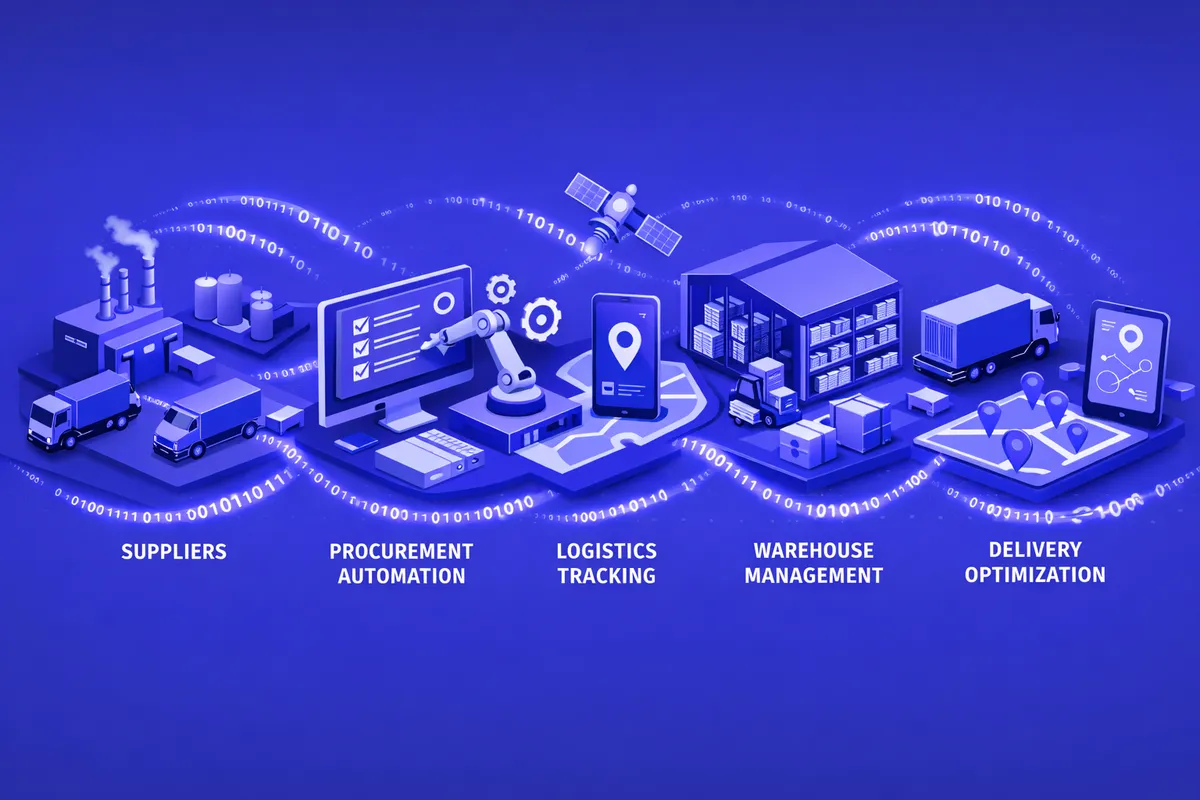
How We Build Supply Chain Automation for River North
Supply chain automation for River North operators begins with a complete vendor and workflow inventory. We catalog every active vendor relationship: contract terms, order frequency, lead times, historical performance, and the current manual process for each procurement cycle. For a boutique hotel on Hubbard Street, that catalog typically spans sixty to eighty active vendor relationships. For a design showroom with Merchandise Mart connections, it spans manufacturer relationships, freight carriers, and white-glove installation contractors across every project in the pipeline.
From the vendor catalog, we map procurement workflows to find where manual coordination consumes the most time and carries the most financial risk. Most River North operators have informal procurement processes that evolved alongside the business rather than designed workflows. The informal process holds at low volume and fractures at high volume because it depends on specific people remembering specific steps. Automation formalizes the process so it runs at consistent quality regardless of volume or personnel.
River North's gallery and hospitality character means automation priority follows event calendars and occupancy patterns rather than simple volume. A hotel's F&B purchasing automation needs to account for the revenue peaks tied to Hubbard Street restaurant week promotions and Clark Street entertainment corridor traffic. A gallery's procurement automation needs to flex around the exhibition calendar, not just average monthly spend.
We integrate supply chain automation with your accounting system so purchase orders generate expected expense records automatically, received goods update inventory counts without manual entry, and vendor invoices route for payment only after automatic reconciliation against purchase orders and receiving records. The accounts payable team addresses exceptions rather than processing every invoice by hand.
Industries We Serve in River North
Boutique hotels and full-service hospitality properties on Hubbard Street and Kinzie Street manage procurement across food and beverage, housekeeping, maintenance, and capital improvements against occupancy patterns tied to the gallery district, the Merchandise Mart calendar, and River North's restaurant corridor. F&B purchasing automation connects par level monitoring to automatic purchase order generation so the morning purchasing decision becomes a system output rather than a manager task.
Art galleries and gallery-adjacent event spaces along Superior Street run procurement cycles that compress around exhibition openings, collector events, and the fall and spring gallery seasons. Automated vendor request workflows that generate contracts, track artist shipping logistics, route catering approvals, and confirm installation contractor schedules replace the email-based coordination that currently requires a staff member to hold every thread simultaneously.
Design showrooms with Merchandise Mart connections on Wells Street and Ontario Street manage vendor relationships across furniture manufacturers, freight carriers, and white-glove installation contractors. Automated contract renewal management tracks manufacturer agreements before they auto-renew at stale rates. Automated freight carrier performance tracking builds the documented case for carrier negotiations that currently happen on intuition.
Creative agencies and advertising firms serving River North's brand-heavy commercial corridor manage procurement for production materials, event hosting, digital services, and contractor relationships. Automated procurement workflows with approval routing by dollar threshold and category replace ad hoc purchase approvals that currently involve email chains and manual receipts.
Restaurants and bar operations on Clark Street and Kinzie Street manage procurement cycles where food waste is a direct margin cost and supplier reliability directly affects the guest experience. Automated inventory management with demand forecasting based on reservation volume and day-of-week patterns reduces over-ordering without requiring the operations manager to review inventory counts daily.
Professional services firms near Trump Tower and Rock N Roll McDonald's manage procurement for office supplies, client entertainment, printed materials, and facilities maintenance. Automated procurement workflows with spend categorization and approval routing replace the informal purchasing processes that currently produce inconsistent expense records and missed approval steps.
What to Expect Working With Us
1. Vendor and procurement process inventory. We spend the first two weeks documenting your complete vendor landscape and procurement workflows. This inventory produces a vendor performance baseline and a prioritized map of where automation will deliver the highest return for your specific River North operation.
2. Automation architecture and integration design. We design the automation layer against your procurement workflows and identify integration points with your accounting system, inventory management platform, and vendor communication channels. For most River North hospitality operators, the F&B purchasing integration is the highest-priority component because it eliminates the daily manual ordering cycle that consumes the most purchasing management time.
3. Phased build with priority on highest-volume workflows. We build and deploy automations in order of business impact, starting with the procurement workflows that consume the most time or carry the most financial exposure when managed inconsistently. For a Superior Street gallery, that typically means exhibition event vendor coordination first, followed by ongoing supply management, followed by contractor performance tracking.
4. Vendor communication rollout and performance monitoring. The most effective supply chain automation includes vendor-facing components: purchase order transmission, acknowledgment tracking, delivery confirmation, and invoice submission portals. We manage the rollout communication and provide the monitoring dashboard that shows purchasing and operations management the performance data they need to make better vendor decisions going forward.