How We Build Legacy System Integration for River North
Our process begins with a systems inventory. We document every application your business uses, how it stores data, what data it contains, and what interactions staff currently perform across systems. For a Merchandise Mart showroom with three-generation technology debt, this inventory sometimes surfaces databases that are not well-documented internally. We treat every data source as potentially valuable and evaluate it before recommending whether to integrate, migrate, or retire it.
We then map the data flows your business actually needs. The goal is not to connect everything to everything; it is to eliminate the specific manual steps that cost your team time and introduce errors. For a hotel near Marina City, the priority flow might be getting legacy guest history into the modern PMS so returning guests are recognized. For a gallery on Superior Street, it might be getting pre-digital collector records into the active CRM so long-term relationships are visible to today's sales staff. We design the integration around the workflows that matter most, not an abstract architecture ideal.
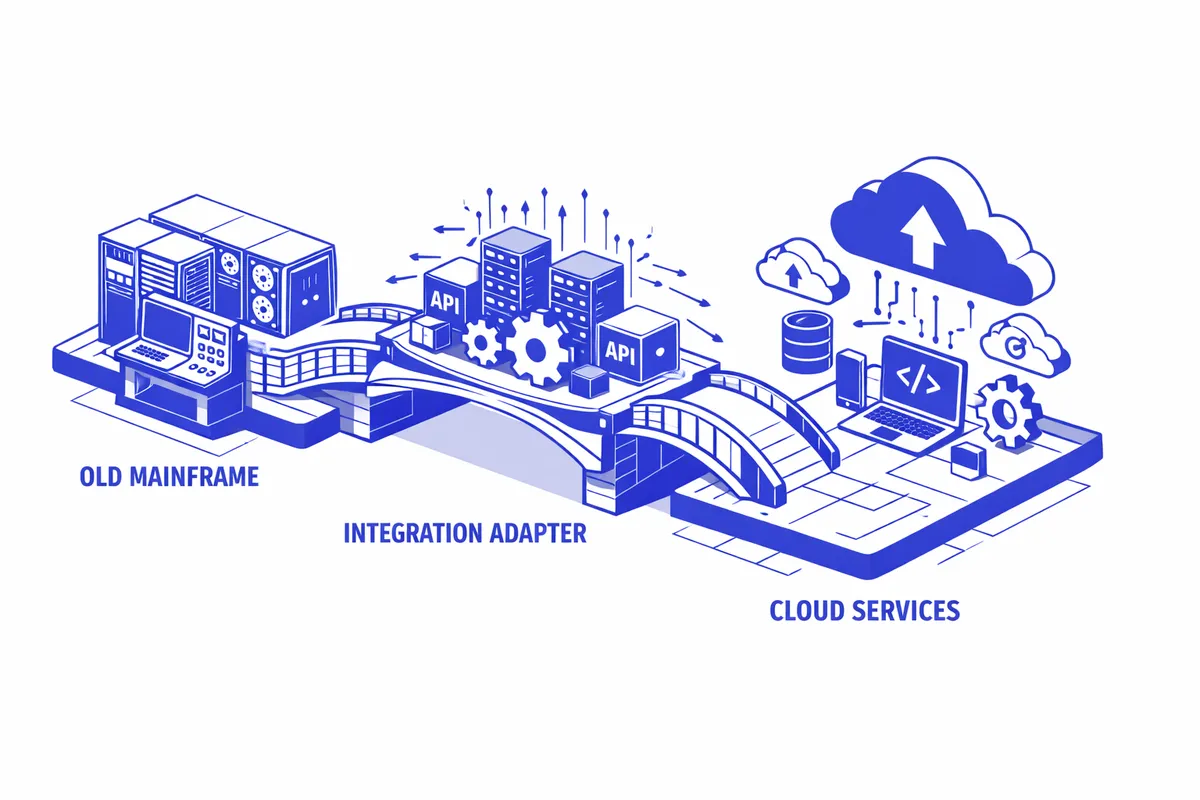
Technical approach varies by what each legacy system supports. Systems with accessible APIs get direct integration. Systems with exportable data formats get structured extract-transform-load pipelines. Systems with neither get attended data migration where we work directly with the database or application files. In all cases, we prioritize data integrity: the goal is to connect systems accurately, not quickly. A legacy gallery database with twenty years of collector provenance records requires the same care as a clinical record. We treat it accordingly.
Data transformation is often where integration projects stall. Legacy systems encode data differently than modern platforms: date formats, address structures, currency fields, and product identifiers all need to be translated consistently. We build the transformation rules into the integration layer so data arrives in your modern system clean and correctly formatted rather than requiring manual cleanup after each sync.
Industries We Serve in River North
Galleries and art organizations on Superior Street and across the River North gallery district carry years or decades of artist, collector, and provenance records in legacy databases that predate modern gallery management software. Integration connects those records to active CRM and inventory systems so the gallery's full historical depth is accessible to current staff without switching between applications. When a collector who has purchased since 2003 contacts the gallery about a new exhibition, every purchase, every inquiry, and every relationship note is visible in one place.
The Merchandise Mart's long commercial history means many of its design showrooms and furniture dealers have product catalogs, trade account histories, and specification records that span multiple software generations. Integration between legacy inventory systems and modern e-commerce, CRM, and order management platforms eliminates the parallel-entry problem and ensures that trade account managers working the spring and fall markets have access to complete client histories regardless of which system those records originated in.
Boutique hotels and hospitality venues near the riverfront often run hybrid technology stacks where a modern PMS coexists with legacy accounting, loyalty, or reservation systems that were too costly to replace at the time of an upgrade. Integration between these systems allows guest history, billing records, and loyalty data to flow without manual reconciliation. A returning guest who stays during every Merchandise Mart trade show should have their full stay history accessible to the front desk regardless of which PMS version it was recorded in.
Restaurants and restaurant groups on Hubbard Street and Ontario Street that have grown through acquisition or through layering new technology onto original systems often have customer, loyalty, and financial data distributed across incompatible platforms. Integration consolidates reservation history, loyalty points, and sales data into a unified view that supports better marketing, reporting, and guest recognition without replacing the components of the stack that still work well.
Advertising and creative agencies in River North's commercial buildings manage project histories, client records, and financial data that may span multiple agency management platforms across years of growth. When a firm has outgrown a legacy project management system but still needs access to eight years of client work history, integration between the old and new platforms preserves that institutional knowledge in an accessible form.
Professional services firms along Wells Street and Clark Street that have operated for years in legacy practice management software face a version of this problem when they want to add modern client portals, document management, or billing tools. Integration surfaces the relevant legacy data in new interfaces without requiring a full platform replacement that would disrupt ongoing client work.
What to Expect Working With Us
1. Systems inventory and data audit. We catalog every system your business uses, assess the quality and completeness of the data in each, and identify the specific data flows that integration should support. For a Merchandise Mart showroom with layered legacy systems, this audit often reveals data quality issues in the legacy systems that need remediation before integration. We surface these early so they do not delay the project.
2. Integration architecture and prioritization. We design the integration architecture and present it in plain terms: what connects to what, how data flows, and in what direction. We prioritize the integration work by business impact so the highest-value connections are live first. You are not waiting for a multi-month full-stack integration before you see any benefit.
3. Build, test, and validation. We build the integration in a staging environment and validate data accuracy against both source and destination systems before moving to production. For a hotel integrating legacy guest history, this means verifying that a sample of historical guest records lands correctly in the modern PMS before running the full migration. Every integration goes through structured validation before it handles real business data.
4. Transition support and monitoring. The weeks immediately after integration go live are the highest-risk period. We provide active monitoring and rapid response during the transition window, reviewing error logs daily, validating data consistency, and addressing edge cases as they surface. After the system stabilizes, we transition to periodic review and documentation support.