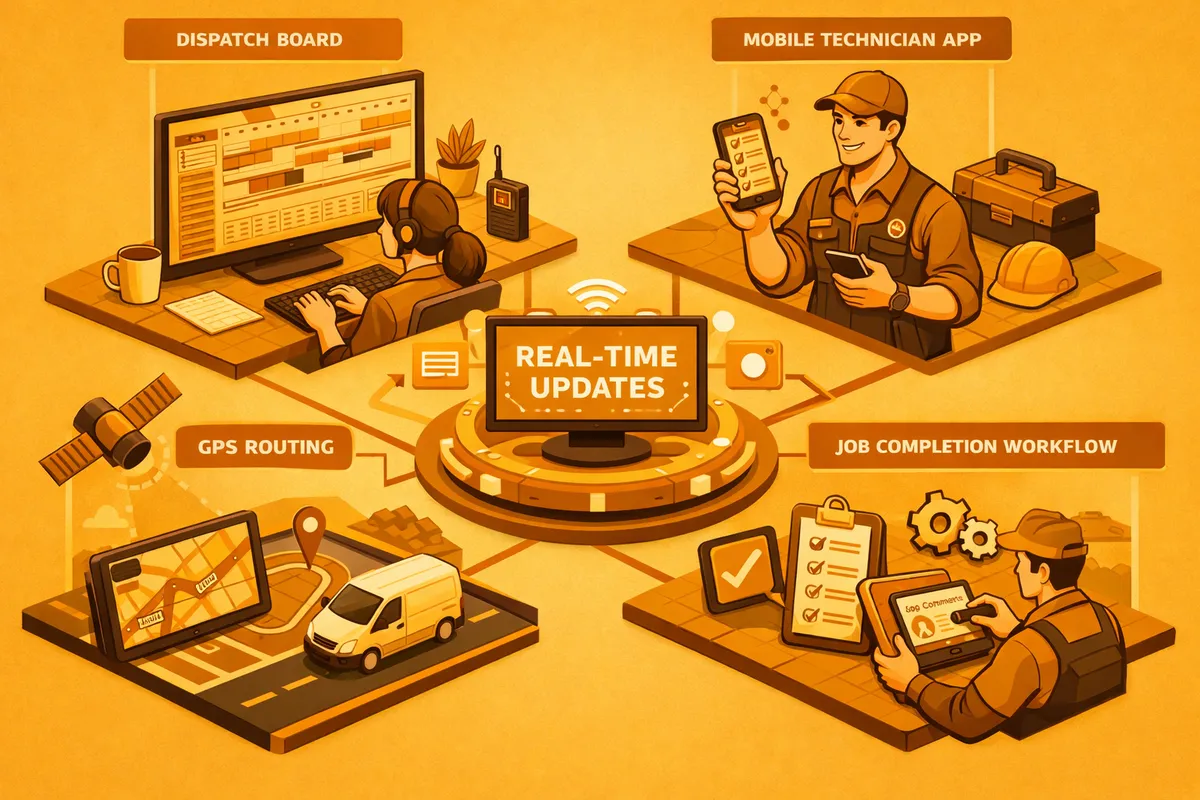
How We Build Field Service Management for River North
We begin by mapping your current field operations from dispatch to invoice. Who gets the service request first? How does it get assigned to a technician? What information does the technician have when they arrive on site? How does completion get documented and communicated to the client? How does the invoice get generated? Most River North businesses doing this work honestly find three or four handoff points where information gets lost, delayed, or duplicated. Those gaps become the design targets for the system we build.
Scheduling is the operational core of any field service system, and we build it around your actual job types rather than a generic calendar. A gallery installation job has different pre-arrival requirements than a restaurant equipment repair. A hotel room maintenance call has different documentation needs than a showroom floor reconfiguration near the Merchandise Mart. The system distinguishes between job types, routes them to appropriately qualified technicians, and surfaces the right pre-job information and documentation templates for each category.
Mobile access for technicians in the field is non-negotiable. Your people on the ground need to receive job assignments, access client history and site notes, document completion with photos, capture client signatures, and log parts and time from their phone. We build mobile interfaces that work in environments with unreliable connectivity, so a technician working in a Kinzie Street building basement or a gallery loading dock does not lose their work when the signal drops.
Client-facing communication is the piece most field service systems underinvest in. We build automated appointment confirmation sequences, pre-arrival notifications with technician information, real-time status updates during the service window, and completion confirmations with documentation attached. Clients know when to expect your team, who is coming, and that the job is done, without having to call your office to find out.
Industries We Serve in River North
Design showrooms and furniture dealers with installation programs around the Merchandise Mart use field service management to coordinate the complex logistics between warehouse, delivery crew, and client site. Job records hold floor plans, product specifications, building access notes, and installation sequences so the crew arrives prepared rather than calling the showroom for information that should have been in their hands before they loaded the truck.
On Hubbard Street and the surrounding blocks, restaurant and hospitality equipment service providers use field service management to maintain dense service schedules across multiple properties. Preventive maintenance visits, reactive repair calls, and compliance inspections all flow through a single dispatch system. Technicians see their full day's schedule, client history, equipment serial numbers, and prior service notes before leaving the shop. Service managers see field status in real time and can reassign jobs when a call runs long.
Gallery installation and art handling specialists serving the Superior Street corridor and the broader River North gallery district manage highly sensitive on-site work with narrow scheduling windows. Field service management tracks crating details, condition reports, installation sequences, and lighting adjustments for each piece. Documentation from installation is stored in the job record and linked to the artwork's provenance file so the gallery has a complete physical handling history.
Hotels near Marina City and the riverfront run large in-house property maintenance and facilities teams across dozens of rooms and mechanical systems. Preventive maintenance schedules, reactive work orders, and vendor service calls all require coordination. Field service management gives facilities managers a real-time view of open work orders, technician location and status, and completion documentation without radio calls or manual status updates.
Audiovisual and technology installation firms working in River North's corporate office buildings, event spaces, and hotel meeting rooms manage complex installations with multiple crew members, equipment staging, and client walkthroughs. Project records hold site surveys, equipment inventories, cable diagrams, and configuration notes. Technicians access the relevant documentation on site rather than calling the project manager for specifications.
Window treatment, lighting, and building finishing contractors who serve River North's residential and commercial interiors operate on project cycles tied to renovation schedules and occupancy timelines. Field service management tracks measure appointments, fabrication lead times, installation windows, and punch list items so project managers are not manually following up on each milestone across a portfolio of simultaneous jobs.
What to Expect Working With Us
1. Field operations audit. We spend time with both your dispatch staff and your field technicians to understand where the current process succeeds and where it breaks. For a River North design installation operation, that typically surfaces scheduling coordination as the primary friction point. For a hotel maintenance team, it is often documentation and work order visibility. We identify the three or four changes that will have the most immediate impact on how your field operation performs.
2. System configuration and job type design. We configure your field service management platform around your specific job types, skill requirements, service zones, and documentation needs. A showroom installation workflow looks different from a restaurant equipment repair workflow. We build each job type with the right pre-job checklist, documentation requirements, and completion steps so the system supports your field team rather than adding administrative work to their day.
3. Mobile rollout and technician training. Field service software only works if the people in the field use it. We run training sessions with your technicians that focus on the mobile experience: accepting jobs, accessing job information, documenting completion, and logging time. We make the first week of live use as supported as possible, with a dedicated channel for questions during the transition period.
4. Dispatcher workflow and reporting setup. We train your dispatch and management team on the scheduling interface, real-time field status monitoring, and the reporting views that show job completion rates, technician utilization, and client satisfaction trends. Within 30 days of launch, you have data on how your field operation actually performs rather than estimates based on verbal updates and gut feel.