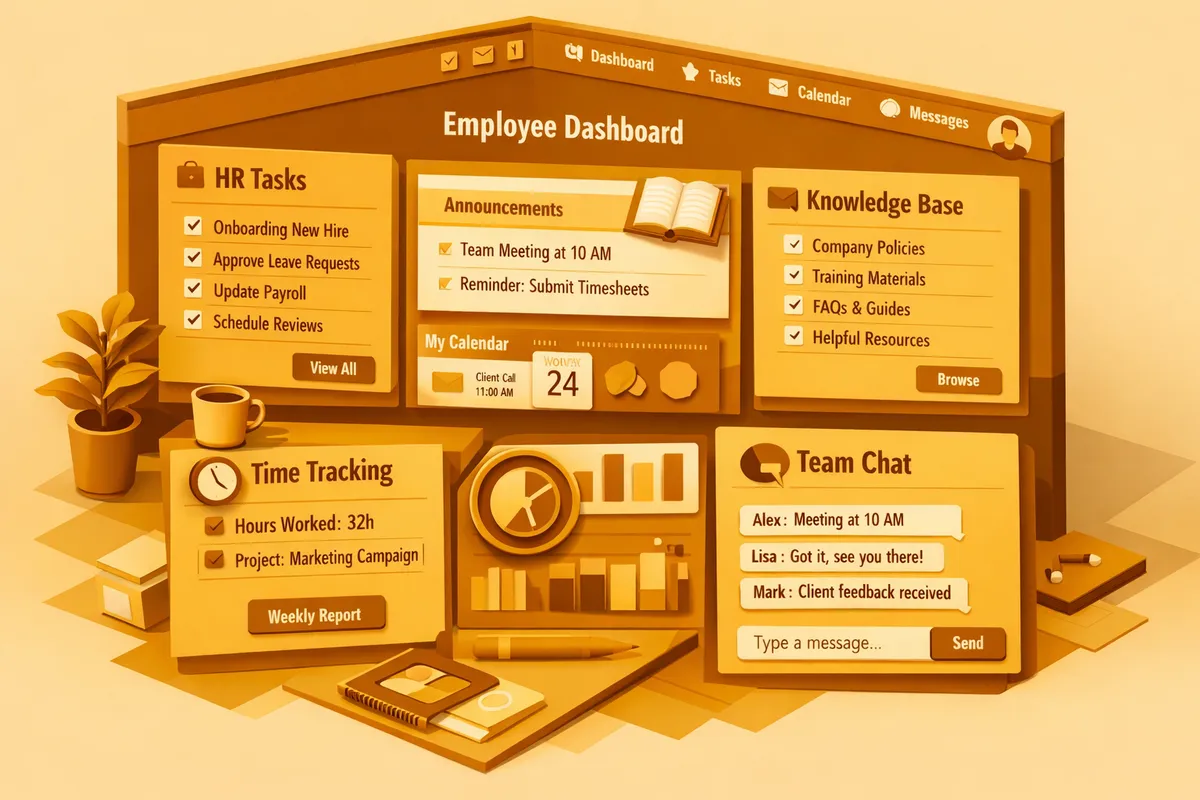
How We Build Employee Portals for River North
We start by mapping how your team actually forms. For a River North agency, that means understanding the difference between a permanent account director, a fractional creative lead, and a freelance editor brought in for one deliverable, because each needs a different slice of the portal. We sit with your operations lead, often the same person managing studio space near Wells Street, and trace where information currently lives. It is usually a mix of a shared drive, three chat channels, and one overworked producer's memory.
From there we design the information architecture around roles rather than departments. A design showroom inside the Merchandise Mart does not have an HR department and an IT department. It has a manager, a few full-time reps, and seasonal help during market weeks. The portal reflects that: self-service for the things people ask repeatedly, gated access for client and brand materials, and clean onboarding flows that a new contractor can complete without a meeting.
We build the portal to integrate with the tools River North firms already run: payroll, time tracking, project management, and single sign-on so a freelancer is not managing another password. Then we pilot it with one team, usually during a slower stretch between campaigns, watch where people get stuck, and refine before a wider rollout. The goal is a portal your staff opens by habit because it is faster than asking.
Industries We Serve in River North
Creative and advertising agencies clustered along Kinzie Street use employee portals to manage a workforce that is half permanent, half project. Onboarding a freelance art director becomes a fifteen-minute self-service flow covering contracts, payment, brand guidelines, and project access. Producers stop chasing timesheets because the portal routes them automatically, which protects the margin on tightly bid campaign work.
Design showrooms and furniture trade businesses inside and around the Merchandise Mart rely on portals to coordinate reps who split time across brands and the seasonal staff hired for spring and fall market weeks. The portal holds line sheets, pricing access, schedules, and the training a temporary rep needs to speak credibly to trade buyers without a manager standing beside them.
Boutique hotels and hospitality groups near Marina City and along the river deploy employee portals so front desk, housekeeping, food service, and event staff all reach the same shift schedules, policy updates, and incident reporting. When a property runs lean and cross-trains people across roles, one portal beats a binder at the manager's station and a separate email thread per department.
Galleries and art dealers on Superior Street and Ontario Street use portals to keep part-time gallery attendants, preparators, and registrars aligned on exhibition calendars, handling protocols, and consignment paperwork. As shows rotate, the portal becomes the reference for what is hanging, what sold, and which procedures govern a six-figure piece in transit.
Professional services firms in River North's office towers turn to employee portals to give associates, paralegals, and support staff a single point of access for benefits, expense submission, and internal policy. For a growing firm hiring steadily, a portal makes each new hire's first week consistent instead of dependent on who has time to walk them around.
Restaurants and nightlife venues along Hubbard Street and Clark Street use portals to manage high-turnover front-of-house and kitchen teams. Servers, bartenders, hosts, and line cooks get scheduling, tip reporting, food safety certifications, and policy acknowledgments in one place, which matters when a venue hires constantly and cannot afford a slow, inconsistent onboarding for every new server.
What to Expect Working With Us
1. Workforce and information mapping. We document how your River North team is actually structured, permanent versus project versus seasonal, and trace where policies, forms, and project context currently live. This usually surfaces a dozen small leaks of time before we design anything.
2. Role-based portal design. We build the information architecture around how people actually use the portal, not around a corporate org chart. A Merchandise Mart showroom and a Kinzie Street agency get different structures because their teams form differently.
3. Integration and single sign-on. We connect the portal to your payroll, scheduling, and project tools, and set up single sign-on so contractors and freelancers are not collecting passwords. The portal becomes the front door, not another tab.
4. Pilot during a slow stretch, then scale. We launch with one team during a quieter window between campaigns or market weeks, watch real usage, fix the friction, and then roll out company-wide so the surge seasons stay calm.