How We Build Document Management for River North
Every River North engagement begins with an intake that accounts for the specific character of the business. For a creative agency on Kinzie Street, that means mapping document categories across every active client engagement, understanding how deliverables, creative assets, and approval records currently relate to each other, and identifying where version control failures have created problems in the past. For a gallery on Superior Street, it means cataloging consignment records, provenance files, and artist agreements and understanding the insurance and auction documentation requirements that govern high-value artwork.
From the intake we design a taxonomy built for the business type and the pace at which documents are generated. Agency environments typically call for a client-and-campaign-centric taxonomy: every client is a container, campaigns within each client are sub-containers, and every document belongs to a campaign, a document type within that campaign, and a version sequence. Metadata fields capture campaign name, client, document type, approval status, and date. Search returns results by any combination of these attributes in seconds. For a design firm or gallery, the taxonomy centers on the project or artwork: every engagement or piece is the organizing unit, and every document associated with it is tagged and searchable.
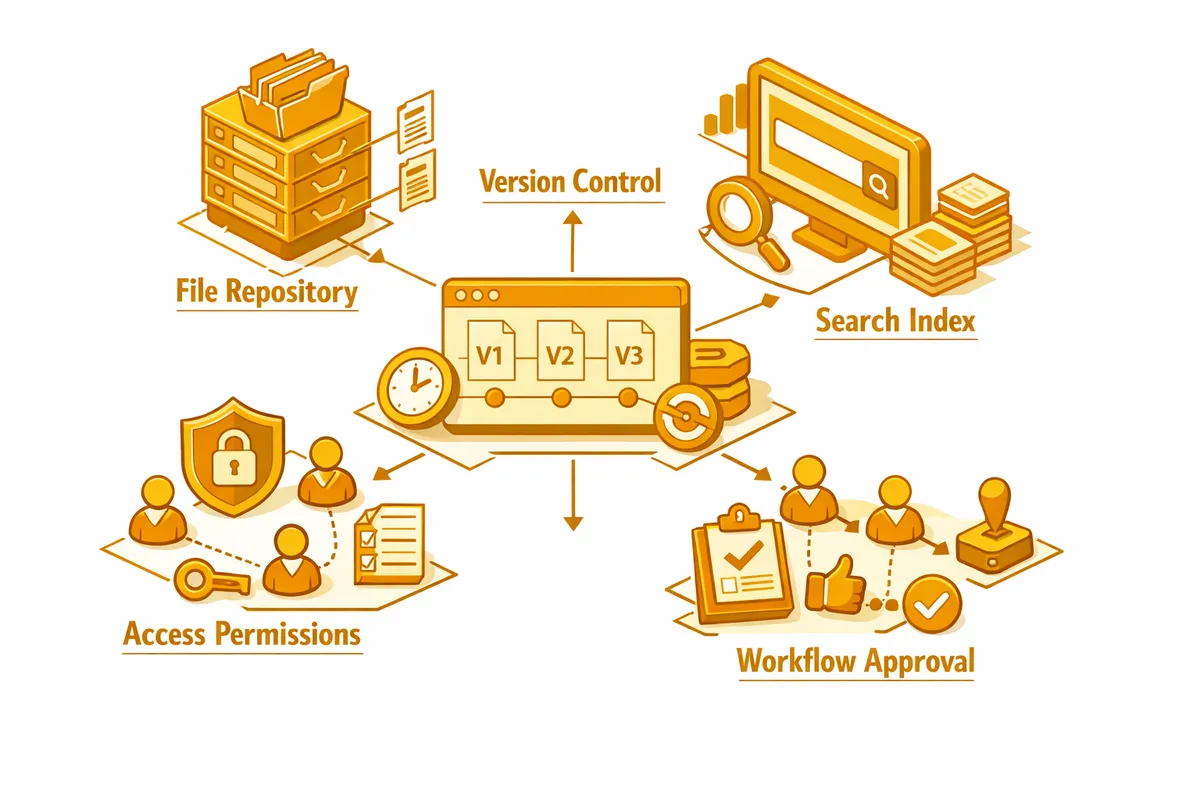
Version control is built to match the collaborative document environment in creative firms. When a client brief goes through multiple iterations, when a contract is redlined and returned twice before signing, when a deliverable receives client feedback and goes through two more revision cycles, the system preserves the full draft history. The current version is clearly marked. Prior versions are accessible for comparison. No more creative-brief-v4-FINAL-APPROVED naming conventions in shared drives.
Industries We Serve in River North
Advertising and creative agencies on Hubbard Street, Kinzie Street, and throughout River North manage client contracts, creative briefs, vendor agreements, usage rights, media plans, and deliverable approval records across concurrent engagements. A client-and-campaign-centric document system with version control for creative deliverables and access controls structured around account teams gives the agency a document infrastructure that scales with client growth rather than collapsing under it.
Design showrooms and trade firms in the Merchandise Mart manage purchase agreements, client trade accounts, product specifications, exclusivity arrangements, and project files. The scale of the Merchandise Mart's trade environment demands document organization that matches the pace of showroom operations. A system built around client and project organizes the documentation so any trade client's full purchase history and project record is retrievable in seconds.
Art galleries and dealer spaces along Superior Street, Clark Street, and the broader River North gallery corridor manage consignment agreements, provenance records, artist contracts, condition reports, and sale documentation for artwork that carries significant financial and legal weight. A document system with strict version control, access logs, and retention policies built around art market documentation protects the gallery's legal and financial position in every transaction and consignment.
Technology and media companies operating in River North's high-density office buildings manage client contracts, software licensing agreements, vendor agreements, IP assignment records, and data processing documentation. As these organizations grow, the document environment that was manageable at ten employees becomes unmanageable at fifty. A system built for the growth trajectory of a tech firm organizes documents from the start so scaling the team does not require rebuilding the filing system.
Boutique hotels and hospitality businesses near Ontario Street and the Rock N Roll McDonald's campus manage vendor agreements, event contracts, group booking documentation, and licensing records. Hospitality operations generate document volume across guest services, food and beverage, facilities, and HR that requires organization by function to stay manageable.
Professional services firms in River North, including law offices, financial advisers, and consulting practices, manage client files, engagement letters, deliverables, and compliance records. A client-centric taxonomy with version control for work product and access controls tied to engagement teams applies professional-grade document discipline to firms that have been managing with shared drives and email.
What to Expect Working With Us
1. Discovery and document mapping. We map your full document environment across every storage location: internal drives, cloud storage, project management tools, email, and physical files. For creative agencies, we pay particular attention to client document segregation and version control gaps. For galleries, we review provenance and consignment documentation practices against insurance and market standards.
2. Taxonomy and system design. We design the classification structure, metadata schema, version control configuration, access control model, and retention policy framework for your specific business type. River North agencies receive campaign and client-centric designs. Gallery clients receive artwork and consignment-centric designs. You review and approve the full architecture before implementation begins.
3. Implementation and migration. We build the system and migrate existing documents with consistent metadata applied during migration rather than carrying existing inconsistencies forward. Active client and project files are operational first, typically within eight to twelve weeks.
4. Training and ongoing support. Post-launch training for your River North team, including training for account and creative staff who will use the system daily, adoption monitoring, and a warranty period. Optional maintenance retainers as your client roster and document environment evolve.