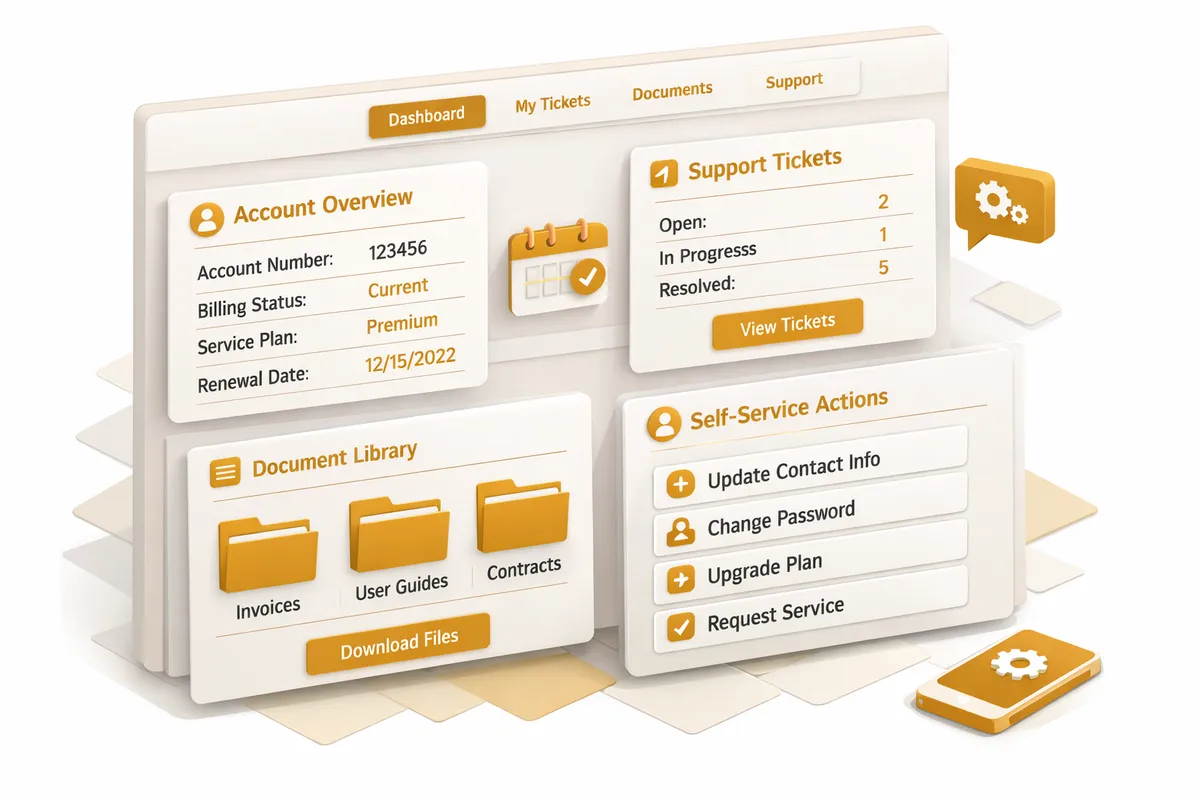
How We Build Customer Portals for River North
River North clients have high expectations. Collectors who patronize galleries on Superior Street have experience with sophisticated financial and legal portals. Architects specifying products at the Merchandise Mart use digital tools daily. Corporate event planners booking at River North hotels expect the same self-service fluency they have with airlines and enterprise software. The portal we build for a River North business must feel like it was designed for its specific client, not adapted from a generic template.
We begin by profiling the actual users: who they are, what they access most frequently, and what friction points exist in their current relationship with the business. For a gallery on Superior Street, the primary user might be a collector based in New York or Los Angeles who accesses the portal quarterly when reviewing available works or confirming consignment valuations. For a design showroom near the Merchandise Mart, the primary user is a local or regional designer who checks order status and specification sheets multiple times per week.
For River North galleries, portals typically include artwork inventory views scoped to the collector's holdings and wish lists, acquisition history with provenance documentation, consignment tracking, and a private communication channel for upcoming exhibitions and first-look opportunities. For hotels on Hubbard Street, portals cover reservation management, invoice history, rate agreements, and group booking submission. For design showrooms, portals include trade account status, product specifications and pricing, order tracking, and sample request management.
Authentication and data privacy requirements are higher for galleries than for most portal use cases. Collector portfolios contain sensitive financial information. Consignment values and acquisition prices are confidential by industry norm. We build gallery portals with encryption, strict access scoping, and session controls that protect both the collector's privacy and the gallery's confidential transaction data.
Industries We Serve in River North
Art galleries along the Superior Street and Ontario Street corridor build collector portals that give buyers private access to their acquisition history, current holdings, consignment tracking, and upcoming exhibition previews. For galleries managing international collector relationships, the portal replaces a fragmented email-and-phone communication model with a structured private channel that collectors access on their own schedule, from any location.
Boutique hotels and event venues on Hubbard Street and Clark Street build group booking portals for corporate travel programs and event planning clients who manage recurring reservations. A corporate account portal consolidates reservation history, invoice retrieval, credit tracking, and new booking submission in one place. Clients manage their hotel relationship the same way they manage an airline or car rental corporate account.
Design showrooms and trade vendors positioned near the Merchandise Mart build trade account portals for architects, interior designers, and commercial specifiers. The portal gives verified trade professionals access to specification sheets, pricing and lead time information, current order status, and sample request workflows without requiring them to contact a showroom representative for each interaction.
Advertising and creative agencies on Wells Street and Kinzie Street use client portals to structure the deliverable review and approval process that dominates mid-project communication. A portal that routes creative work for client review, captures feedback in context, and tracks revision rounds replaces the email thread archaeology that wastes time on both sides of the agency-client relationship.
Architecture and interior design firms serving commercial clients across River North and the broader Chicago market use project portals to share drawing packages, specification documents, and project milestone updates with developers, general contractors, and end clients. A structured portal keeps all project stakeholders working from the same information without requiring the design firm to manage individual distribution lists.
Professional services firms including lawyers and consultants in River North office buildings use client portals for matter status access, document retrieval, invoice review, and structured communication that keeps sensitive client information out of general email environments. For practices serving sophisticated clients, a well-designed portal reinforces the firm's positioning as a high-caliber, operationally disciplined service provider.
What to Expect Working With Us
1. Client profile research and access scope design. River North clients are not generic. Before designing a portal, we profile the actual users: their digital literacy, their access frequency, their privacy expectations, and the specific information they most often need to retrieve. The portal scope is built from that profile, not from a standard feature list.
2. Confidentiality architecture for sensitive client data. Galleries, financial advisers, and legal practices in River North handle client data that requires stronger confidentiality protections than most portal use cases. We design the encryption, access control, and audit logging layers specifically for your data sensitivity level before writing any application code. For gallery portals, this includes protecting acquisition prices and collector identity from other portal users.
3. Brand-matched user experience design. A River North gallery portal must feel like the gallery. A boutique hotel portal must reflect the property's aesthetic. We design portal interfaces that extend the visual identity and tone of the businesses they represent, not default to a generic software look. The client experience in the portal reinforces the client experience in person.
4. Integration and phased launch with client feedback. Portal data comes from your existing systems: inventory management, property management, CRM, project management. We build the integration that keeps portal data current and manage the launch in phases: internal review, then a selected pilot group of key clients, then full rollout. Piloting with actual clients before full launch surfaces usability issues while they are still easy to fix.