How We Build Custom CRM for River North
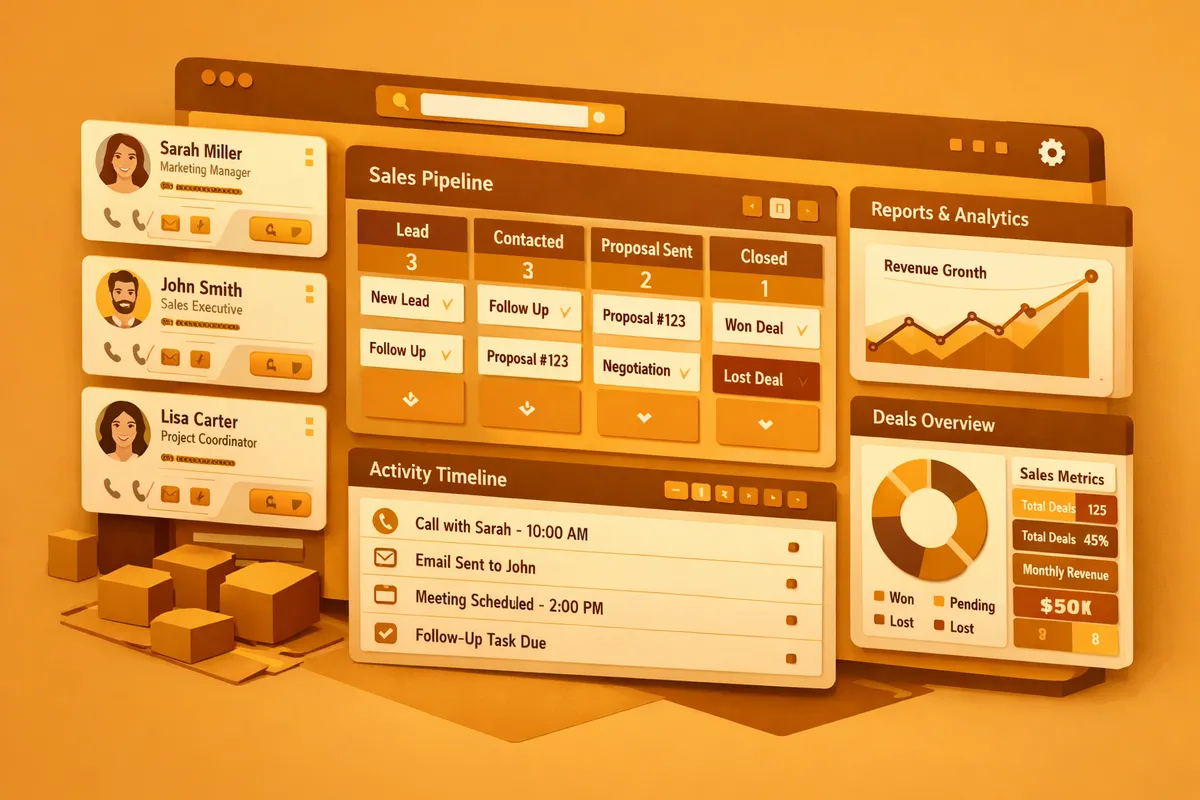
The first conversation is about your most important relationships, not your software stack. We ask you to describe your top ten accounts and how you manage them today. For a River North gallery, that means walking through how you track a collector's acquisition history, preferences, and communication frequency. For a design showroom, it means explaining how you manage the difference between a retail customer, a trade account, and an architect with an active project. For a boutique hotel, it means describing how you recognize a repeat guest and what you do with that recognition to deliver better service. Those descriptions become the data model for your CRM.
We build the data architecture around your actual relationship patterns before writing a line of code. Contact types, relationship tiers, activity logging, and reporting views are all designed around how your business thinks about its client relationships, not how a generic CRM vendor thought relationships should work. A gallery's contact record looks nothing like a hotel's guest profile, which looks nothing like a design showroom's trade account. Each gets its own fields, workflows, and views built from scratch.
Integration with your existing tools is central to adoption. A CRM that requires manual data entry loses to email within three months because staff revert to what is easier. We connect your CRM to your booking system, your point-of-sale, your email platform, and your calendar so that client activity logs automatically. When a collector purchases a piece at your Superior Street gallery, that transaction appears in their contact record without anyone copying it. When a trade client emails your showroom from Kinzie Street, that communication threads into their account history without a manual step.
Industries We Serve in River North
Galleries and art dealers on Superior Street use custom CRM to track collector acquisition history, exhibition attendance, inquiry patterns, and communication preferences. The CRM surfaces which collectors have expressed interest in a particular artist, flags contacts who have not been reached in a defined period, and automates exhibition preview invitations segmented by past purchase history. When a new piece arrives that matches a collector's documented preferences, the system prompts outreach without staff needing to search their memories.
Boutique hotels and hospitality venues near Marina City build guest profiles that accumulate preferences, special occasion history, room configurations, and stay patterns over years of visits. The front desk sees arriving guests' full history before they check in. Loyalty recognition is proactive rather than reactive. For guests who stay during Merchandise Mart trade shows annually, the CRM surfaces their previous stays and preferences automatically so each visit feels anticipated rather than generic.
Design professionals who work the Merchandise Mart twice a year deserve better than being treated like new contacts every market cycle. Design showrooms in the River North trade district use custom CRM to maintain detailed project histories, specification records, sample request logs, and account notes for architects, interior designers, and purchasing agents. The account manager who works a trade market visit in October has October's conversation notes, the preceding April's project status, and the client's active specification list in a single view.
Advertising and creative agencies in River North's commercial office buildings manage complex client relationships that span campaigns, contracts, and personnel changes. Custom CRM tracks campaign history, contact org charts, decision-maker preferences, renewal dates, and relationship health metrics. When a client's primary contact leaves their company, the CRM surfaces the account history and relationship notes so the agency's team can rebuild the relationship with context rather than starting from scratch.
High-end restaurants on Hubbard Street that manage private dining programs, corporate accounts, and repeat clientele use custom CRM to track table preferences, dietary requirements, occasion history, and account credit relationships. A guest who celebrated an anniversary in your private room last year gets a different pre-visit communication than a first-time reservation. A corporate account that books client dinners monthly receives different service attention than a walk-in booking.
Professional services firms along Clark Street and Wells Street maintain client relationship intelligence that spans engagements, referral histories, and industry connections. A custom CRM tracks which clients have referred others, which accounts are approaching contract renewal, which relationships have gone dormant, and which contacts should receive invitations to client events. Partner-level relationship management that previously lived in individual partners' heads becomes accessible to the entire team.
What to Expect Working With Us
1. Relationship mapping session. Before we touch any technology, we run a structured session where you describe your most important client relationships and how you currently manage them. This session reveals the data model your CRM needs to support and exposes the gaps in your current tools. For River North businesses managing collector relationships, trade accounts, or high-value repeat clientele, this session typically surfaces three to five relationship patterns that no off-the-shelf CRM handles correctly.
2. Architecture and prototype. We build a working prototype of your CRM's core contact model and primary views before committing to full development. You interact with real data structures, not wireframes, so we catch mismatches between the design and your actual workflow before they cost development time. For a gallery preparing for a Chicago Art Week exhibition cycle, we time this to align with your actual relationship management calendar.
3. Integration build and data migration. We connect your CRM to your existing tools and migrate your current contact data, cleaning and structuring it in the process. Most River North businesses have client data scattered across email, spreadsheets, a legacy booking system, and someone's personal contacts. We consolidate it into a single structured system without losing history.
4. Adoption and iteration. A CRM is only valuable if your team uses it. We run training tailored to each role that will touch the system, track adoption metrics in the first 60 days, and address friction points before they become habits. After 90 days, we conduct a review to add features your team has identified through real use and adjust views and workflows based on how the system is actually being used versus how we anticipated it would be used.