How We Build Computer Vision for River North
We start by understanding what visual data you are currently capturing and what business questions you need answered. Most River North businesses have existing camera infrastructure in place for security purposes. Computer vision adds the analytical layer to this existing infrastructure, extracting business intelligence from footage that was previously only available for security review.
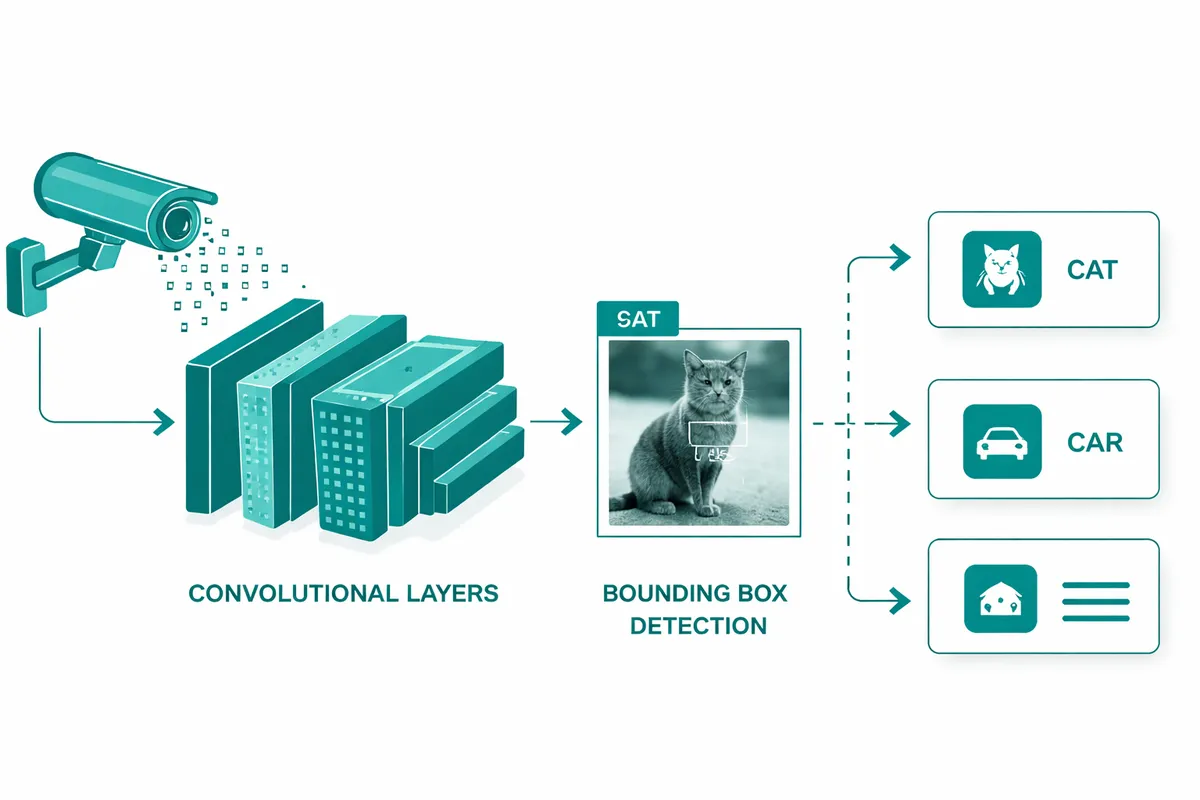
For each space and business question, we design a computer vision system with three analytical layers. The perception layer processes raw visual data to detect objects, people, and activities: a visitor standing in front of an artwork, a client browsing a product display, a hotel guest approaching the front desk, a server delivering a course. The analytics layer aggregates perception data into business metrics: average dwell time by artwork, traffic density by showroom zone, concierge interaction frequency by hour, average course delivery time by table section. The insight layer surfaces business-language intelligence from the analytics: "Artwork 14 receives 40 percent less viewing time than comparable pieces at the same price point despite equivalent wall position" or "The northeast showroom zone generates 60 percent of consultation requests but receives 35 percent of floor traffic."
We implement computer vision with privacy standards appropriate for River North's business environment. Gallery and hotel computer vision systems are designed to analyze behavioral patterns without identifying individuals: dwell time and movement analysis does not require face recognition or individual identification. We implement appropriate data handling, retention schedules, and access controls, and help you develop the visitor disclosure practices appropriate for your business context.
Industries We Serve in River North
Art galleries and fine art dealers on Superior Street and throughout the River North Gallery District use computer vision for visitor attention analytics: which artworks receive the most viewing time, how viewing time correlates with inquiry and purchase, how visitor movement through galleries varies by exhibition type and opening event versus regular hours. Gallery directors use visual intelligence to make evidence-based decisions about artwork positioning, exhibition layout, and acquisition focus.
Design showrooms and Merchandise Mart trade resources use computer vision for floor traffic analysis: which product displays attract the most browsing, which areas generate the highest consultation rates, how consultant coverage patterns align with actual client traffic distribution. Showroom managers use visual intelligence to optimize floor layout, staffing deployment, and inventory presentation.
Boutique hotels and luxury hospitality businesses near Kinzie Street use computer vision for guest behavior analytics in lobby and common areas: arrival pattern timing, concierge interaction demand by hour, lounge and restaurant utilization patterns, and the behavioral signals that indicate guests who need assistance. Hotels use visual intelligence to optimize staffing coverage, service proactivity, and space utilization.
Fine dining restaurants and private event venues on Hubbard Street use computer vision for service flow analytics: table utilization rates, course timing analysis, server coverage patterns, and the relationship between service timing and occupancy levels. Restaurants use visual intelligence to identify where service process improvements would accelerate table turns without degrading guest experience.
Luxury retail and boutique operators in River North use computer vision for shopper path analysis, display engagement tracking, fitting room utilization, and conversion funnel visualization from entry to purchase. Retailers use visual intelligence to optimize store layout, display positioning, and staff deployment.
Corporate event and private dining venues throughout River North use computer vision for event space capacity management, guest flow analysis during events, service timing optimization, and post-event analytics that inform layout and staffing decisions for future events of similar type and size.
What to Expect Working With Us
1. Visual data audit and use case definition. We assess your existing camera infrastructure, map the business questions that visual intelligence could answer, and design a computer vision implementation appropriate for your space and business type. We identify which use cases deliver the highest decision value relative to implementation complexity.
2. Computer vision deployment and calibration. We deploy computer vision software and models configured for your specific spaces, calibrate detection accuracy for your environment's lighting conditions and traffic patterns, and integrate analytics into dashboards your management team uses. We validate accuracy against manual observation before relying on automated analytics for decisions.
3. Baseline establishment and insight development. We run the system for four to six weeks to establish behavioral baselines for your space before drawing conclusions that inform decisions. Baseline data establishes what normal looks like, against which meaningful deviations become visible. We develop the business-language insight reports your team uses for operational and strategic decisions.
4. Ongoing monitoring, accuracy maintenance, and expansion. We monitor computer vision accuracy as your space and operations evolve, update detection models when layout changes affect camera coverage, and help you add new use cases as your team becomes familiar with the intelligence computer vision provides. Quarterly reviews identify where the system's outputs are informing decisions and where additional coverage would add value.