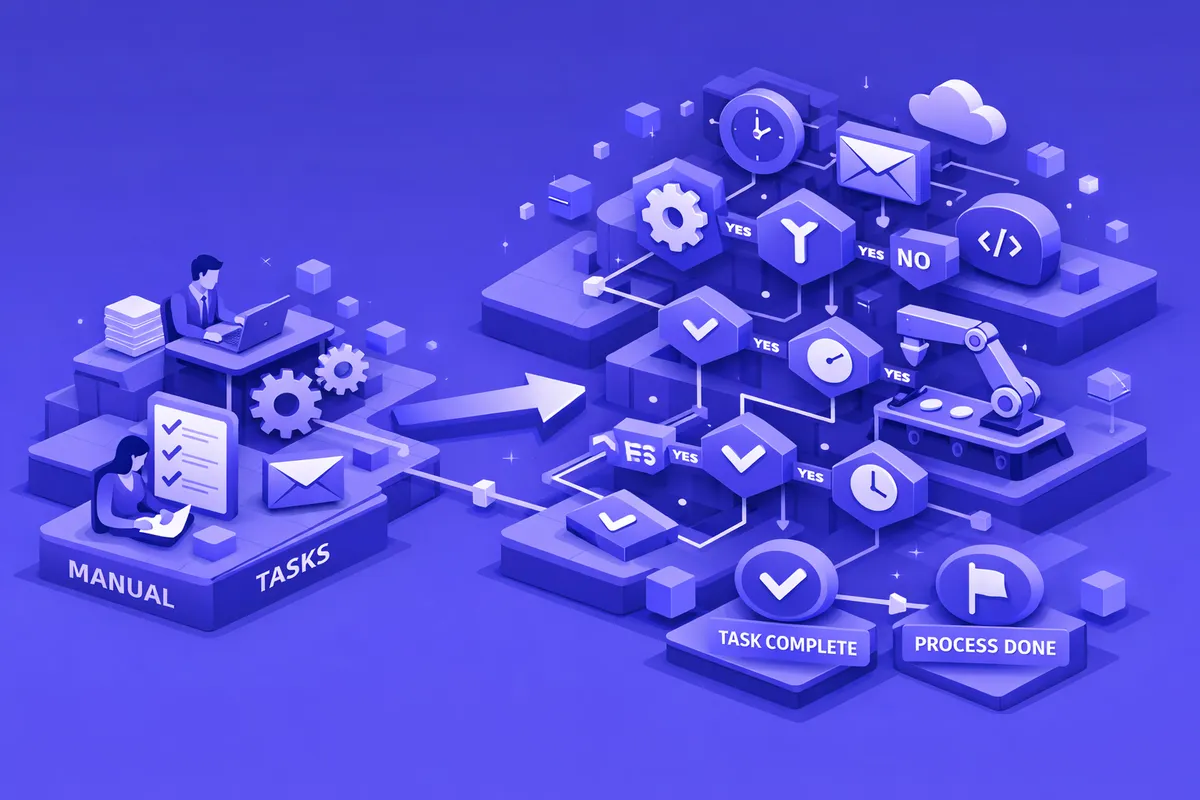
How We Build Business Process Automation for River North
Our engagement starts by mapping how work actually moves through your business, not how your org chart suggests it should. We conduct working sessions with the people doing the tasks, not just the managers overseeing them. A front desk manager at a hotel near the Merchandise Mart knows exactly where the check-in workflow breaks down on the day a trade show opens. A gallery director on Superior Street can identify which part of the post-opening follow-up sequence falls apart when multiple collectors need simultaneous attention. That ground-level knowledge shapes which automations to build first.
We prioritize automations by impact-to-complexity ratio. The highest-return automations for River North businesses tend to involve recurring, high-stakes workflows: vendor invoice processing, client intake and onboarding, reservation and appointment management, purchase follow-up sequences, and internal approval chains for time-sensitive decisions. We build these first, measure the time and error reduction, and use that data to justify the next tier of automations.
Integration is where most automation projects stall, and we address it directly. Your restaurant POS, your hotel property management system, your gallery CRM, and your design firm project management tool each hold data that should be talking to your other systems. We build the connectors so information flows without manual re-entry. A purchase made in your gallery's point-of-sale system triggers an automatic confirmation email, updates your collector database, flags the piece as sold in your inventory, and queues a follow-up for the artist's record without anyone touching a keyboard between those steps.
Industries We Serve in River North
Galleries and art dealers along the Superior Street corridor use automation to manage the full cycle from exhibition planning to post-sale follow-up. Artist agreements, consignment tracking, press release distribution, opening night RSVPs, and collector thank-you sequences all run on triggers rather than staff reminders. When a new acquisition comes in, the workflow initiates automatically: photography request, catalog entry, condition report, and provenance documentation queued in sequence.
Boutique hotels and hospitality venues near Marina City and along the riverfront deploy automation to keep guest-facing service seamless while reducing back-office labor. Automated pre-arrival sequences send room preference confirmations, parking instructions, and concierge recommendations before the guest lands. Post-checkout sequences trigger review requests and loyalty follow-up without front desk staff initiating each one manually.
Restaurants on Hubbard Street automate the operational repetition that otherwise consumes manager time during service. Weekly vendor ordering based on par levels, staff scheduling alerts, reservation confirmation sequences, and end-of-night reporting all run without a manager manually touching each step. During high-volume periods like Chicago Restaurant Week, the automation absorbs the reservation surge without adding administrative overhead.
Design showrooms in the Merchandise Mart area use automation to manage the trade account lifecycle: application intake, approval routing, account setup, and sample request fulfillment all flow through defined processes instead of ad hoc email chains. Follow-up sequences for quotes and custom orders run on timers so prospects receive consistent outreach even when the sales team is occupied with floor traffic.
Advertising and creative agencies concentrated in River North's office buildings automate client reporting, project status updates, invoice generation, and contract renewal notifications. Account managers stop spending Friday afternoons assembling status decks manually; the automation compiles performance data, formats the report, and sends it to the client on schedule.
Professional services firms in the Wells Street and Clark Street corridors automate client intake, document collection, appointment scheduling, and follow-up sequences for prospects who have not yet converted. Intake forms trigger automatic document requests, calendar invitations, and confirmation sequences so new clients have a polished onboarding experience before they speak to anyone on your team.
What to Expect Working With Us
1. Workflow excavation. We spend the first week documenting every recurring manual process in your business, ranked by time cost and error frequency. For a River North restaurant, that often surfaces three to four hours of daily manager time going to tasks that can be fully automated. For a gallery or hotel, the number is typically higher. This inventory becomes the prioritized automation roadmap.
2. Build sequence and pilot. We build your highest-impact automation first and run it alongside your existing process for two weeks before cutting over. This catches edge cases specific to your business before automation is handling things solo. A Merchandise Mart showroom with seasonal trade show traffic, for example, needs its automations tested against peak-volume scenarios before they run unsupervised.
3. Integration and handoff. We connect your automations to the tools you already use, train the team members who will interact with them daily, and document every workflow so you are not dependent on us for ongoing operation. Most River North businesses are running their automations independently within 30 days of launch.
4. Quarterly reviews tied to your calendar. We schedule optimization reviews around River North's operational peaks: before the Merchandise Mart spring market, before Chicago Art Week, and before the holiday dining season. Each review adds new automations or adjusts existing ones to match what your business has learned since the last cycle.