How We Build API Integration Services for River North
River North integration engagements start with a systems audit focused on operational reality, not technical architecture. We walk through a working week with your team: where data originates, where it needs to land, and every step currently taken to move it. For a Hubbard Street agency, that conversation typically surfaces three to six manual processes that consume between two and eight hours per week in total. Those processes are our integration targets.
From the audit, we build a priority stack ordered by labor savings and risk reduction. For a creative agency, the highest-priority integration is almost always the connection between project management and accounting: when a project closes in the PM tool, the billable data flows directly to the invoice queue rather than requiring a manual export. For a Merchandise Mart showroom, it is typically the connection between the product catalog and the order management system: price changes flow automatically, and orders land in fulfillment with the correct current pricing.
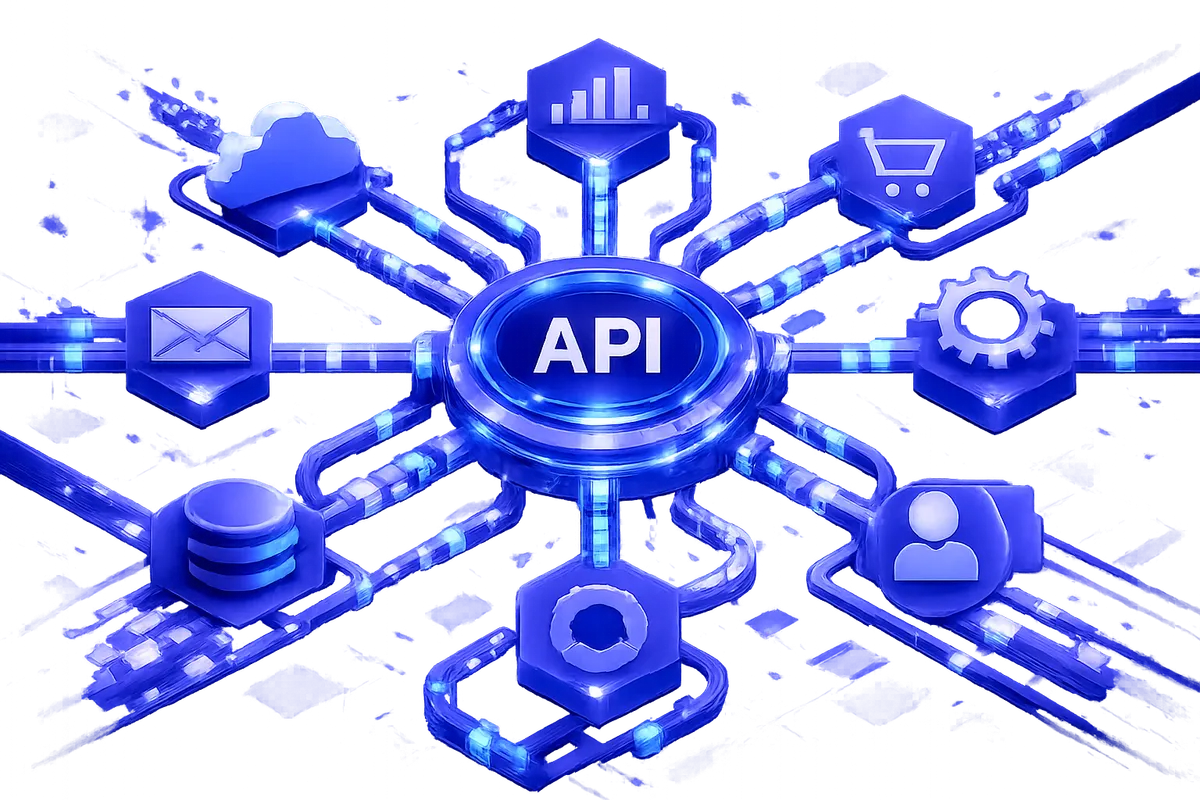
We work with the APIs your tools already expose. Most major project management platforms, CRM systems, accounting tools, and e-commerce platforms have documented APIs. We use native connectors where they exist, middleware integration platforms where they reduce complexity, and custom-built connectors only where the systems require it. River North agencies running tools like HubSpot, QuickBooks, Monday.com, or Harvest have mature integration options available. Niche design industry tools sometimes require more custom work, and we build those integrations with the same monitoring and reliability standards as the others.
Every integration includes error alerting, retry logic, and a monitoring dashboard. A pipeline that fails silently lets systems drift out of sync while the team assumes data is flowing correctly. River North businesses cannot afford invisible failures when client deliverables and financial accuracy are at stake.
Industries We Serve in River North
Advertising and creative agencies on Hubbard Street and Kinzie Street integrate project management, time-tracking, CRM, and accounting systems to give account teams real-time profitability data at the project level. When billable hours flow from the time-tracking tool to the project system and then to accounting without manual export, the agency knows whether a project is on budget while there is still time to act, not after the invoice has been sent.
Along Superior Street, art galleries and design showrooms connect inventory management systems, point-of-sale platforms, and accounting software. For a gallery managing a rotating exhibition calendar, knowing which pieces have sold, which are on hold, and which are available for consignment requires that inventory data update in real time across every platform where availability is displayed or tracked.
Boutique hotels and hospitality properties on Wells Street and Clark Street integrate property management systems with channel managers, revenue management platforms, and accounting software. The daily revenue reconciliation that currently takes a night auditor two hours becomes an automated overnight process when the PMS, the channel manager, and the accounting platform share a clean integration layer.
Near the Merchandise Mart, design and furniture trade showrooms connect catalog management systems with order platforms, commission tracking tools, and client account portals. When a trade client logs into their portal and sees accurate real-time inventory rather than a cached snapshot from last week, that accuracy is a competitive advantage that drives repeat sourcing.
Professional services firms on Ontario Street and Superior Street, including law offices and consulting practices, integrate CRM platforms with practice management tools, billing systems, and client communication platforms. The integration between CRM and billing is often the highest-value connection: when a matter or engagement in the CRM links directly to billing records, the business development team can track revenue per client relationship without running manual reports.
Restaurant groups and food and beverage operators in the dense hospitality corridor connecting Hubbard and Clark integrate point-of-sale systems with inventory management, accounting, and payroll platforms. When each location's POS data flows to accounting automatically at the end of each service, the finance team closes the month without chasing individual store reports.
What to Expect Working With Us
1. Operational systems audit. We document every tool in your stack, every manual data-transfer step your team currently performs, and every place where data exists in more than one system without a reliable sync. The audit produces a complete map of your integration landscape, including the informal workarounds that have become load-bearing but were never intended as permanent solutions.
2. Integration priority matrix. We rank each potential integration by three factors: labor saved per week, operational risk reduced, and implementation complexity. You approve the sequence. We execute in phases so each phase delivers measurable value before the next begins. River North businesses typically see the largest return from the first two or three integrations, which almost always involve the core operational systems: project management, CRM, and accounting.
3. Build and parallel-run validation. Every integration runs alongside your existing manual process for at least two full operational cycles before the manual step is retired. We validate outputs against your known correct data. You confirm the integration is producing accurate results before you stop doing the manual step. Nothing goes live on trust alone.
4. Monitoring and operational handoff. Every live integration includes active monitoring: error alerts sent to your team when a sync fails, volume anomaly detection when data volumes fall outside normal ranges, and a weekly summary of what ran and what required attention. Your team inherits full visibility into integration health, not a black box that requires a call to us whenever something looks wrong.