How We Build AI Integrations for River North
We begin with a system inventory: every tool your River North business uses, how data currently moves between them, and where the manual steps are. The manual steps are the integration opportunities. Every time a staff member copies data from one system to another, that is a workflow that automation can handle. Every time someone has to check three different systems to answer a question about a client or a transaction, that is a visibility gap that integration can close.
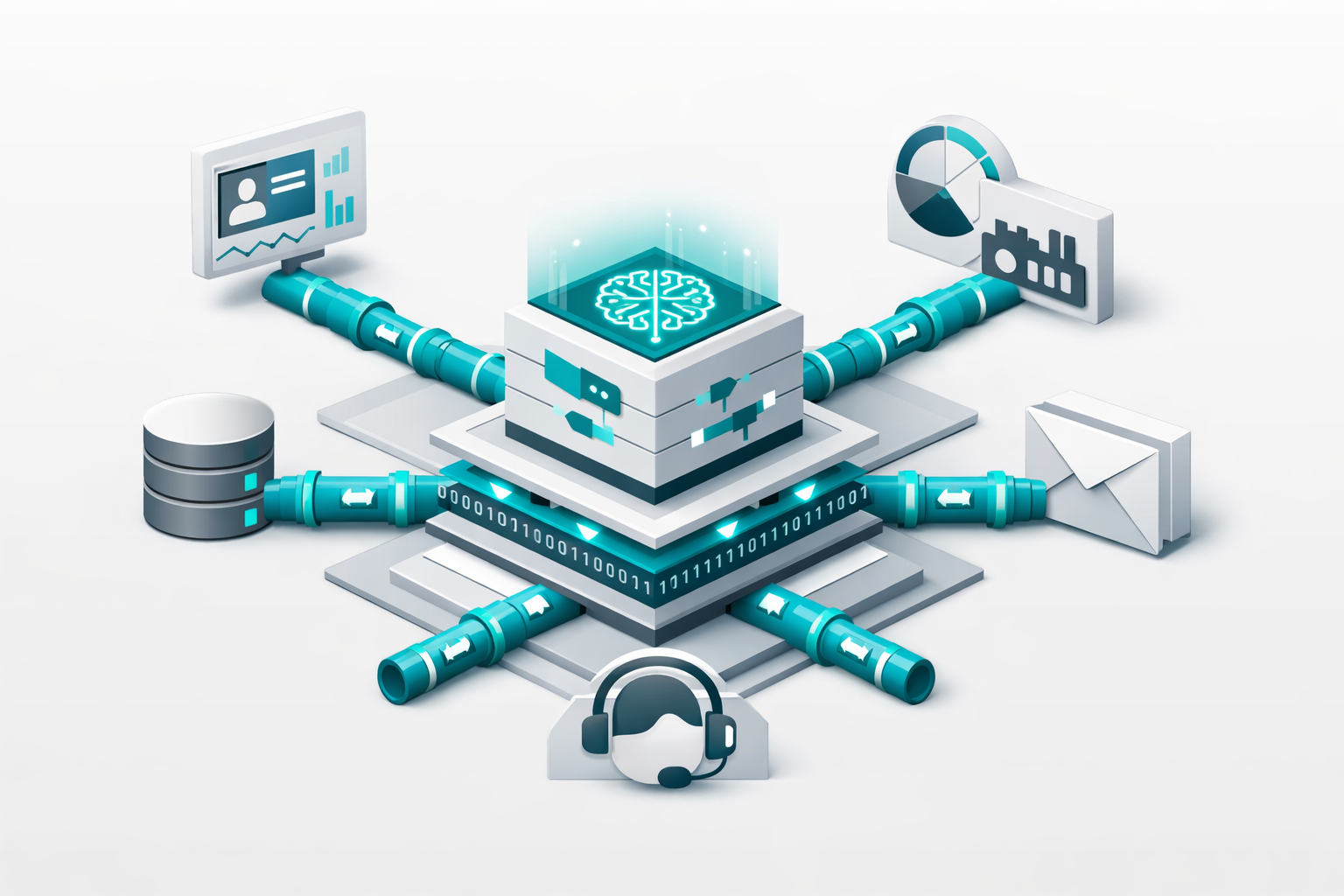
We design the integration architecture for your specific systems and use cases. Some integrations are straightforward point-to-point connections between two tools with standard APIs. Others require a middleware layer that translates between incompatible data formats or orchestrates multi-step workflows. For River North businesses with complex tool stacks, we design an integration hub that connects all major systems through a common layer rather than building individual point-to-point connections that become difficult to maintain as systems change.
We build the AI layer where it adds genuine value. Not every workflow benefits from AI. Routing a purchase order confirmation to the right folder is an automation task that does not require AI. Extracting key specifications from an unstructured email request, classifying an inquiry by project type and client tier, or drafting a personalized follow-up based on past interaction history: these are tasks where AI adds capabilities that simple automation cannot provide.
We test integrations against real data and real edge cases before deploying to production. Integration failures that lose data, create duplicate records, or trigger incorrect automated responses are more disruptive than the manual processes they replace. We validate thoroughly before go-live and monitor closely in the first weeks of production operation.
Industries We Serve in River North
Art galleries and dealers on Superior Street use AI integration to connect gallery management systems, collector CRMs, provenance research tools, email marketing platforms, and accounting software so exhibition workflows, collector communications, and financial records stay synchronized without manual reconciliation.
Showroom vendors at the Merchandise Mart use AI integration to connect CRM systems with specification management tools, pricing databases, inventory systems, and delivery tracking so sales teams have complete, current information without switching between applications and manually reconciling data.
Boutique hotels on Kinzie Street and Ontario Street use AI integration to connect booking systems, revenue management platforms, guest preference databases, and communication tools so personalization is operational rather than aspirational, and revenue management decisions are based on complete, current data.
Restaurants and hospitality venues near Hubbard Street use AI integration to connect POS systems, reservation platforms, inventory management, and marketing tools so menu and pricing decisions are informed by accurate, current sales data and marketing reaches the right diners at the right time.
Creative agencies and professional services firms between Clark Street and Ontario Street use AI integration to connect project management, time tracking, billing, and client communication systems so project profitability and client relationship health are visible in real time rather than available only at month-end.
Real estate and property management firms near Marina City use AI integration to connect leasing systems, maintenance request platforms, tenant communication tools, and financial reporting so portfolio management decisions are based on complete information and tenant communication is consistent and timely.
What to Expect Working With Us
1. System inventory and integration design. We map your full tool stack, identify the manual handoffs and data gaps, and design the integration architecture that closes the most important gaps with the least implementation risk. We prioritize integrations by impact: which connections will save the most time, eliminate the most errors, or enable the most valuable AI capabilities.
2. Integration development and testing. We build the integrations, configure the AI capabilities where relevant, and test against real data including edge cases that reveal brittleness in the logic. We do not deploy integrations that behave correctly only in ideal conditions.
3. Deployment and monitoring. We deploy to production with monitoring in place from day one. Integration failures need to be caught immediately, not discovered when a staff member notices that data has been missing from the CRM for two weeks. We configure alerts for failures and anomalies and review logs proactively in the first month of operation.
4. Documentation and ongoing support. We document the integration architecture so your team understands how data flows through the system and what to do if something breaks. As your tool stack evolves and your River North business grows, integrations need to evolve with it. We provide ongoing support for changes, additions, and optimization.