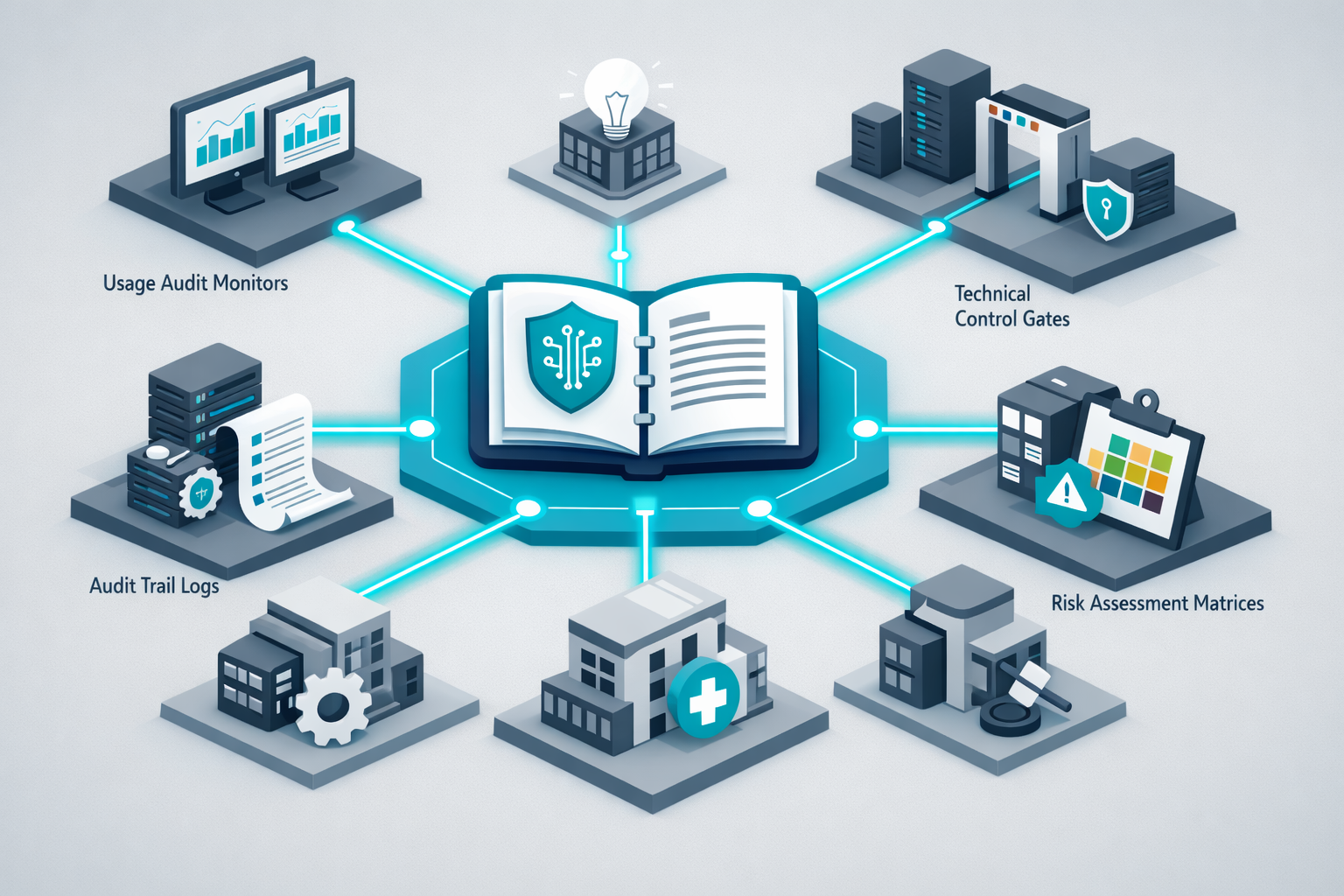
How We Build AI Governance for River North
We start with an AI use inventory. We identify every AI tool, platform, and workflow currently deployed or under evaluation in your organization: the contract drafting assistant used by associates, the sentiment analysis tool running on guest review data, the image generation tools deployed for marketing, the predictive scheduling tool used for staffing. Most River North businesses discover they are using more AI tools than they formally authorized. The inventory surfaces the scope.
For each tool and use case, we assess the governance dimensions: what data is the tool accessing, who is the data provider and what are their terms, what outputs is the tool producing and what decisions are being made on those outputs, and which regulatory frameworks apply to those decisions. The assessment produces a risk profile for each use case: low risk (internal productivity tools with no client data), medium risk (tools handling client data under terms that require review), and high risk (tools producing outputs that could constitute regulated professional work product).
We draft an AI use policy appropriate for River North's professional environment. The policy addresses authorization requirements for new AI tools, data handling standards for each risk tier, review requirements for AI-generated work product before it reaches clients, incident response procedures for AI-related failures, and employee training expectations. We help leadership adopt the policy and integrate it into existing compliance frameworks.
We establish audit readiness documentation: records of tools in use, governance assessments completed, policy versions and effective dates, training completion, and incident logs. When a client, insurer, or regulator asks about AI governance practices, the documentation is organized and accessible.
Industries We Serve in River North
Law firms and legal service providers along Wells Street and Clark Street receive AI governance frameworks that address attorney-client privilege in AI tool selection and use, bar association ethics requirements around AI-generated work product, client data protection obligations, and disclosure practices for AI involvement in legal analysis. We help firms adopt productivity-improving AI tools without creating professional responsibility exposure.
Architecture and interior design firms serving clients through the Merchandise Mart ecosystem deploy governance frameworks covering IP protection in AI-assisted design work, confidentiality obligations for client specifications, procurement-sensitive information handling, and the attribution and liability questions that arise when AI tools contribute to professional deliverables.
Financial advisory and accounting firms in River North adopt governance frameworks addressing SEC and FINRA guidance on AI in client-facing communications, data residency requirements for client financial information, conflict-of-interest screening in AI-assisted advisory work, and documentation requirements for regulated financial advice.
Art galleries and fine art dealers on Superior Street and throughout the River North Gallery District implement governance covering AI tools in artist portfolio analysis, copyright dimensions of AI-generated marketing materials, fiduciary obligations when AI tools contribute to valuation or acquisition recommendations, and collector data privacy under applicable frameworks.
Boutique hotels and hospitality businesses near Kinzie Street adopt governance frameworks for AI guest experience tools: GDPR and CCPA compliance for international and California guest data, PCI-DSS scope management when AI tools touch payment workflows, and bias and fairness review for AI tools that affect guest service decisions.
Corporate event and professional services venues throughout River North implement governance for AI tools used in event planning, client communication, vendor management, and staff scheduling that ensures data handling obligations and professional liability considerations are addressed before deployment.
What to Expect Working With Us
1. AI use inventory and risk assessment. We identify all AI tools in use or under evaluation across your organization and assess each for governance risk: data handling, regulatory applicability, output liability, and compliance gap. The inventory and assessment define the scope of governance work needed.
2. Policy development and documentation. We draft an AI use policy appropriate for your regulatory environment and professional obligations, along with data handling standards, review requirements for AI outputs, and incident response procedures. We work with your leadership and legal counsel to finalize and adopt the policy.
3. Audit readiness framework and training. We build the documentation infrastructure for ongoing governance: tool logs, risk assessments, policy versions, training records. We train staff on the AI use policy and on their responsibilities under it. We help integrate AI governance into your existing compliance and risk management processes.
4. Ongoing governance monitoring and updates. AI regulatory guidance is evolving rapidly. We provide quarterly updates as FTC, SEC, state bar, and sector-specific guidance develops. We review your AI tool inventory as new tools are adopted and assess governance implications before deployment rather than after problems emerge.