How We Build Accounting Automation for River North
We start by mapping the specific processes that consume the most financial operations time in your business. River North businesses span more distinct operating models than almost any other Chicago neighborhood, so the process map is specific to your industry, not generic. A gallery's consignment reconciliation process looks nothing like a restaurant's nightly revenue audit, and a hotel's revenue accounting looks nothing like an ad agency's project billing cycle.
Once the map is complete, we identify automation candidates using the same test: does this step follow a deterministic rule? Consignment settlement calculations follow a rule. Nightly POS reconciliation follows a rule. Commission calculations based on product category follow a rule. Revenue recognition based on milestone completion follows a rule. Most River North businesses find that half to two-thirds of their manual close work is rule-driven and therefore automatable.
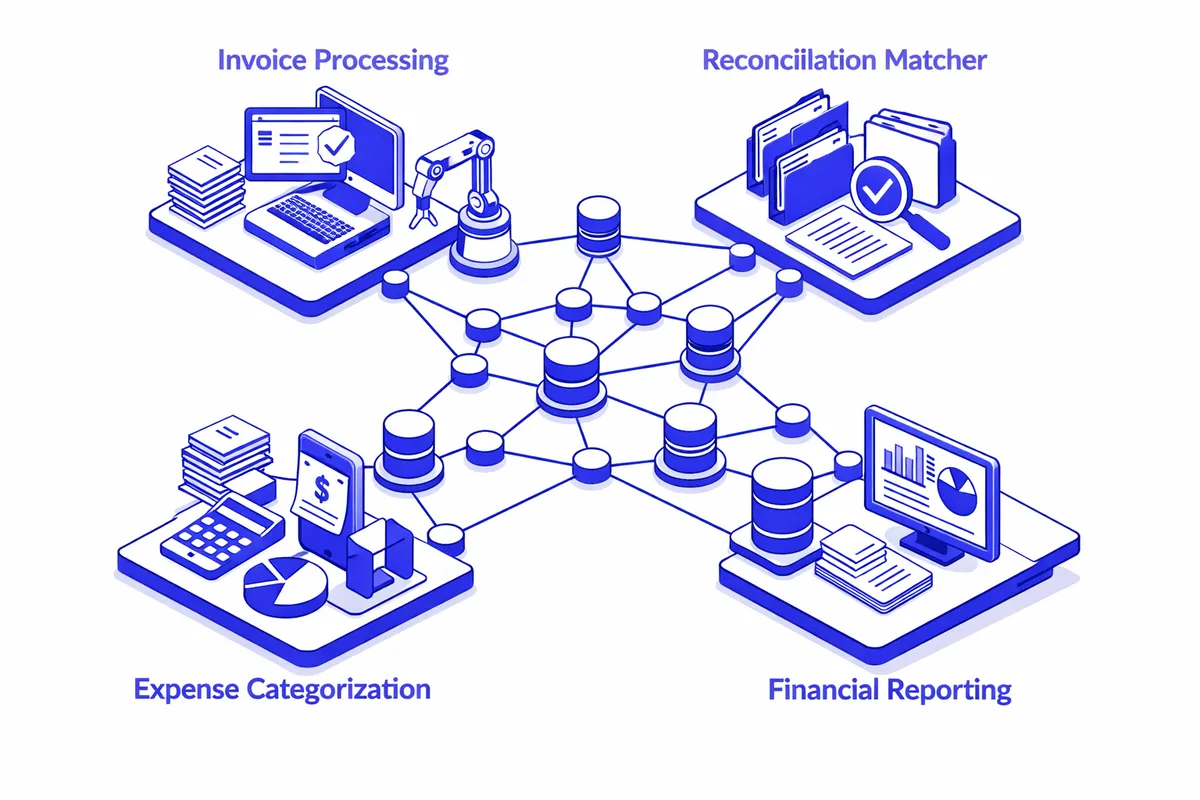
We build on top of your existing accounting software rather than replacing it. Gallery software like Artlogic, hotel property management systems like Opera or Mews, restaurant platforms like Restaurant365 or QuickBooks with POS integration, and agency tools like Harvest or FunctionFox all have data outputs we can work with. The automation layer sits between your operational systems and your accounting system, moving data according to the rules you approve.
Before any automation goes live, we run it against three months of historical transactions and compare automated outputs against your actual records. No live transaction touches an automated workflow until the historical test produces consistent matches.
Industries We Serve in River North
Art galleries and dealers along the Superior Street gallery district use accounting automation for consignment inventory reconciliation, artist settlement calculations, and sales reporting. When a major work sells, the settlement calculation, general ledger posting, and artist payment trigger automatically based on the consignment terms already in the system. Month-end gallery reconciliation that previously took two days runs in minutes.
Boutique hotels near Marina City and along Ontario Street deploy automation for daily revenue reconciliation across rooms, food and beverage, and ancillary revenue streams. The automated nightly close compares PMS system totals against payment processor settlements and posts the reconciled entries by morning. Revenue managers start the day reviewing variances, not manually pulling reports.
Advertising and creative agencies on Kinzie Street and throughout River North use accounting automation for project billing: retainer drawdown tracking, milestone invoice generation, and hours-to-billing reconciliation from time tracking tools. When a project closes, the final billing calculation, client invoice, and revenue recognition entry all trigger through a single workflow rather than requiring coordination across three staff members.
Restaurants and entertainment venues on Hubbard Street deploy automation for nightly POS reconciliation, gratuity allocation, and event billing. High-volume River North restaurants that run both dining room and private event operations on the same night need separate reconciliation tracks for each revenue stream. Automation handles both simultaneously and delivers a consolidated close report by midnight.
Design showrooms in the Merchandise Mart use automation for purchase order tracking, delivery confirmation, accounts payable processing, and designer commission calculation. Custom furniture and fixture orders that span months and involve partial deliveries create complex accounts payable workflows that automation handles systematically once the rules are defined.
Professional services firms on Wells Street and Clark Street, including law firms, consulting practices, and financial advisors that serve River North's business community, use automation for time and billing reconciliation, retainer drawdown tracking, and client reporting. The billing cycle that once required a paralegal to manually pull time records and generate invoices now runs on a schedule without intervention.
What to Expect Working With Us
1. Industry-specific process mapping. River North's business mix is too diverse for a generic accounting review. We map your specific close cycle in detail, tracing every manual step from source transaction to general ledger posting. Gallery owners, hotel controllers, and agency finance directors get different maps, because their processes are genuinely different.
2. Automation sequencing by ROI. Not every automation delivers equal time savings at equal build cost. We prioritize the build sequence based on where your team spends the most hours on rule-driven work, so the first automations deployed deliver the largest immediate return.
3. Historical data validation. Every automation runs against your real historical data before touching live transactions. For galleries, that means running consignment settlements against completed sales records. For hotels, it means running nightly reconciliations against three months of archived shift reports. We do not go live until the automated output matches your actuals.
4. Documented workflows your team controls. Every automation we build is documented at the rule level. Your controller or finance manager understands exactly what each automation does, what triggers it, and what to check when an exception appears. We train your team to manage the system before we hand it off.