How We Build UI/UX Design for Ravenswood
Research precedes pixels. For a Ravenswood brewery building an online ordering flow, we start by talking to the people who will use it: taproom regulars, distribution buyers, and the staff who process the orders. For a design studio building a client portal on Damen Avenue, we interview current clients about what information they want during a project and what frustrates them about the current communication process.
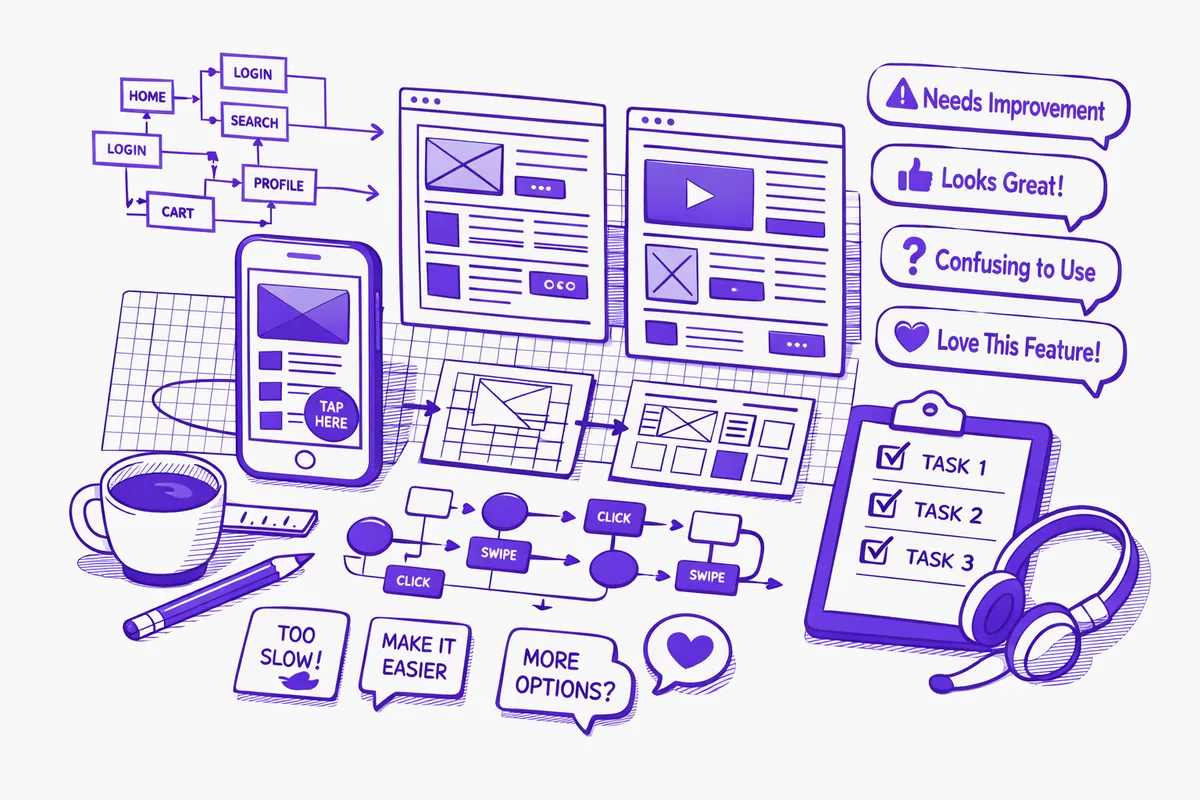
User research produces the prioritized requirements: what the interface must do, in what order of importance, and for which user type. From those requirements, we build the information architecture first: the site map, the navigation structure, and the task flows for each user goal. Architecture review precedes any visual design because changing a navigation model after visual design begins is expensive.
Visual design follows with wireframes at low fidelity, reviewed and approved before high-fidelity screens are produced. This sequence saves revision cycles and keeps design decisions grounded in the functional requirements rather than aesthetic preferences. For Ravenswood businesses with strong visual identities, the high-fidelity screens translate the brand system into a digital context that is both recognizable and distinct from print or packaging applications.
Prototyping and usability testing complete the design process before handoff to development. We test with real users matching the target audience, not with the client's team, because the team already knows how to navigate the product. The testing reveals where real users get confused or lost, and the design is refined before it is built rather than after.
Industries We Serve in Ravenswood
Craft breweries and distilleries along Ravenswood Avenue need UX design for two distinct products: the consumer website that serves casual visitors and the member-facing platform that serves subscription club members and wholesale buyers. We design each with its user's specific goals in mind, using a shared visual system that maintains brand coherence without forcing the same interface model onto users with fundamentally different needs.
Artisan manufacturers and specialty producers near Montrose Avenue often have a digital interface problem rooted in complexity: their products require a custom configuration process that involves multiple decisions in sequence. Poorly designed configuration flows lose customers at the point where commitment is required. We design those flows to guide users through complexity without creating friction, using progressive disclosure to reveal options as they become relevant rather than presenting everything at once.
Design studios and creative agencies on Damen Avenue invest in UI/UX design as a business development signal. A studio with a well-designed website and client portal communicates its own capability through the quality of its digital tools. We design these engagements with dual audiences: the prospective client evaluating the studio's work and the current client using the portal daily.
Independent restaurants and cafes near Welles Park need UX design for mobile ordering and reservation flows that convert browsing intent into seated guests. The research consistently shows that restaurant websites lose conversions at the reservation step when the booking interface requires too many fields or does not communicate availability clearly. We redesign those flows around the guest's decision process rather than the restaurant's administrative preferences.
Yoga studios and wellness businesses on Lawrence Avenue need member-facing UX that makes class booking and schedule management feel effortless on a phone. The key design problem in wellness platforms is reducing the steps between the user's decision to book a class and the confirmed booking. Every additional tap or screen view in that sequence loses members. We map and compress those flows.
Specialty retail shops near the Ravenswood Manor neighborhood use UX design for product catalog browsing and checkout flows that match the considered, deliberate shopping behavior of their customer base. Ravenswood specialty retail customers are not impulsive buyers. The UX needs to support informed decision-making with clear product information, visible provenance details, and a checkout flow that does not create anxiety.
What to Expect Working With Us
1. User research and requirements definition. We conduct three to five user interviews per primary user type, review analytics data from the current digital presence, and produce a prioritized requirements document. For Ravenswood businesses that have never done formal UX research, this step surfaces assumptions about user behavior that the data consistently contradicts.
2. Information architecture and wireframe review. We present the navigation structure, task flows, and wireframe screens for review before any visual design begins. Feedback at this stage is inexpensive to incorporate. Feedback at the visual design or development stage is not. We structure the engagement to front-load the design decisions that matter most.
3. Visual design and prototype. High-fidelity screen design follows approved wireframes. We build a clickable prototype for usability testing so the design is tested against real user behavior before going to development. For Ravenswood clients with strong existing brand systems, the visual design phase includes a digital brand application guide that covers type scales, component states, and interaction patterns.
4. Handoff and development support. Design handoff includes production-ready files, component specifications, and a design system document that development teams can reference throughout the build. We remain available for design questions during development to prevent interpretation drift between the approved design and the built product.