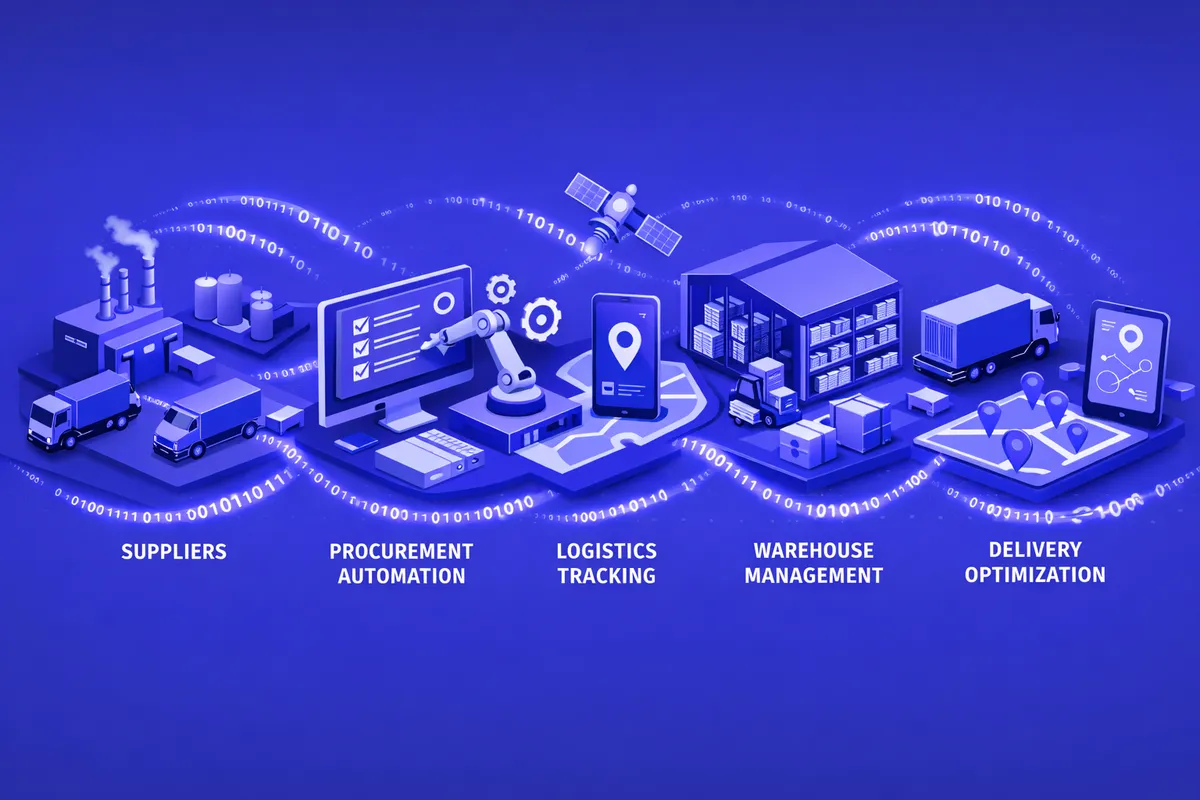
How We Build Supply Chain Automation for Ravenswood
Ravenswood's manufacturing and production businesses use diverse operational tool stacks. Some producers manage inventory in spreadsheets. Others use production management platforms, accounting software, or specialized brewery management tools like Ekos or OrchestratedBEER. We design automation that works with your existing tools rather than requiring replacement. The integration between your inventory tracking, your production planning, and your purchasing workflows is where supply chain automation delivers the most value, and that integration is almost always missing from manual processes.
For craft beverage producers, we build automation around the production schedule: batch requirements that calculate automatically from the recipe and the production plan, purchase orders that generate for each batch's ingredient and packaging requirements with lead times calculated to hit production dates, and supplier acknowledgment tracking that confirms delivery commitments before the production window opens. The automation does not replace the production manager's judgment about recipe adjustments or supplier relationships. It handles the transactional execution that surrounds those judgments.
For manufacturers and artisan producers along Ravenswood Avenue, the automation design centers on inventory monitoring and reorder management: automated threshold monitoring that tracks raw material levels, purchase order generation when thresholds are crossed, approval routing for orders above specified values, and delivery tracking that confirms receipt and updates inventory. The result is a procurement process that runs systematically without requiring daily manual review of inventory positions.
Industries We Serve in Ravenswood
Craft Breweries and Distilleries: Ravenswood's craft beverage producers, including operations near Begyle Brewing and Empirical Brewery on the Ravenswood Avenue corridor, manage complex batch-production supply chains with multiple raw material categories, seasonal ingredient availability, and packaging procurement lead times. Automated batch supply planning, purchase order generation, and ingredient delivery tracking address the operational complexity that production-scale beverage manufacturing creates.
Artisan Manufacturers and Fabricators: The small manufacturers and metal fabricators along Ravenswood Avenue manage raw material procurement across multiple suppliers with production-schedule-dependent reorder requirements. Automated inventory monitoring, threshold-triggered purchase order generation, and delivery confirmation tracking reduce the administrative burden on shop managers and eliminate the procurement delays that disrupt production schedules.
Design Studios with Physical Production: Ravenswood's design studios that produce physical goods alongside design services manage material procurement and production logistics that benefit from automated inventory tracking and supplier communication. Automated reorder workflows and supplier lead time tracking keep production on schedule without requiring the studio to maintain a dedicated purchasing function.
Specialty Food Producers: Specialty food businesses in Ravenswood, including producers at the neighborhood's independent food operations along Lawrence Avenue, manage ingredient procurement with perishability constraints, supplier lead times, and production scheduling requirements. Automated procurement workflows that trigger from production plans and manage supplier communications reduce the daily purchasing coordination burden.
Independent Restaurants and Specialty Cafes: Ravenswood's independent restaurants and specialty cafes along Montrose Avenue manage perishable food and beverage inventory with daily ordering cadences and supplier relationships that benefit from automated reorder triggering and delivery tracking. Automation ensures reorder accuracy without requiring manual inventory counts before every order.
Specialty Retailers with Complex Inventory: The boutique and specialty retailers along Damen Avenue and Lawrence Avenue manage multi-supplier product catalogs with seasonal demand patterns and supplier lead times that make manual reorder management error-prone. Automated inventory monitoring and reorder triggering eliminate the stockouts that manual periodic review causes.
What to Expect Working With Us
1. Supply chain process mapping and audit. We map your current procurement, inventory, and supplier communication workflows, identify the highest-cost bottlenecks and automation opportunities, and produce a prioritized implementation roadmap calibrated to your production model and tool stack.
2. Integration design. We design the connections between your inventory management, production planning, accounting, and purchasing tools, defining the data flows that allow automated workflows to trigger across system boundaries.
3. Phased implementation. We build the highest-priority automation first, testing against your actual operational scenarios and production schedules before launch. Each phase delivers operational benefit before the next begins.
4. Post-launch monitoring and optimization. We monitor automated workflows for the first 60 days post-launch, optimize reorder parameters based on actual performance, and build the reporting layer that tracks procurement efficiency, fill rates, and carrying costs.