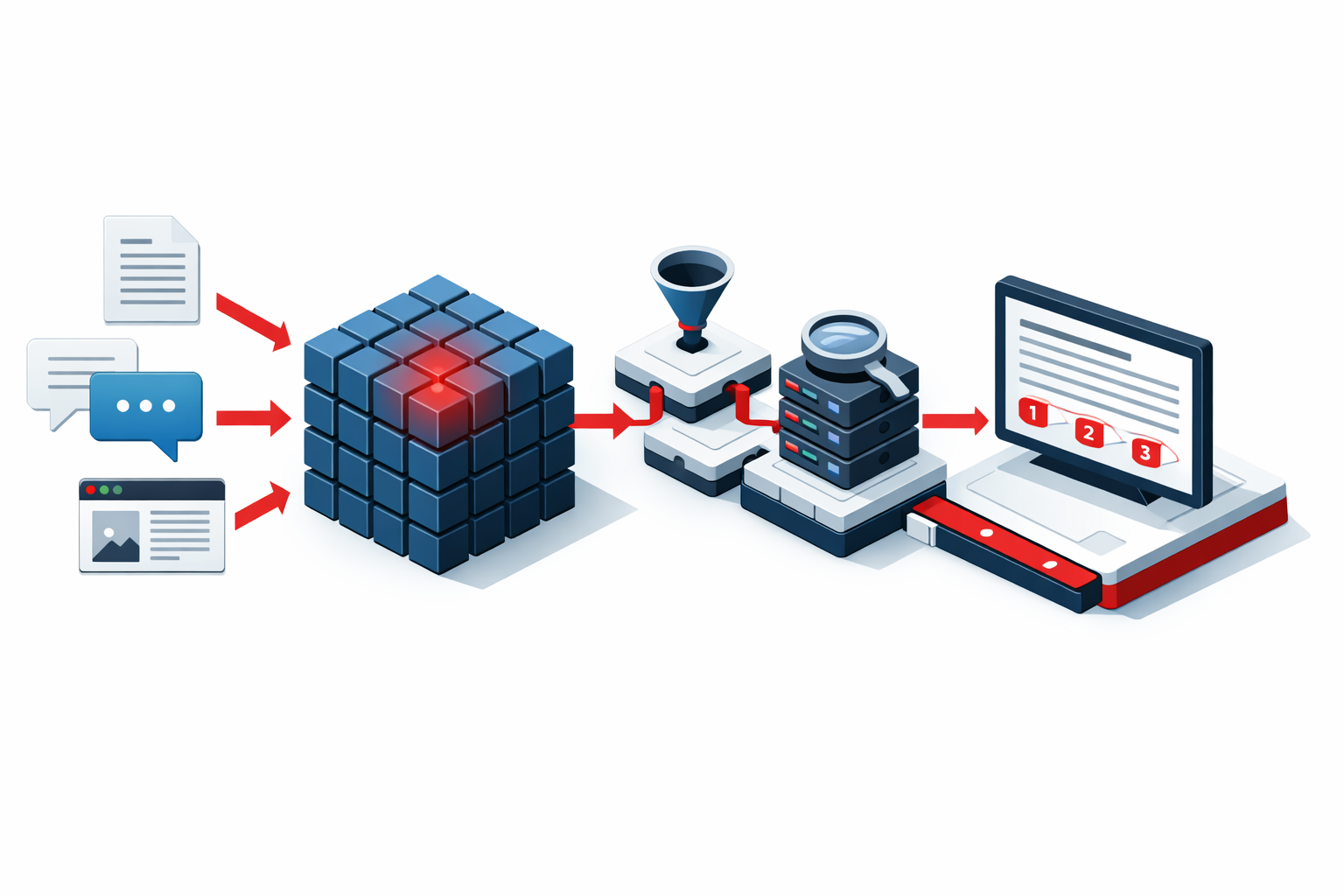
How We Build RAG Systems for Ravenswood
RAG system development starts with a knowledge inventory: we identify the documents, records, and information repositories the business holds, assess their quality and organization, and prioritize the sources that are most frequently needed and least efficiently accessible. For a Ravenswood craft brewery, the highest-priority sources are typically the production archive, the supplier and ingredient records, the taproom operational documentation, and the member and event records.
From the inventory, we prepare the knowledge base: cleaning and organizing the documents, handling format conversion where documents are in non-searchable formats, and structuring the metadata that will allow the retrieval system to surface the most relevant documents for each query. Quality of preparation directly affects the quality of the retrieval: a well-organized knowledge base returns accurate, relevant results where a poorly organized one returns noise.
We build the retrieval and generation system on the prepared knowledge base, configure the query interface appropriate for the business's use patterns (a web interface, a chat window, or an integration into an existing tool), and test against real queries from the business before deployment. Testing confirms that the system retrieves the right documents and synthesizes accurate answers before the team begins relying on it.
Industries We Serve in Ravenswood
Craft breweries along Ravenswood Avenue near Begyle and Empirical build RAG systems on their production archives, recipe and ingredient records, taproom operational documentation, and staff training materials. The system answers brew day questions (what was the fermentation profile on the 2022 imperial stout?), procurement questions (which hop supplier has the best Centennial consistency record?), and operational questions (what is the policy for taproom buyouts on Saturdays?) without requiring anyone to search the archive.
Design studios and creative agencies near Lawrence Avenue and Montrose Avenue build RAG systems on their project archives, client communication records, process documentation, and portfolio databases. The system answers project reference questions (how did we handle the brand guide deliverable for the client with the strict stakeholder approval process?), process questions (what is our standard contract language for revision limitations?), and capability questions (what project types have we completed in the healthcare sector?).
Specialty retailers and artisan producers on Damen Avenue and Ravenswood Avenue build RAG systems on their product records, supplier communication archives, pricing history, and customer purchase records. The system answers product questions (what is the care instruction for the 2024 ceramic collection?), supplier questions (what was the MOQ and lead time for the French linen supplier?), and customer history questions (what did this wholesale account order for the spring season last year?).
Fitness studios and wellness businesses near Welles Park and along Ashland Avenue build RAG systems on their member records, class format documentation, instructor training materials, and operational policies. The system answers policy questions, member history questions, and program questions for new staff without requiring direct knowledge transfer from a senior team member.
Architecture and professional services firms in Ravenswood build RAG systems on their project archives, specification libraries, code and regulatory reference materials, and firm standards documentation. The system answers specification questions, precedent questions from past projects, and regulatory questions from the firm's own accumulated research without requiring search through extensive project archives.
Restaurants and food businesses in the Ravenswood and North Center corridor build RAG systems on their recipe archives, supplier records, menu history, and operational documentation. The system answers recipe questions, supplier contact and ordering information questions, and operational procedure questions for kitchen staff without requiring the head chef to be the sole source of institutional knowledge.
What to Expect Working With Us
1. Knowledge inventory and prioritization. We audit the business's documents and knowledge repositories, assess their quality, and prioritize the sources for the initial RAG build.
2. Knowledge base preparation. We prepare the documents for retrieval, handling format conversion, organization, and metadata structuring to ensure accurate retrieval performance.
3. System build, testing, and calibration. We build the retrieval and generation system, test it against real queries from the business, and calibrate for accurate, relevant responses before deployment.
4. Deployment, training, and ongoing maintenance. We deploy the system, train the team on effective querying, and maintain the knowledge base as new documents are added and existing documents are updated.