How We Build Legacy System Integration for Ravenswood
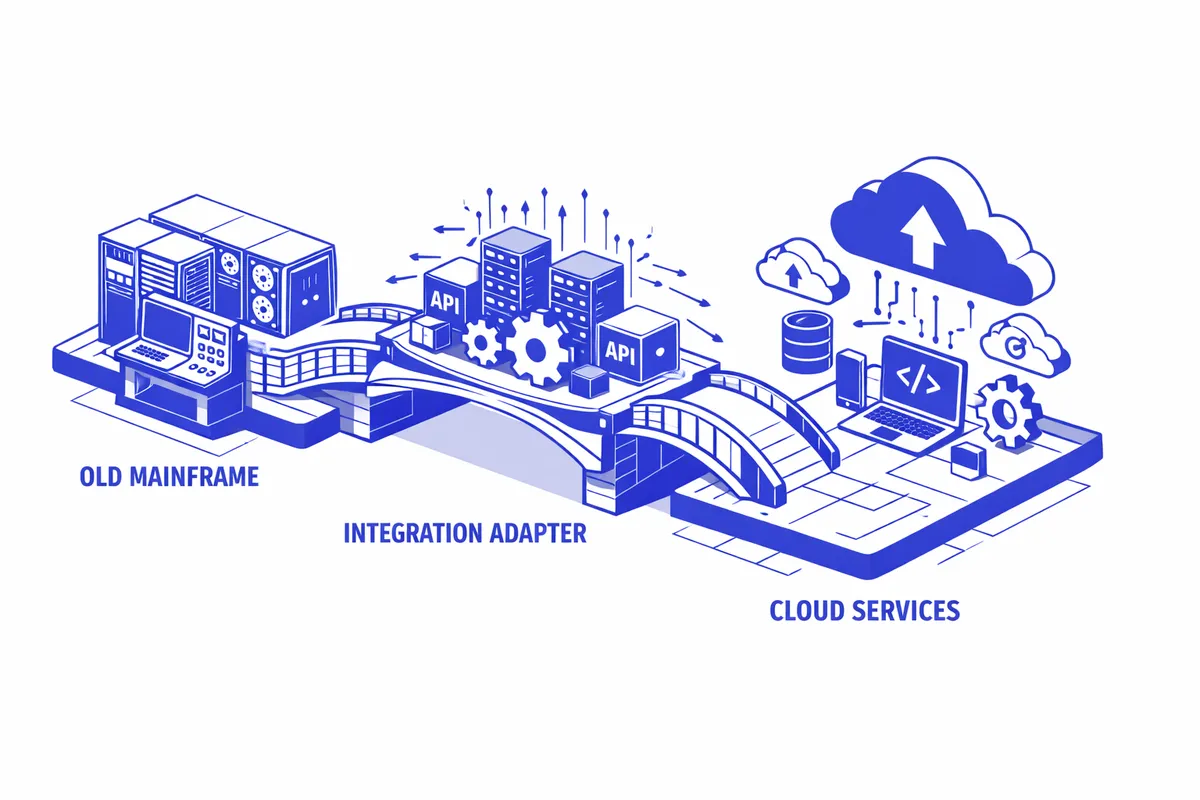
Every legacy integration engagement starts with a technical audit of the existing systems. We need to understand what the legacy system runs on, what data it holds, what format that data is in, and whether there is any existing interface for external access: an API, an export function, a database query interface, or even just a scheduled file export. For an older manufacturing system on Ravenswood Avenue, that audit often reveals that the system can generate CSV or XML exports on a schedule, which is a workable starting point even without a modern API.
From the audit, we design the integration architecture. Some legacy systems support direct database connections where we can read data in real time. Others support file-based integrations where we process scheduled exports. A few require a middleware layer that listens for changes in the legacy system's data files and transforms them for the receiving platform. We choose the approach that provides the most reliable and accurate data flow given the legacy system's capabilities.
We then build the integration layer and the data transformation logic that converts the legacy system's format to something the modern platform can consume. For a Ravenswood manufacturer whose legacy system uses custom product codes and the modern platform uses a different identifier scheme, that transformation layer handles the mapping automatically.
Testing against real historical data is mandatory before any integration goes live in a production environment. We run parallel operations for a period before cutting over so any data accuracy issues are caught without affecting business operations.
Industries We Serve in Ravenswood
Specialty manufacturers and artisan producers along Montrose Avenue are the primary legacy integration clients in Ravenswood. Production scheduling, quality control logging, and inventory tracking systems built for an earlier era of manufacturing need to connect to modern procurement platforms, e-commerce storefronts, and cloud accounting tools. We build the integration layer that makes those connections work without requiring production staff to interact with two systems simultaneously.
Craft breweries and distilleries on Ravenswood Avenue that have grown significantly since their founding often carry legacy recipe management, production logging, or taproom POS systems that were installed in the brewery's early years. When new tools come in around them, the older systems become data islands. We connect them into the modern infrastructure so production data flows automatically to accounting, inventory, and distribution systems.
Design studios and agencies that have been operating in Ravenswood for more than a decade may run legacy project management or time-tracking systems that house years of billable hours data and client records. Migrating that data manually is prohibitive; leaving it in a disconnected system means it cannot inform current project estimating or client analysis. We build the connections that make historical data accessible to modern tools.
Wholesale distributors operating out of the Ravenswood industrial corridor typically carry the deepest legacy system complexity: customer databases, order management tools, and routing systems that were built for an earlier distribution landscape and are now difficult to connect to modern retail buyer portals and EDI systems. We handle those integrations, including EDI translation layers that Ravenswood distributors need to do business with larger retail accounts.
Specialty food and beverage producers near the Ashland Avenue end of the corridor who sell through retail often need to connect legacy inventory and production systems to retail compliance platforms: nutritional database tools, label compliance software, and retail ordering systems. We build those connections without requiring a full ERP replacement.
Professional service firms on Wilson Avenue or Lawrence Avenue that have operated for many years may carry legacy CRM or billing systems that house a decade of client relationship data. We build the export and migration integrations that bring that data into modern CRM platforms while preserving its historical integrity.
What to Expect Working With Us
1. Legacy system technical audit. We spend the first one to two weeks documenting every legacy system: what it runs on, what data it holds, what export or connection capabilities exist, and what downstream systems it needs to connect to. For Ravenswood manufacturers with highly customized legacy tools, this audit sometimes surfaces integration options the business was not aware of.
2. Integration architecture design and risk assessment. We design the integration approach and present the options with their associated risk profiles. A real-time database connection to a legacy system is more powerful but carries more risk than a file-based export integration. We walk through the tradeoffs and recommend the approach that balances functionality with operational stability.
3. Build, parallel testing, and validation. We build the integration in a staging environment and run it against real historical data before touching the production system. The parallel testing period lets us verify data accuracy without risk to live operations. We do not declare an integration complete until the data flowing through it has been compared against a historical baseline.
4. Documentation and operational handoff. Every integration is fully documented: the connection architecture, the transformation logic, the error handling, and the monitoring setup. If the integration fails for any reason, the documentation tells your team exactly what to check and how to restart it without calling us.