How We Build HR Automation for Ravenswood
HR automation for a Ravenswood business starts with a workforce audit: how many employees, what are the pay types, what is the hiring frequency, and where does the most manual work currently live. A brewery near Ravenswood Avenue with fifteen employees across taproom, production, and sales will have different automation priorities than a design studio on Damen Avenue with eight full-time employees and a rotating roster of contractors.
From the audit, we identify the five to seven workflows that generate the most administrative work per cycle: onboarding, scheduling, time tracking, payroll preparation, contractor management, and compliance document tracking. We build automations in sequence, starting with the highest-cost manual process.
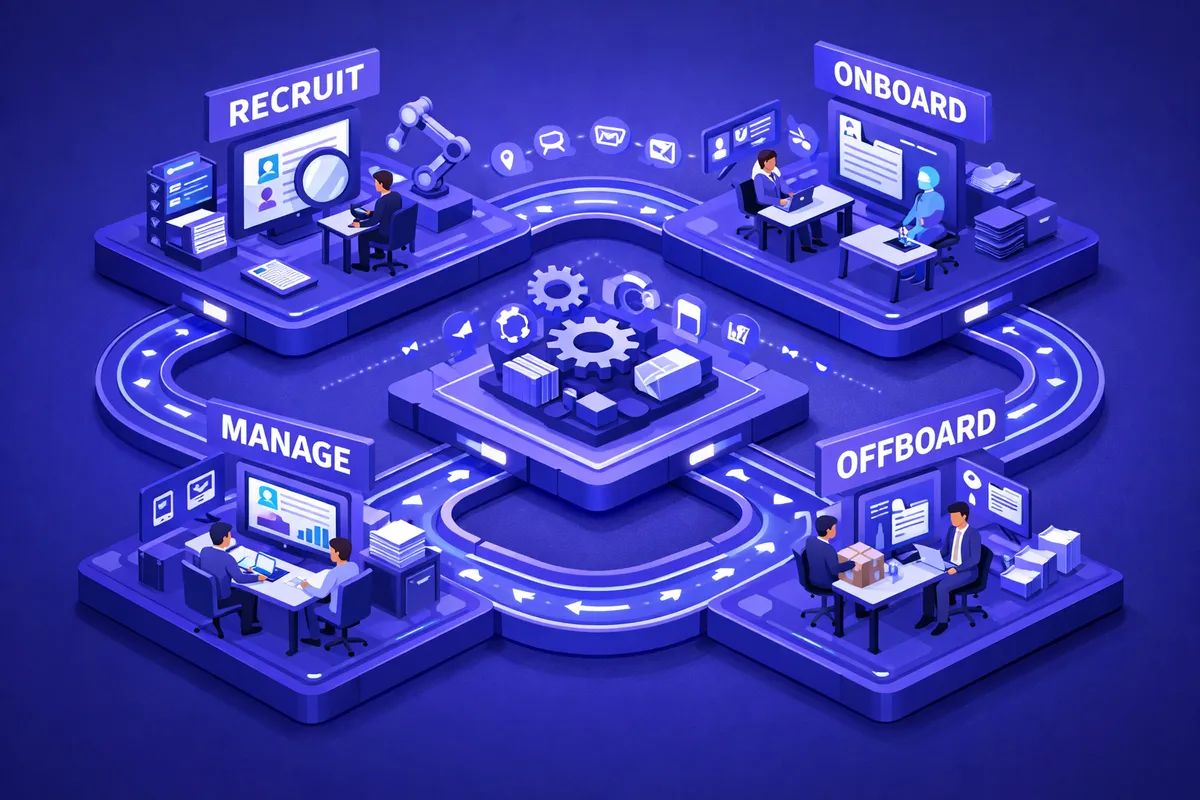
Onboarding automation is usually first. We build the digital onboarding sequence that sends new hires their paperwork automatically, collects signatures, routes I-9 verification, and deposits completed documents into the HR system without anyone on the business's team managing the process manually. A Ravenswood taproom that hires four seasonal employees in April and four more in June should not require the manager to personally shepherd each one through the paperwork stack.
Scheduling automation comes next for most Ravenswood businesses, and this is where the neighborhood's specific character shapes the design. A taproom on Ravenswood Avenue does not staff the same way on a Tuesday night as it does during a Saturday release event that pulls customers from Andersonville and Lincoln Square. The scheduling system needs to understand shift types, minimum coverage rules for events, and availability constraints for a workforce that often includes students and second-job workers who have narrow availability windows. We build scheduling automations that generate draft schedules from availability data, route them to the manager for approval, and publish confirmed shifts to staff phones automatically. When a shift opens because a worker calls out, the system broadcasts availability to pre-approved substitutes without the manager making individual calls down a list.
For design studios and creative agencies on Damen Avenue, contractor lifecycle automation is typically the highest-value build. Studios that work with ten to fifteen independent contractors annually run a recurring cycle of agreement generation, W-9 collection, project scope documentation, and 1099 preparation that consumes significant administrative time. We automate the full contractor onboarding sequence so that when a new engagement is approved, the contractor receives their agreement and W-9 request automatically, and the completed documents flow into the system ready for tax preparation without anyone manually chasing signatures.
We integrate with the HR and payroll platforms the business already uses: Gusto, Rippling, Homebase, Deputy, or others. We do not require a platform migration. We build around what already works.
Industries We Serve in Ravenswood
Craft breweries and distilleries on Ravenswood Avenue manage a workforce that shifts every season. Summer release events pull extra taproom staff on short notice. Winter production ramps for seasonal batches. We automate the scheduling system that coordinates those shifts, the onboarding sequences for seasonal hires, and the time-tracking-to-payroll pipeline that keeps weekly reconciliation manageable.
Artisan manufacturers and specialty producers near Montrose Avenue often add and reduce production staff on production-cycle schedules. HR automation handles the contractor agreement workflows, the multi-rate time tracking across production stages, and the automatic payroll reporting that connects production hours to the accounting system.
Design studios and creative agencies along Damen Avenue run a contractor-heavy workforce model that creates a specific HR burden: independent contractor agreements, project-based time tracking, 1099 preparation, and non-disclosure documentation. We automate the contractor lifecycle from initial engagement agreement through project close and tax form delivery.
Independent restaurants and cafes near Wilson Avenue deal with high turnover and frequent new hires, which makes manual onboarding extremely costly in time. Automated onboarding for a Ravenswood cafe means a new server receives their new hire paperwork by email the day they are offered a job, completes it on their phone, and arrives on day one with nothing left to sign.
Yoga studios and wellness businesses on Lawrence Avenue manage instructor scheduling, certification tracking, and independent contractor relationships alongside their front-desk employees. We automate the certification expiration alerts, the instructor schedule publishing, and the bi-weekly pay calculations that vary with class attendance and session counts.
Specialty retail shops near the Ravenswood Manor neighborhood typically have a small permanent staff supplemented by part-time holiday help. HR automation builds the seasonal onboarding workflow that activates every October, the scheduling templates that adjust for holiday hours, and the offboarding sequence that handles the end-of-season departure paperwork without requiring manager time.
What to Expect Working With Us
1. Workforce mapping and compliance review. We document your workforce structure, pay types, and current HR workflows. For businesses with mixed employee classifications, we flag compliance requirements in Illinois that automated systems should track: required break documentation, minimum wage compliance for tipped workers, contractor versus employee classification thresholds. This is not legal advice, but it is an important context for automation design.
2. Priority workflow automation. We build the three to five highest-impact automations first: typically onboarding, scheduling, and payroll preparation. Each workflow is tested with real employee scenarios before going live, including edge cases like mid-cycle schedule changes or split-shift pay calculations.
3. Integration with existing payroll and scheduling tools. We connect the new automation layer to your existing platforms rather than replacing them. Gusto users keep Gusto. Homebase users keep Homebase. The automation layer reduces the manual steps between those tools without requiring your team to learn new interfaces.
4. Manager training and process documentation. HR automation is only valuable if the managers who use it understand how it works. We train every manager who interacts with the system and provide written process documentation so new managers can be onboarded without retraining from scratch. Ravenswood businesses that grow from ten to twenty employees should not have their HR automation collapse when a manager changes.