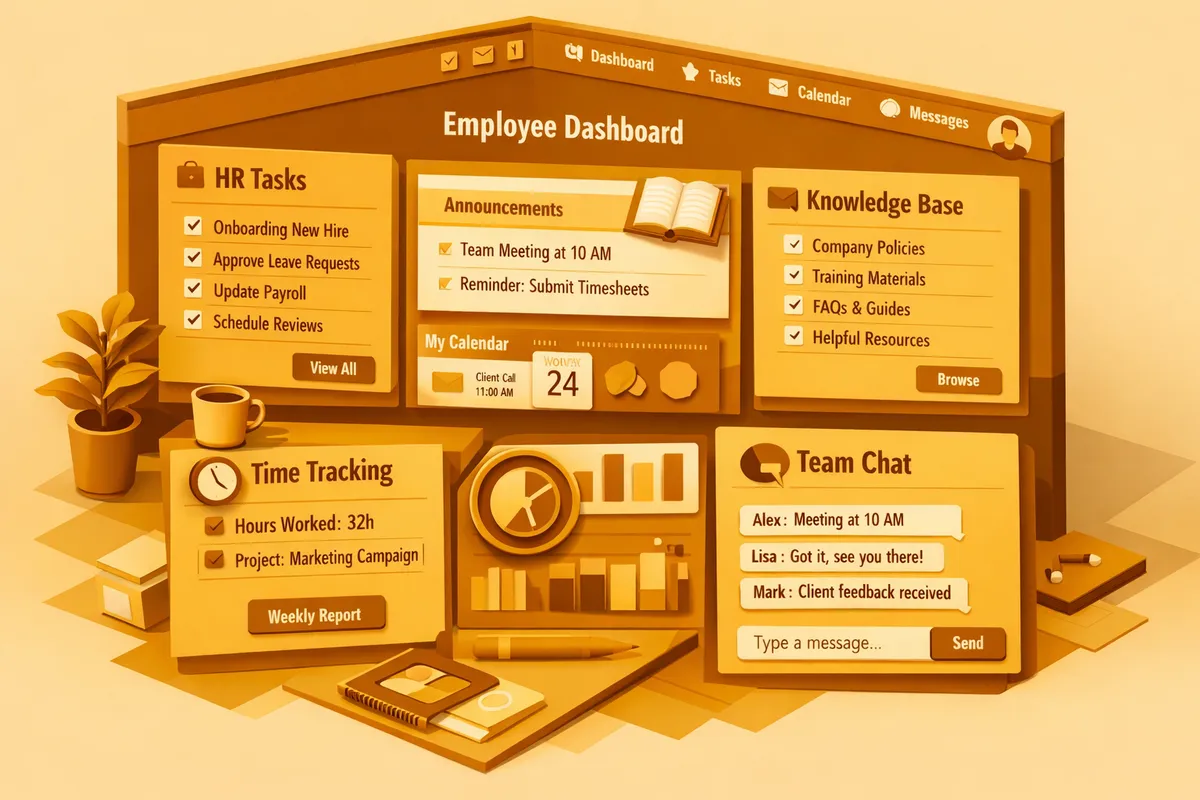
How We Build Employee Portals for Ravenswood
We start on your floor, not in a conference room. Before we design a single screen, we walk the production line or the taproom with you and map how a shift actually runs: who clocks in, who reports tips, who approves a schedule swap, what a seasonal ramp looks like when the brewery near the Ravenswood Avenue tracks pushes a summer release. Every maker business in this neighborhood has a different crew mix, and the portal has to match the real workflow rather than a generic HR template.
From there we define the employee types your portal supports. A brewery has hourly production staff, tipped taproom servers, and salaried managers, each with different pay structures and overtime rules. An artisan food producer near Lawrence Avenue may run W-2 employees alongside seasonal packers. A design studio in one of the corridor loft buildings has straightforward salaried staff but still needs PTO tracking and document access. We build onboarding flows, time-off approval routing, and pay-stub access for each category so no one is forced into a workflow that does not fit their role.
We then connect the portal to the payroll and scheduling tools you already run, so hours, approvals, and pay records stay in sync without anyone re-keying data. We test it with a real shift before launch, train your managers on the approval side, and hand over a system that a packaging worker on Wilson Avenue can use from a phone during a break. The goal is a portal that survives a busy canning week, not one that only works on a quiet afternoon.
Industries We Serve in Ravenswood
Breweries and distilleries along the Ravenswood Avenue corridor lean on employee portals to manage crews that span production, packaging, and taproom service. A brewery near Begyle Brewing uses the portal to onboard seasonal canning help, route tipped-server time-off requests, and give every shift worker self-service access to pay stubs and schedules without pulling a manager off the floor during a release week.
Small-batch food producers and artisan makers clustered in the loft buildings near Lawrence Avenue use employee portals to bring structure to packing and production teams that scale up and down with demand. New hires complete I-9s, food-handler acknowledgments, and direct deposit setup through a guided checklist, and owners see exactly who is fully onboarded before a big production run.
Independent restaurants and taprooms that grew alongside the neighborhood's breweries rely on employee portals to handle high-turnover front-of-house staffing. A taproom kitchen near Empirical Brewery uses the portal so a new line cook can sign policies, submit tax forms, and request schedule changes without that work competing with a Friday dinner rush for the manager's attention.
Small manufacturers and metal fabricators in Ravenswood's light-industrial blocks use employee portals to track certifications, safety acknowledgments, and shift schedules for production staff. A fabrication shop off Montrose Avenue keeps renewal dates and signed policy documents in the portal, so compliance paperwork is current instead of scattered across a filing cabinet and a few inboxes.
Design studios and creative workshops in the converted spaces near Ashland Avenue use employee portals for cleaner HR administration even with smaller, salaried teams. Staff submit PTO requests, access benefits documents, and update personal information through the portal, which frees a studio principal near Welles Park from being the manual relay point for every routine HR question.
Specialty retailers and boutique shops along the Ravenswood retail pockets use employee portals to onboard part-time and seasonal sales staff quickly. A shop near the Ravenswood Manor blocks runs holiday hiring through the portal, so seasonal employees complete paperwork and learn their schedules before their first shift instead of during it.
What to Expect Working With Us
1. Floor walk and workflow mapping. We spend time in your space, whether that is a production floor near the Ravenswood Avenue tracks or a taproom off Montrose Avenue, and map how shifts, approvals, and onboarding actually happen today. That ground-level picture drives every design decision that follows.
2. Role-based portal design. We build the portal around your real employee mix: hourly production crews, tipped servers, seasonal packers, salaried managers. Each role gets onboarding flows, time-off routing, and pay access that fit how that person actually works.
3. Payroll and scheduling integration. We connect the portal to the payroll and scheduling systems you already use so hours, approvals, and pay records stay in sync. No double entry, no reconciliation spreadsheet living on someone's desktop.
4. Seasonal-ramp readiness and handoff. We test the portal against a real shift, train your managers, and tune it so it holds up when the neighborhood's breweries push warm-weather batches and your headcount spikes. You leave with a system built for your busiest week, not your slowest one.