How We Build Customer Portals for Ravenswood
The portal design process starts with a client journey audit. We map every interaction a current client has with the business from the moment they sign a contract or place an order to the moment the project closes. For a Ravenswood design studio, that journey typically spans twenty or more touchpoints over a project lifecycle, most of them handled through email. We identify which of those touchpoints can be moved into the portal and which genuinely need direct communication.
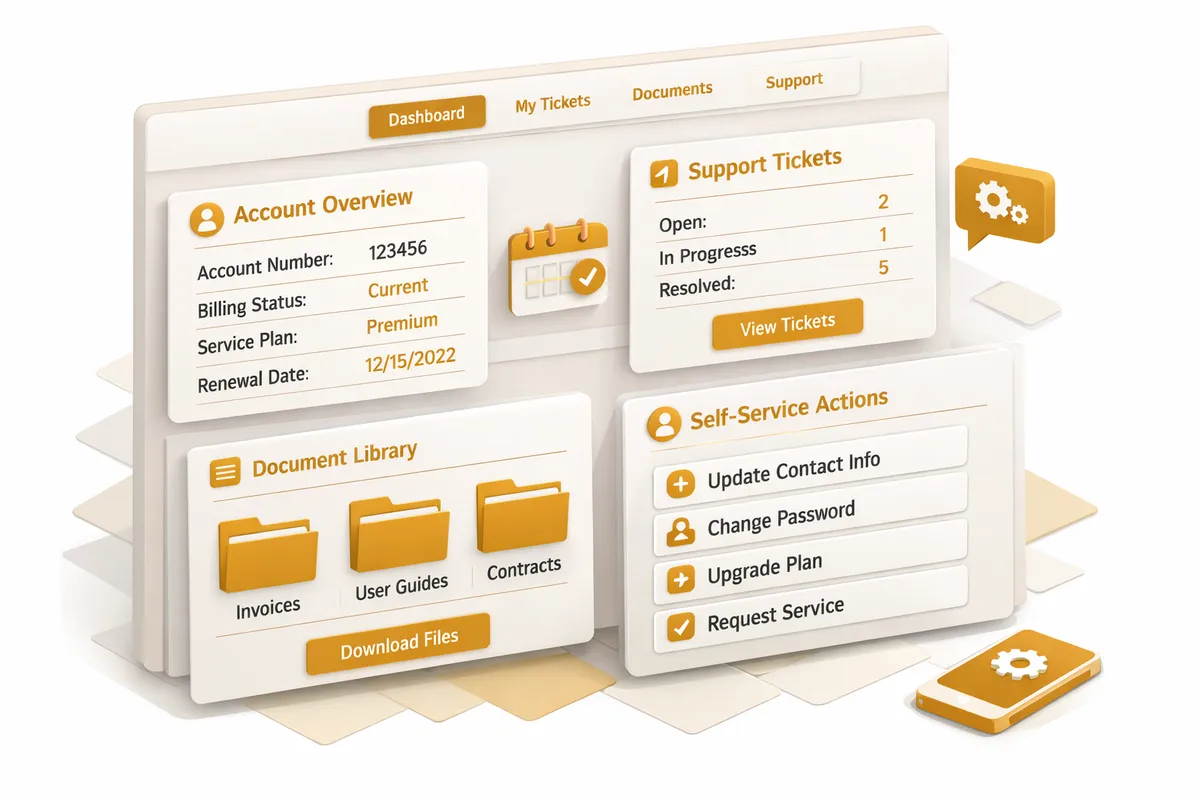
From there, we design the portal architecture: what the client can see, what actions they can take, and what notifications they receive automatically. For a manufacturer on Montrose Avenue building custom products, that typically means an order tracker that shows production stage, a document center for spec sheets and approvals, a payment schedule with online payment capability, and a messaging channel that keeps all communication in one place.
We build on a Next.js foundation with a PostgreSQL backend, which gives Ravenswood operators a portal that is fast, secure, and genuinely theirs rather than a white-labeled third-party tool with limited customization. The portal carries the business's brand design, matches the visual language of the existing website, and creates a consistent professional experience from first contact through project close.
Testing involves real client scenarios, including the approval workflows and file delivery sequences that are specific to each Ravenswood business type, before any client is invited to use the portal.
Industries We Serve in Ravenswood
Design studios and creative agencies in Ravenswood's converted industrial buildings manage client relationships that involve dozens of files, multiple approval rounds, and long production timelines. A portal gives clients 24-hour access to proofs, revision histories, final deliverables, and project timelines without the studio team spending time on status emails. Approval requests arrive in the portal and route back as signed sign-offs, eliminating the "I never got that email" problem.
Custom manufacturers and artisan producers along the Ravenswood Avenue corridor take on projects with complex specification processes and multi-stage production timelines. A portal built for a Ravenswood woodworker or metal fabricator lets the client track their order from raw material selection through production stages to quality check and shipping, with milestone notifications sent automatically at each stage.
Specialty food and beverage producers near Empirical Brewery and Begyle Brewing who sell wholesale to restaurant and retail buyers need a simple order status portal that keeps wholesale clients informed without requiring distributor phone calls. A wholesale portal gives buyers visibility into order processing, delivery scheduling, and invoice history without creating work for the production team.
Independent professional service firms on Wilson Avenue or Lawrence Avenue that manage ongoing client relationships benefit from a portal that houses all deliverables, meeting notes, project timelines, and communication history in one place. This is particularly valuable for firms that have client relationships spanning months or years where institutional memory lives entirely in email archives.
Yoga studios and wellness businesses on Lawrence Avenue with membership programs and class package purchasers use portals to let clients manage their own accounts: view class history, update payment methods, book appointments, and access digital content libraries. This reduces the administrative load on front-desk staff and gives clients the self-service access they expect.
Specialty retail shops near the Ravenswood Manor neighborhood that offer custom orders or consignment services use portals to keep customers informed about order status, estimated completion dates, and pickup readiness. A Ravenswood shop that takes custom furniture or textile commissions can handle the entire client relationship from deposit to delivery through the portal without relying on phone tag.
What to Expect Working With Us
1. Client journey mapping and portal scoping. We review your current client communication and document every interaction type, document exchange, and status update that happens between your team and your clients. This scope document drives the portal architecture so we build exactly what your clients need and nothing they will never use.
2. Portal design and development. We design the portal UX with your clients in mind: simple navigation, clear status indicators, obvious calls to action for approvals and payments. Development typically takes three to five weeks depending on the complexity of integrations with your existing project management or order tracking systems.
3. Client onboarding and launch sequence. We build the onboarding email sequence that invites existing clients to set up their accounts and walks them through the portal features. For Ravenswood businesses with long-standing client relationships, we give careful attention to the transition from email-heavy communication to portal-first communication, framing it as a benefit rather than a change.
4. Performance review and feature expansion. Six weeks after launch, we review portal usage data: which features clients actually use, where they drop off, and what requests are still coming in by email that should be handled in the portal. We refine based on real usage before recommending any additional features.