How We Build Custom AI Models for Ravenswood
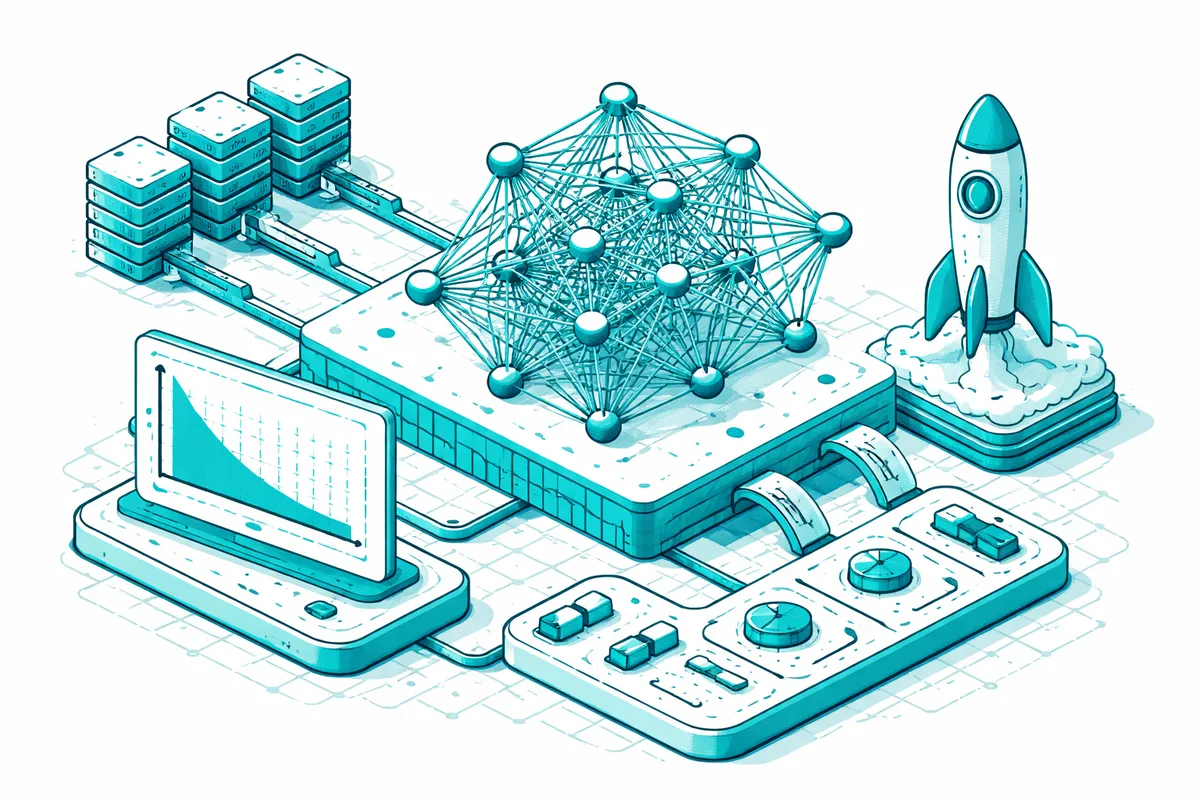
Custom model training starts with a data assessment: we evaluate the business's accumulated data for volume, quality, and relevance to the intended training objective. For a brewery, we assess years of POS data, taproom visit records, and any external data sources that correlate with demand. For a design studio, we assess project records, client communication history, and outcome data. For a fitness studio, we assess class attendance, member lifecycle data, and seasonal patterns.
If the assessment confirms sufficient training data, we define the training objective: the specific task the model will perform, the inputs it will receive, the outputs it will produce, and the performance criteria that will determine success. For a brewery demand forecast model, that means defining the prediction horizon, the relevant input variables (day of week, weather, event calendar, recent release activity), and the acceptable error range for useful operational planning.
Training, validation, and deployment are managed with business-context explanations throughout: we explain what the model is learning, how performance is measured, and what the results mean for business decisions. Models are validated against held-out data before deployment. Post-deployment monitoring tracks model performance over time and flags when retraining is needed.
The training process for Ravenswood businesses includes neighborhood-specific external data integration where relevant. Welles Park event programming, the Ravenswood ArtWalk calendar, the Lincoln Square Maifest and Oktoberfest schedules, and the seasonal programming calendar at nearby venues all affect demand patterns for Ravenswood businesses in predictable ways. Training data that includes these external signals produces models that anticipate demand shifts tied to the neighborhood's event calendar rather than treating these recurring spikes as unexplained anomalies. The result is a demand model that knows Ravenswood the way the experienced business owner knows it: not just from internal data, but from the full context of the neighborhood's seasonal and event-driven commercial rhythm.
Industries We Serve in Ravenswood
Craft breweries along Ravenswood Avenue with multi-year operation histories have the data to support custom demand forecasting models that outperform generic tools. A model trained on the specific brewery's historical patterns predicts taproom traffic, beer style demand by season, and release event impact more accurately than any general hospitality forecasting model.
Design studios and creative agencies near Lawrence Avenue with multiple years of project records have the data to support models that estimate project scope from brief descriptions, flag timeline risk from early project signals, and recommend resource allocation based on historical project patterns.
Fitness studios and wellness businesses near Welles Park with member lifecycle data have the data to support models that predict member churn risk, forecast class demand by time slot and instructor, and identify the member behavior patterns that predict long-term retention versus early cancellation.
Specialty retailers and artisan producers on Damen Avenue and Ravenswood Avenue with multi-year sales records have the data to support inventory optimization models that predict demand at the item level and recommend order quantities based on historical patterns and seasonal adjustments.
Architecture and professional services firms in Ravenswood with project history spanning multiple years have the data to support models that estimate project timelines from scope descriptions and predict which proposal situations are most likely to convert to signed contracts.
Restaurants and food businesses along the Ravenswood and North Center corridor with multi-year POS data have the data to support demand forecasting models that predict cover counts by day and meal period, food cost models that predict ingredient price trends, and customer segmentation models that identify the characteristics of the business's most valuable customers.
What to Expect Working With Us
1. Data assessment and feasibility review. We evaluate your business's data and determine whether custom model training is appropriate and what training objectives are achievable with the available data.
2. Training design and data preparation. We design the training approach, prepare the data, and define the performance criteria for the model.
3. Model training, validation, and refinement. We train the model, validate its performance against held-out data, and refine it to meet the performance criteria.
4. Deployment and performance monitoring. We deploy the trained model and monitor its performance over time, identifying when retraining is needed as business patterns evolve.