How We Build Accounting Automation for Ravenswood
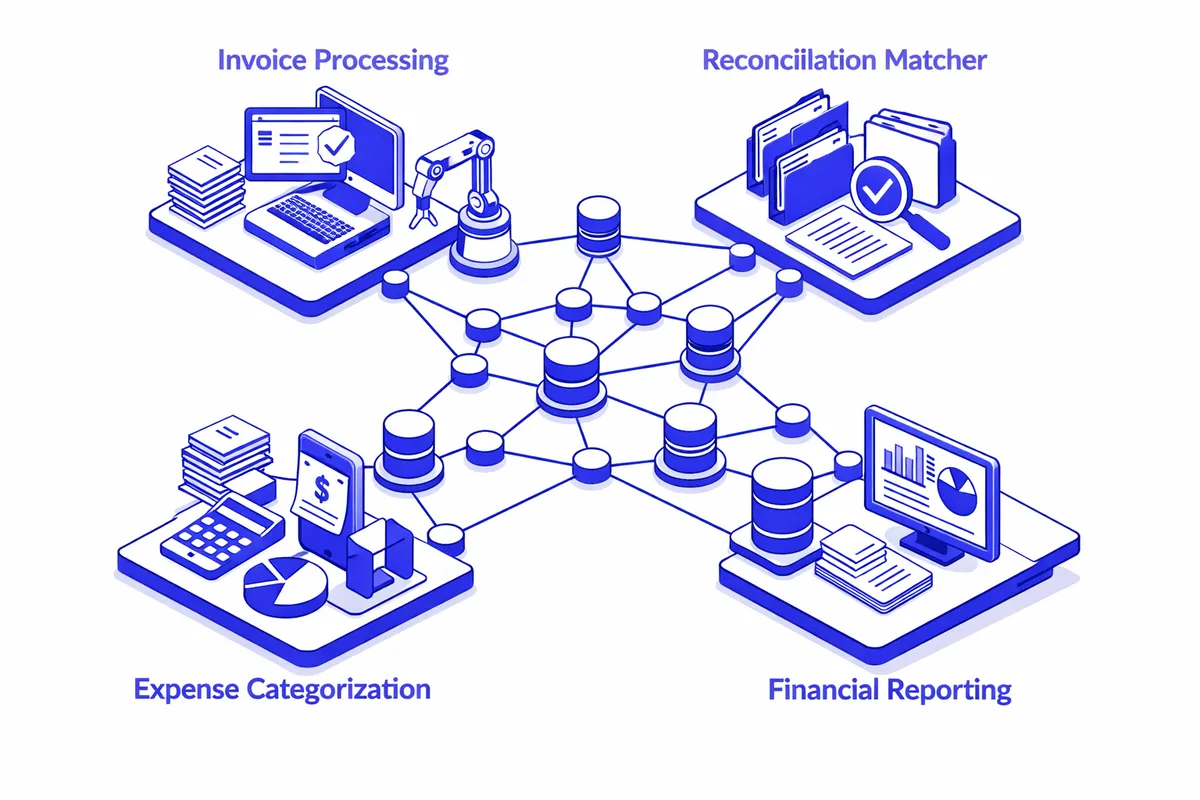
The starting point for every Ravenswood engagement is a systems audit. We map every platform that touches money: POS terminals, e-commerce platforms, payroll providers, inventory management tools, invoicing software, and the banking and credit accounts the business uses. For a brewery near Empirical Brewery's stretch of Ravenswood Avenue, that audit often reveals five or six disconnected systems that each require manual export and re-entry. For a design studio on Damen Avenue, it might be a simpler picture: project management software and a bank account that never properly talk to QuickBooks.
Once we understand the system map, we design the integration architecture. We use Zapier, Make, and direct API integrations to connect platforms without requiring the business to switch to new tools. If the taproom already runs on Square and the brewery likes it, we keep Square and connect it to QuickBooks or Xero automatically. If payroll runs through Gusto, we connect Gusto. We do not require Ravenswood operators to abandon the tools that already work.
After integration, we build the reconciliation rules, the chart of accounts structure, and the reporting templates so the business owner sees a clean P&L, a cash flow forecast, and a cost-of-goods breakdown without touching a single cell. We test against three months of historical data before go-live so there are no surprises.
Industries We Serve in Ravenswood
Craft breweries and distilleries on the Ravenswood Avenue corridor manage multi-channel revenue that rarely flows cleanly into a single accounting system. Taproom POS data, distribution invoices, event ticket revenue from Welles Park area events, and subscription club membership fees each live in separate tools. Automation connects all of it to a unified accounting layer and produces the cost-per-barrel reports that brewery operators actually need.
Artisan manufacturers and specialty producers near Montrose Avenue carry inventory that makes simple cash-basis accounting unreliable. We connect inventory management platforms to the accounting system so cost-of-goods updates automatically as materials move through production, and so every finished batch has an accurate cost basis without manual calculation.
Design studios working from Ravenswood's converted industrial spaces often mix project billing, hourly retainers, and software reseller revenue in ways that confuse standard bookkeeping templates. We build the accounting architecture that segments revenue by type, tracks project profitability, and gives design studio owners a clear view of which client relationships are actually driving margin.
Independent restaurants and cafes near Wilson Avenue and Lawrence Avenue deal with high-volume, low-margin transaction data that produces enormous reconciliation workloads when handled manually. We automate the POS-to-accounting connection, the payroll integration, and the vendor invoice processing so the owner's time stays on operations rather than data entry.
Yoga studios and wellness businesses on Lawrence Avenue manage recurring membership revenue, drop-in class fees, retail product sales, and instructor payroll in ways that rarely live inside one platform. We connect the scheduling and membership software to the accounting system and automate the monthly reconciliation that would otherwise require hours of manual work.
Specialty retail shops near the Ravenswood Manor neighborhood handle supplier invoices, retail POS transactions, and potential e-commerce revenue across platforms that were never designed to talk to each other. We build the integrations and the accounts payable automation that keeps the books accurate without requiring a part-time bookkeeper.
What to Expect Working With Us
1. Systems inventory and integration mapping. We spend the first week cataloging every platform that touches money in your business. This is the most important step. Ravenswood businesses that have grown organically often have three or four tools doing overlapping work and none of them connected. The inventory tells us exactly what to build.
2. Integration architecture and chart of accounts design. We build the connection layer between your platforms and your accounting system, and we restructure the chart of accounts to match how your business actually operates. For a Ravenswood brewery, that means separate revenue accounts for taproom, distribution, events, and subscriptions with automated cost allocations for each.
3. Historical testing and go-live. Before flipping the switch, we run the automation against three months of historical transactions and reconcile the output against your existing records. This surfaces any edge cases before they cause problems in live books.
4. Training and monthly close documentation. After go-live, we walk your team through the new close process and document every step. The goal is a monthly close that takes hours rather than days, with reports your accountant or CFO can review without asking follow-up questions.