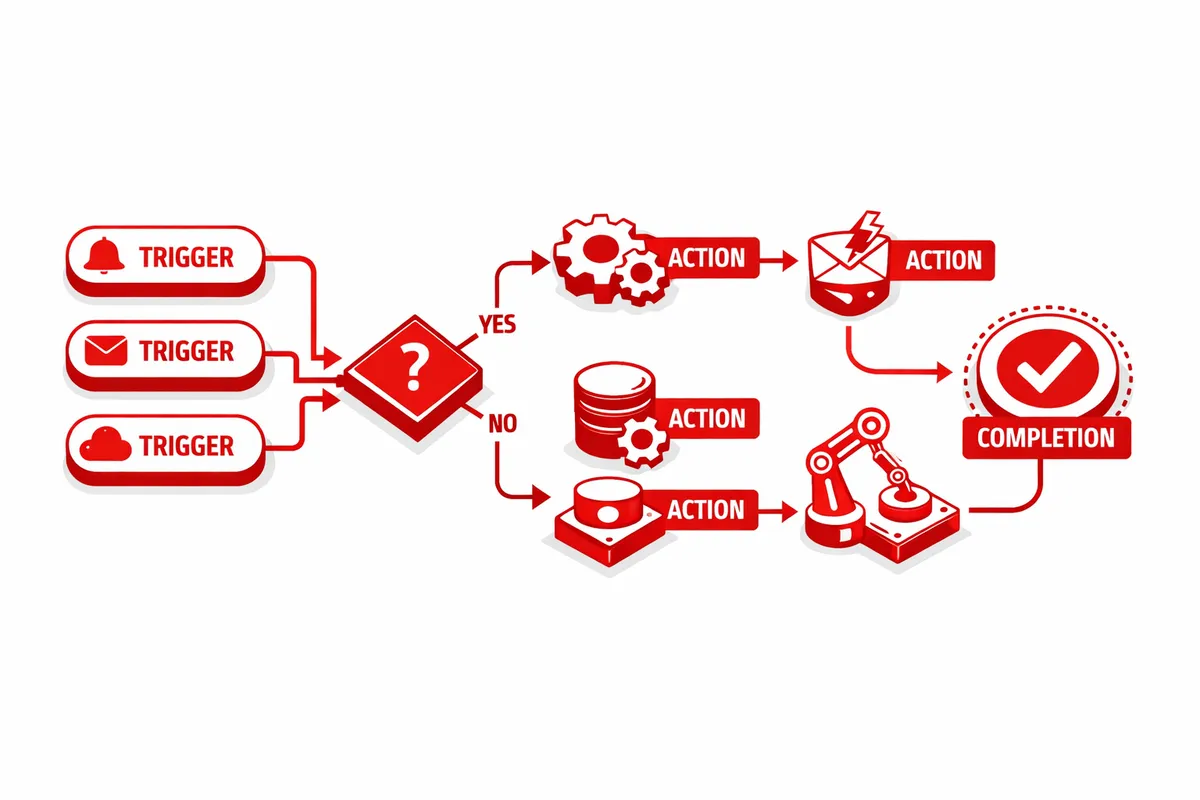
How We Build Workflow Automation for Pilsen Businesses
We begin by understanding each business's specific operational flow. Pilsen businesses range from multi-channel galleries processing art sales across platforms to single-location restaurants managing daily operations to solo creative professionals juggling client work and business administration. Each has different automation needs and different systems to integrate.
We document every manual process and identify the tasks that are purely administrative, requiring no creative or professional judgment. Those become automation candidates. Tasks that involve judgment get partially automated: the system prepares everything up to the decision point, the human makes the decision, and the system executes everything after it.
We integrate with the platforms each business uses. Pilsen businesses use a wide range of tools: Artlogic, Artwork Archive, Shopify, Square, Toast, QuickBooks, Mailchimp, Google Workspace, and specialized platforms for their specific industry. We connect whatever combination your business operates on.
Industries We Serve in Pilsen
Galleries and art businesses along 18th Street automate inventory management, consignment tracking, sales processing, collector communication, and exhibition planning. Multi-channel inventory updates across the physical gallery, online store, and art fair listings happen instantly when a sale occurs in any channel. Consignment payment calculations run automatically based on the agreed split terms for each artist. Exhibition planning workflows manage the timeline from artist selection through installation, coordinating marketing, press outreach, opening event logistics, and collector invitations in a single automated sequence. Art fair preparation workflows compile inventory for the fair, generate price sheets, prepare shipping logistics, and set up the temporary online presence for fair-specific sales.
Restaurants along 18th Street and Halsted Street automate purchasing, prep planning, guest communication, and operational reporting. A Halsted Street restaurant automated its vendor ordering process, eliminating the daily phone calls and text messages to suppliers by generating and sending purchase orders based on inventory levels and projected volume. The system tracks delivery confirmations and flags missed or incomplete deliveries before the prep window opens. Weekend volume adjustments, critical for Pilsen restaurants that see dramatically higher traffic on Friday and Saturday evenings, build into the purchasing and staffing automations automatically.
Creative businesses and artisan workshops automate client communication, project management, invoicing, and product inventory. A ceramics studio on 18th Street automated its wholesale ordering workflow: when a retail client submits an order, the system checks production capacity, schedules the production run, generates the invoice, and triggers the shipping notification when the order is complete. The potter focuses on making. The business logistics handle themselves. A muralist automated the project intake and proposal workflow: when a project inquiry arrives, the system sends an immediate acknowledgment, collects project details through a structured form, and prepares a proposal template pre-populated with the project specifics for the artist to review and customize.
Neighborhood-serving businesses along Ashland Avenue, including laundromats, auto shops, tax preparers, and medical offices, automate scheduling, customer communication, and billing. These businesses serve a high volume of repeat customers and benefit from automated appointment reminders, service completion notifications, and re-engagement communications that maintain customer relationships without manual follow-up.
What to Expect Working With Us
1. Process audit tailored to your business type. We document the manual workflows specific to your operation, whether that is gallery consignment management, restaurant purchasing, creative project delivery, or neighborhood service operations.
2. Automation design that preserves creative control. For Pilsen's creative businesses, we design automations that handle logistics while keeping all creative and curatorial decisions in human hands.
3. Platform integration. We connect your existing tools, from gallery management platforms to restaurant POS systems to creative project management tools.
4. Core automations live in two weeks. Inventory synchronization, notification workflows, financial reporting, and high-frequency task automations deploy first.
5. Full deployment in four to six weeks. Exhibition planning workflows, seasonal adjustments, and complex operational sequences complete the build.