What We Design
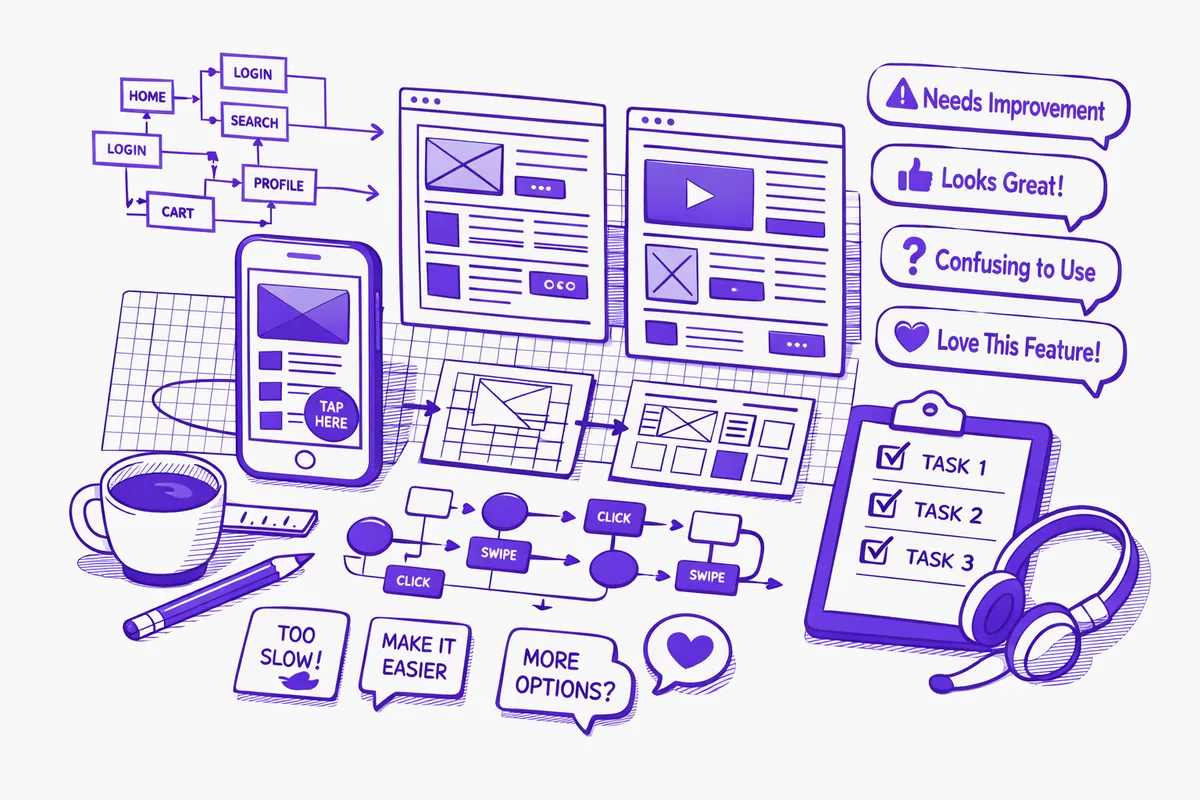
User research and discovery. We conduct research with the actual users of your product: surveys, interviews, contextual observation, and usability testing. For Pilsen businesses with bilingual user bases, research is conducted in both languages. Research findings produce user profiles and journey maps that ground every subsequent design decision in real user behavior rather than internal assumptions.
Information architecture. The structure of how information and functionality is organized in a digital product. Clear information architecture makes navigation intuitive and helps users find what they need without requiring them to understand how the product is organized from the builder's perspective. For complex products, information architecture is the foundation on which interface design is built.
Wireframes and interaction design. Low-fidelity wireframes that document the layout and functionality of each screen before visual design begins. Interaction design that specifies how the interface responds to user input: transitions, feedback states, error handling, and loading states that keep users oriented while the system processes their requests.
Visual UI design. High-fidelity visual designs that apply brand identity, typography, color, and imagery to the wireframe structure. For Pilsen businesses with strong brand identities, we design interfaces that are visually consistent with the physical brand while meeting digital interface conventions and accessibility standards.
Prototypes. Interactive prototypes that simulate the actual product experience so stakeholders can navigate the design on their own devices and identify issues before development begins. Prototype testing with real users before development prevents the expensive rework that comes from discovering usability problems after the product is built.
Design systems. For products with ongoing development, design systems document the complete set of interface components, their states, and their usage rules so that design decisions are consistent and documented for development teams. Design systems make product development faster and more consistent over time.
Accessibility design. We design for WCAG 2.1 AA compliance as a minimum standard, ensuring that interfaces are usable by people with visual, motor, and cognitive disabilities. For community organizations and government-adjacent services in Pilsen, accessibility is often a legal requirement in addition to a community service responsibility.
How We Build Our design process is research-led rather than assumption-led. We do not begin designing interfaces until we have a grounded understanding of the users. This adds time at the front of the project and saves time in the total project by reducing the rework that comes from designing for the wrong users or the wrong context.
Collaboration with the client team is structured throughout the process. We involve stakeholders in research planning, present findings in understandable formats, review wireframes and prototypes with the people who know the business and the users best, and adjust designs based on informed feedback. We do not design in isolation and present a finished design for approval. We design in dialogue.
We design for development. Our deliverables include specifications that developers can implement accurately without inferring missing details. We specify interaction states, responsive behavior, spacing, typography, and all the edge case states that a design needs to address for a product to behave as intended across real user conditions.
Industries We Serve in Pilsen
Community organizations and nonprofits serving Pilsen's diverse population need UX research and design that accounts for the full range of their users: bilingual adults, older residents less comfortable with technology, community members navigating systems in a second language, and users on low-cost Android devices on limited data plans. We design for this full range.
Restaurants and food businesses building digital ordering, reservation, or loyalty experiences need UX that reduces friction in the user journey from decision to completed transaction. Every unnecessary step costs conversions.
Startups and new products founded by Pilsen-area entrepreneurs need design that validates their product concept with real users before investing in development and that scales as the product grows.
Service businesses building client-facing portals, booking systems, and communication tools need UX that reflects how their specific clients want to interact with the business rather than how the internal team assumes clients will behave.
Healthcare and social services organizations serving Pilsen's community need accessible, bilingual, and culturally appropriate interfaces for intake forms, resource directories, and service delivery tools.
What to Expect
Research and discovery. User research, stakeholder interviews, and analysis of existing product performance data. Delivered as user profiles, journey maps, and a research synthesis that frames the design problem clearly.
Information architecture and wireframes. Structural design of the product before visual design. Reviewed and approved by stakeholders before visual design begins.
Visual design and prototype. High-fidelity visual designs and an interactive prototype. User-tested against the research participant pool before finalization.
Design system and handoff. Component documentation and design specifications delivered in formats your development team can implement. We support developers during the implementation phase with design questions and specification clarifications.