How We Build Supply Chain Automation for Pilsen Businesses
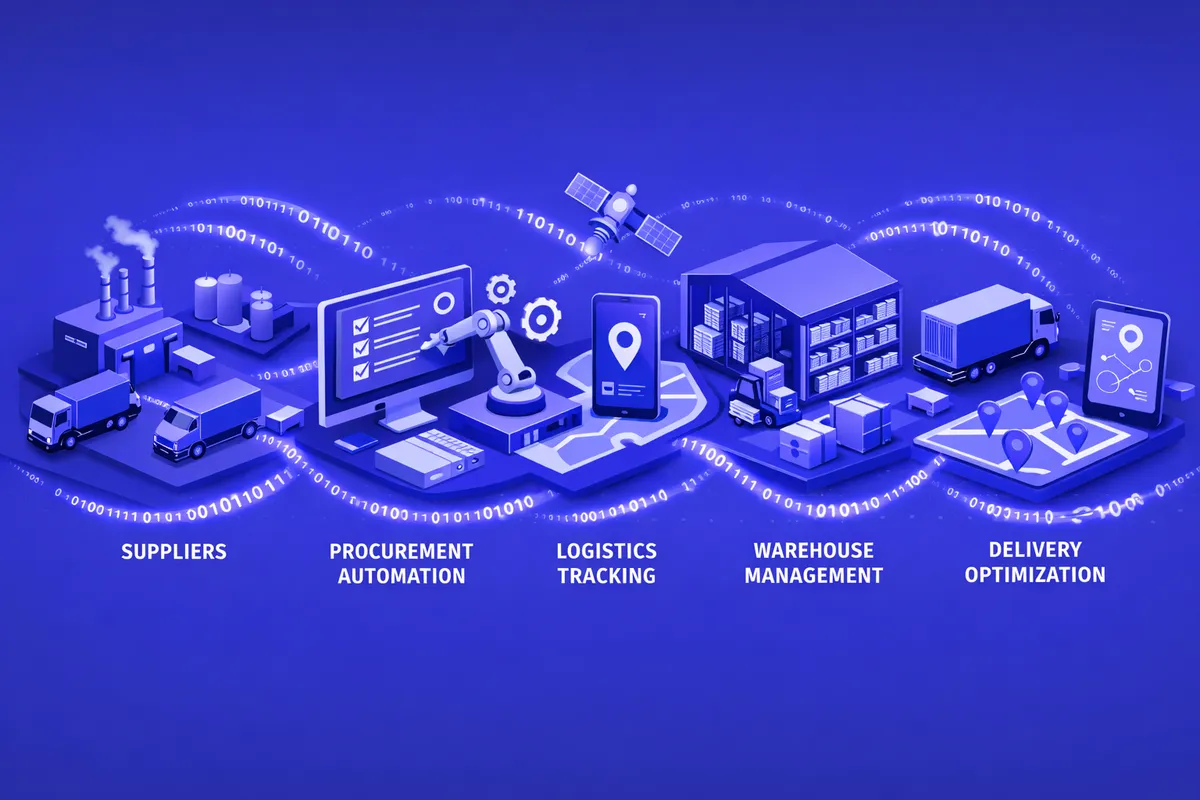
We begin with a supply chain audit that maps every purchasing workflow: what items are purchased, from which suppliers, on what triggers, through what ordering mechanisms, and with what lead times. We map receiving workflows: how deliveries are verified, how received quantities update inventory, and how discrepancies between ordered and received quantities are handled. We map the gap between where automation can replace manual work and where human judgment is genuinely required.
Technology selection follows the audit. For most Pilsen food businesses, the right foundation is a combination of an inventory management platform with purchasing capabilities and a supplier communication tool that routes orders appropriately for each supplier's ordering process. For manufacturing and fabrication businesses, we may incorporate MRP-lite functionality that connects material requirements to production planning. For distributors, we may add warehouse management integration. We select tools appropriate for the scale and complexity of the specific business rather than defaulting to enterprise systems that require consultants to implement and maintain.
Reorder point configuration is the core of supply chain automation. For each item in the system, we define the minimum quantity threshold that triggers a reorder and the order quantity that replenishes to target levels. These parameters are based on actual consumption data, supplier lead times, and the holding cost and stockout risk trade-off specific to each item category. For perishable items, the reorder logic accounts for shelf life alongside inventory level. For seasonal items, the parameters are adjusted for demand patterns.
Supplier integration varies by supplier capability. Larger distributors and national suppliers typically accept electronic purchase orders via EDI or web portal. Smaller local suppliers may receive orders by email, phone, or text. We configure the automation to route orders through the appropriate channel for each supplier, generate the order format they accept, and confirm receipt through the channel they use to respond.
Testing before go-live includes simulated reorder triggers using historical consumption data to verify that reorder points produce the right purchasing patterns, not just the mathematically correct ones. Edge cases like seasonal demand shifts, supplier substitution scenarios, and simultaneous reorder triggers for multiple items are tested before the automation runs on live inventory.
Industries We Serve in Pilsen
Restaurants and food businesses on 18th Street and throughout the neighborhood need supply chain automation that handles fresh ingredient replenishment with lead time and spoilage considerations specific to perishable purchasing. For restaurants with complex menus and multiple suppliers, automated purchase order generation and delivery scheduling reduce the daily administrative burden of food purchasing to management-by-exception rather than active daily coordination.
Manufacturing and fabrication businesses near Ashland and Racine that source materials across multiple suppliers with different lead times, quality standards, and ordering requirements need automation that connects material requirements to production scheduling and triggers purchasing at the right time rather than the right moment someone remembers to check.
Food distributors and wholesale businesses serving Pilsen's restaurant corridor and Chicago-area food businesses need supply chain automation that coordinates their own purchasing from upstream suppliers with outbound order fulfillment downstream. Automated replenishment that keeps warehouse inventory at target levels across their full product catalog reduces the stockout risk that costs customer relationships.
Specialty retail businesses managing product inventory across multiple suppliers use automation to track sales velocity by item, identify replenishment needs before stockouts occur, and route purchase orders to suppliers in formats they accept and through channels they use.
Nonprofits and community organizations managing supply and materials for programs, particularly food programs serving Pilsen's community, benefit from automated procurement tracking and vendor management tools that reduce administrative burden on program staff.
What to Expect
Supply chain audit and automation scope. We document your current purchasing workflows, supplier relationships, lead times, and inventory management approach. We identify the automation opportunities with the highest impact on purchasing efficiency and stockout/overstock risk.
System selection and configuration. We select and configure the platforms appropriate for your specific supply chain complexity. Configuration includes item catalog setup, reorder point definition, supplier routing, and order format templates.
Integration and testing. We connect supply chain automation to your inventory management and accounting systems and run simulated scenarios to verify that the automation produces the right purchasing decisions before live deployment.
Training and go-live. We train the team members responsible for supply chain oversight on monitoring the automation, handling exception cases, and adjusting parameters as business needs evolve.