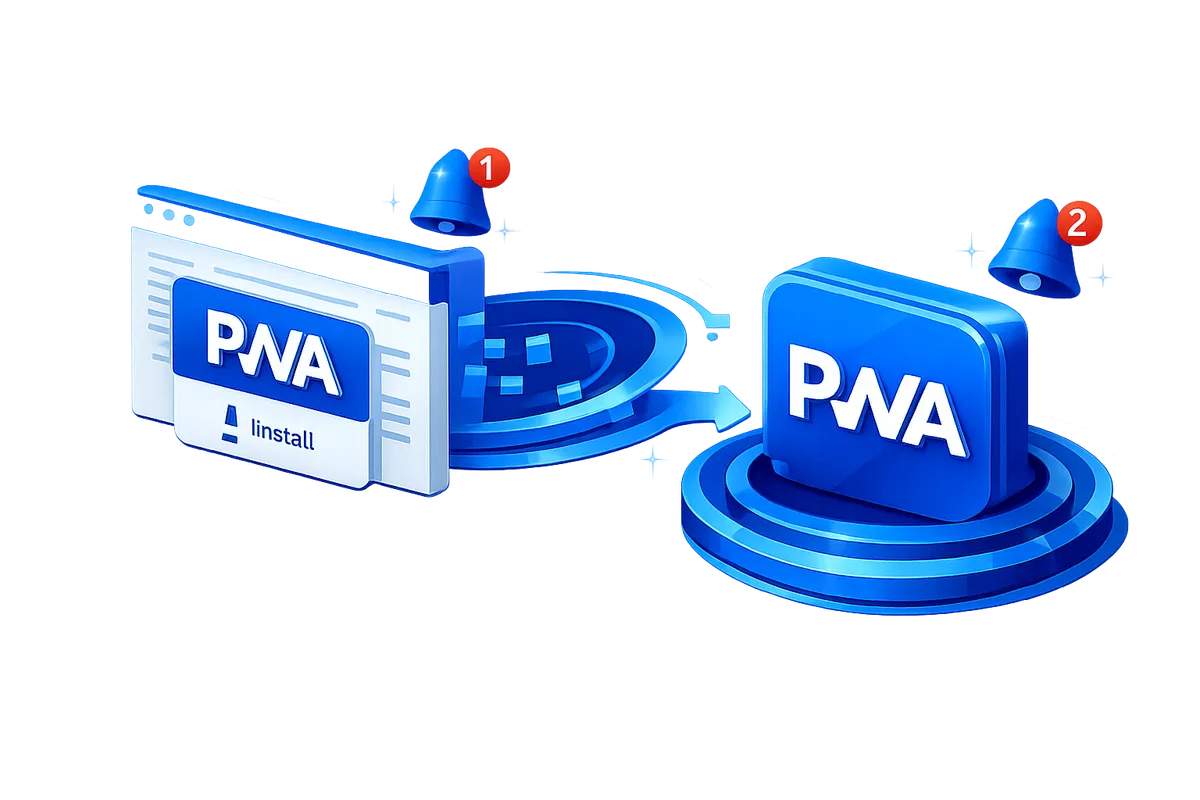
What We Build with Progressive Web App Technology
Restaurant and food business applications. Digital menus that work offline and update instantly when specials change, ordering systems that handle poor connectivity gracefully, reservation and waitlist management with push notifications for table readiness, and loyalty programs that install to the customer's home screen without requiring an App Store download.
Community organization resource directories. Multilingual resource guides that work offline, program calendars with push notification reminders, volunteer coordination tools, and program enrollment systems that function for users with limited connectivity or data plans.
Gallery and arts experience applications. Exhibition guides that work inside the gallery without internet dependency, artist profile collections with rich media, event calendars with push notifications for opening announcements, and work collection browsers that function as marketing tools beyond the physical gallery visit.
Service business scheduling and customer portals. Appointment booking applications with push notification reminders, job status tracking for customers of service businesses, and customer account portals that work reliably across devices without requiring a native app download.
Retail applications. Product catalogs with offline browsing capability, loyalty programs that install to the home screen, reorder functionality for frequent customers, and store locator and hours information that works without a live connection.
Internal operations tools for distributed teams. For Pilsen businesses with employees working across multiple sites, PWAs provide field tools, checklists, and reporting applications that work in areas of inconsistent connectivity and sync data when connection is restored.
How We Build Progressive Web Apps for Pilsen Businesses
We build PWAs using Next.js or React with service worker implementation managed through libraries like Workbox. Service workers are the technical foundation of progressive web apps: they run in the background, manage caching strategies, enable offline functionality, and power push notifications. Getting service worker implementation right is where many PWA projects fail, because service worker logic needs to handle cache invalidation, background sync, and push notification delivery reliably across the full range of devices and network conditions your users will encounter.
Performance optimization is built into every PWA we deliver. This means image optimization, code splitting, critical CSS inlining, and cache-first loading strategies that produce Lighthouse scores in the 90+ range rather than the 50s and 60s that are common in standard responsive websites. For Pilsen businesses whose customers experience your mobile presence primarily on mid-range Android devices on carrier data plans, these performance differences are meaningful.
Offline content strategy varies by application type. For a restaurant daily specials app, caching the most recent specials so they are available offline is relatively simple. For a community organization resource directory with hundreds of entries, a more sophisticated caching strategy determines what to cache, how much to cache, and when to refresh. We design the offline strategy based on the actual connectivity patterns of your target users rather than technical defaults.
Push notification implementation requires careful design to provide value without becoming intrusive. We implement notification permission requests at moments when users understand why they are receiving them and see clear benefit from accepting. Notifications sent at wrong times or for irrelevant content lead to notification permission revocation, which is worse than no notification capability at all.
Industries We Serve in Pilsen
Restaurants and taquerias on 18th Street and across the neighborhood's food corridor use PWAs to provide fast-loading mobile menus, digital ordering with offline resilience, and loyalty programs that live on the customer's home screen rather than buried in a third-party app.
Community organizations and nonprofits serving Pilsen's diverse community use PWAs to deliver accessible, offline-capable resource directories, program information, and event coordination tools that reach community members regardless of their device capability or data plan limitations.
Art galleries and cultural institutions in the Chicago Arts District use PWAs to enhance the visitor experience with offline-capable exhibition guides and to maintain ongoing audience relationships through push notifications for upcoming exhibitions and events.
Retail shops along Blue Island Avenue and Ashland use PWAs for product catalogs, loyalty programs, and customer accounts that install to the home screen and provide a branded experience without the friction of an App Store download.
Service businesses use PWAs for appointment booking, service status tracking, and customer communication tools that work reliably across the range of devices their customers use.
What to Expect
Requirements definition and technical assessment. We define the core functionality, user scenarios, and offline requirements before beginning design. We assess the technical requirements, including push notification infrastructure, backend API requirements, and caching strategy, based on the specific use case.
Design and development. We design the user interface with mobile-first attention to touch interaction patterns and performance constraints. Development includes full service worker implementation, offline strategy, push notification setup, and performance optimization to Lighthouse targets.
Testing across devices. We test on actual Android and iOS devices across the range your users are likely to carry, not just in browser simulators. Testing includes offline behavior, push notification delivery, and installation to home screen functionality on both platforms.
Launch and monitoring. We deploy to production and monitor performance metrics, offline cache hit rates, push notification delivery rates, and user engagement in the first weeks of live operation.