How We Build Field Service Management Systems for Pilsen Businesses
We start with a detailed assessment of how your business currently dispatches work, communicates with technicians, manages job documentation, and bills customers. We map the full cycle from lead or service request to payment collected, documenting every step and identifying where manual processes create errors, delays, or lost revenue. This assessment typically surfaces three to five specific problems that the business has normalized over time but that field service management technology can solve directly.
Platform selection follows the assessment. For most small and mid-sized service businesses in Pilsen, we evaluate options including ServiceTitan, Jobber, FieldEdge, Housecall Pro, and more specialized platforms for specific trade verticals. The right choice depends on your trade, your customer mix, your billing complexity, and the technical comfort level of the people who will use it daily. We do not have a preferred platform we push regardless of fit. We select based on what actually matches the operation.
Configuration is where most field service implementations fail. The platform is purchased, the demo looks great, and then the out-of-box defaults do not match how the business actually operates. We configure your platform to reflect your service types, pricing structure, crew assignments, customer communication preferences, and invoicing workflows. We build the job types and pricing templates specific to your trade so technicians in the field are working from accurate price books rather than calling the office to ask what to charge.
Integration with your accounting system is essential. Service businesses need their invoicing in the field service platform to sync to QuickBooks, Xero, or Sage without manual re-entry. We configure that integration so that closed and invoiced jobs flow into accounting automatically, and payment status updates in the accounting system are visible in the field service platform.
Industries We Serve in Pilsen
Plumbing and HVAC contractors serving Pilsen, Bridgeport, and the surrounding Southwest Side use field service management to dispatch technicians with the right equipment and parts, manage service contracts for commercial accounts, track parts inventory across trucks, and close same-day invoices in the field without returning to the office.
Electrical contractors working residential and commercial accounts need job tracking that handles permit documentation, inspection scheduling, and work order documentation in a format that satisfies city requirements. We configure platforms to capture the documentation your license and permits require.
Cleaning and janitorial services managing recurring residential and commercial accounts need scheduling tools that handle route optimization, employee check-in verification for quality assurance, and recurring billing that bills automatically without manual invoicing for every service visit.
Appliance repair and specialty service businesses need platforms that handle service call scheduling, parts ordering connected to job records, and warranty documentation that customers can reference after the job closes.
Landscaping and lawn care businesses serving residential and commercial accounts in Pilsen and surrounding neighborhoods need seasonal scheduling tools, crew routing, and recurring billing management that handles the variable nature of outdoor service work.
General contractors managing subcontractors need field service tools that track subcontractor assignments, job progress, materials delivered, and change orders without losing information between the office and the field.
What to Expect
Operational assessment. We spend the first week documenting your current dispatch, scheduling, communication, and billing workflows. We interview the office staff who manage scheduling and billing and the field technicians who report job status and collect payment. The assessment produces a clear picture of where the technology can improve operations and where configuration decisions need to reflect your specific workflows.
Platform selection and configuration. We recommend the platform best matched to your operation and configure it before training begins. Configuration covers job types, pricing, customer communication templates, crew assignments, and accounting integration. You review and approve the configuration before we train your team on it.
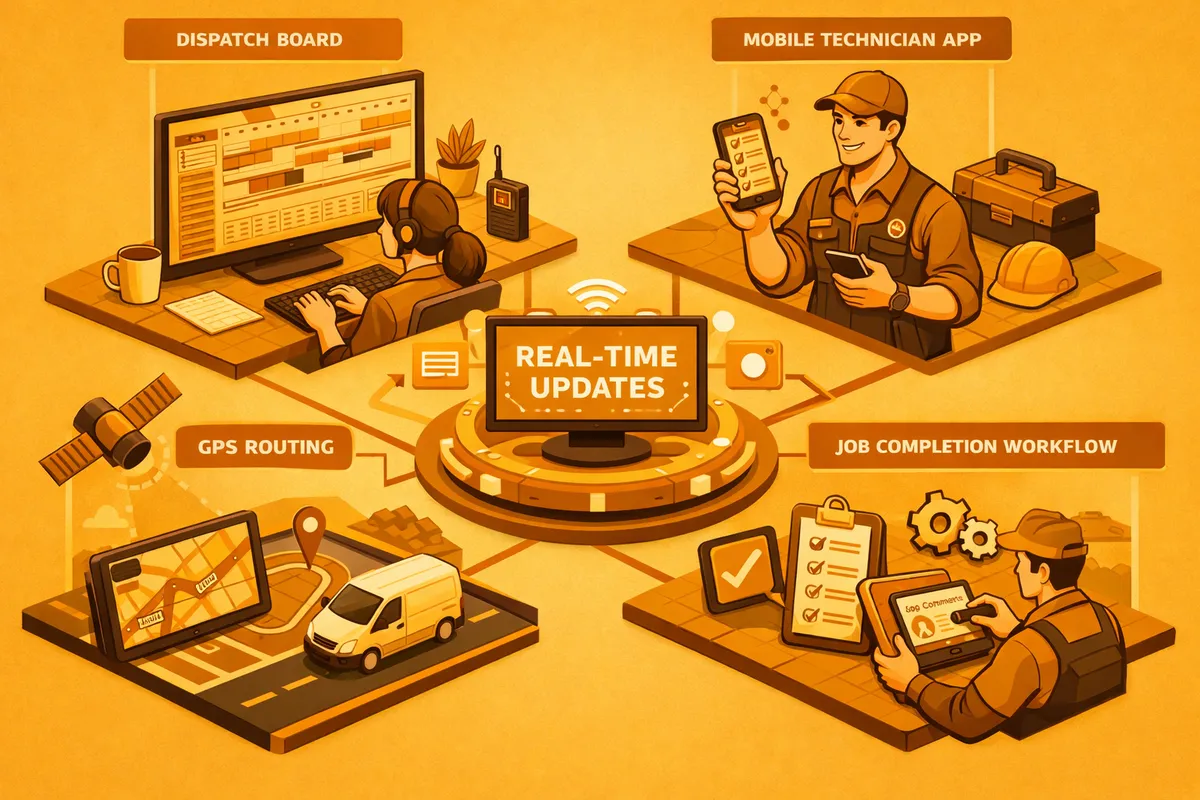
Training and rollout. We train office staff and field technicians separately because their workflows are different. Office staff learn dispatch, scheduling, and customer communication. Field technicians learn the mobile app for job acceptance, status updates, materials recording, and on-site invoicing. We run a parallel period where the new system and the old process run simultaneously until the team is confident, then cut over completely.
Post-launch monitoring and optimization. The first thirty days after go-live reveal configuration adjustments that improve adoption and efficiency. We include a monitoring period with every implementation and make adjustments based on real usage data rather than theoretical preferences from the pre-launch period.