How We Build Custom ERPs for Pilsen
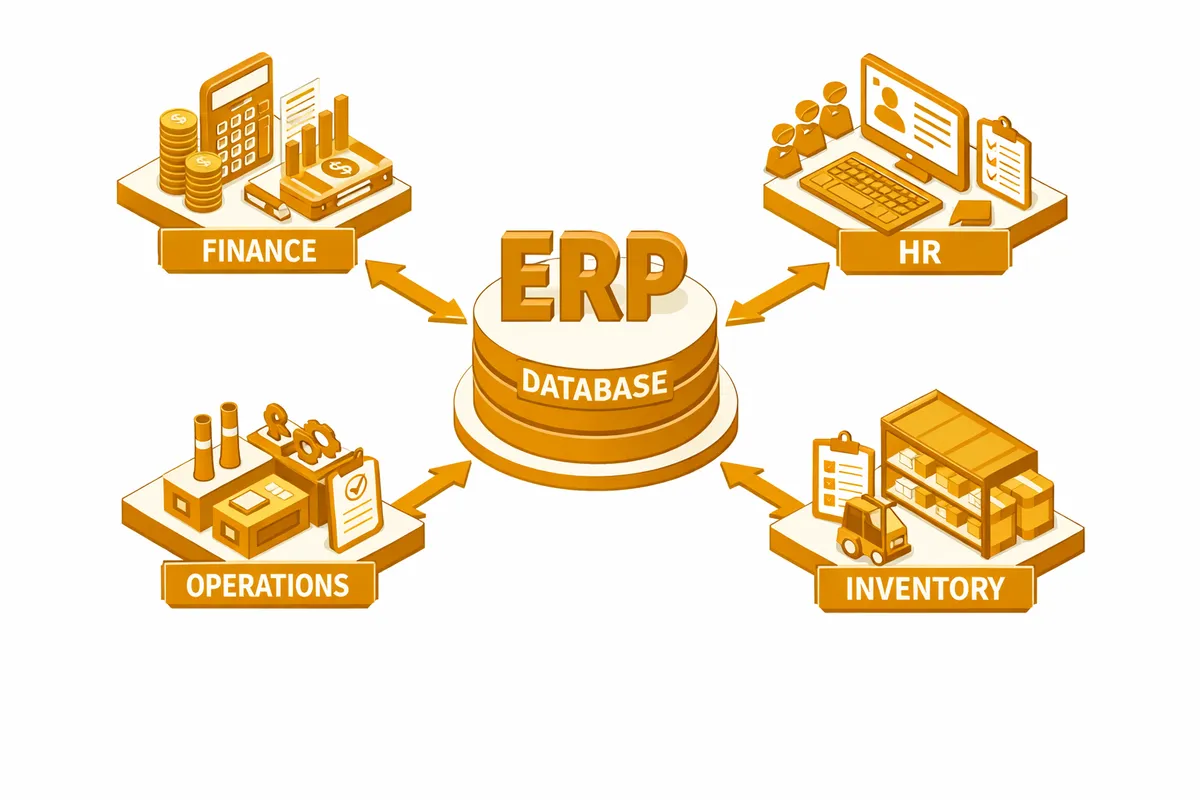
Custom ERP projects begin with an operational audit. We spend time with your team across every function of the operation: production or service delivery, inventory management, procurement, order management, customer service, and accounting. We document the workflows in each function, the data that flows between them, the decisions made at each stage, and the reporting that management needs to oversee the operation. That audit produces the requirements specification that drives the system design.
Operational data model design defines the entity structure that represents your business: products, materials, vendors, customers, orders, production runs, inventory lots, and the relationships between them. For a Pilsen food producer, the data model includes recipe management (bill of materials for each product), raw material inventory, finished goods inventory, production planning, order management, and delivery tracking, all structured in ways that support the queries and reports the operation requires.
Workflow engine implements the process logic that governs how work moves through the system. A production order moves from planning to scheduled to in-progress to complete, with inventory adjustments at each stage and quality checks at defined points. An incoming purchase order moves from received to invoiced to paid, with matching logic that connects vendor invoices to purchase orders. The workflow engine makes the system's behavior match the operation's actual process rather than requiring the operation to change its process to accommodate the software.
Reporting and analytics provides the operational intelligence your management team needs. Production efficiency by line or shift. Inventory turnover by product category. Order fulfillment rate by delivery window. Cost per unit by production run. These are the metrics that indicate whether the operation is performing at target and where attention is needed.
Integration layer connects the custom ERP to the external systems it needs to exchange data with: accounting platforms, e-commerce storefronts, shipping carriers, supplier portals, and any other systems in the operational environment.
Industries We Serve in Pilsen
Food producers and specialty manufacturers near the 18th Street corridor and the Blue Island Avenue market area use custom ERP to manage recipe-based production, raw material inventory, finished goods tracking, and the multi-channel distribution relationships that supply Chicago restaurants, retail stores, and direct-to-consumer customers.
Social enterprises and community-oriented businesses in Pilsen that combine production programs with retail and wholesale distribution use custom ERP to manage the multiple business models within a single operational infrastructure without requiring separate systems for each.
Service businesses with significant operational complexity, including those managing large project portfolios, complex subcontractor relationships, or multi-location service delivery, use custom ERP to integrate project management, resource allocation, procurement, and financial reporting.
Multi-location retail businesses operating in Pilsen and other Chicago neighborhoods use custom ERP to manage inventory across locations, synchronize pricing, coordinate purchasing, and produce consolidated operational reporting.
Professional services firms with complex resource management requirements use custom ERP to integrate project planning, staff allocation, time tracking, client billing, and financial management in a single operational system.
What to Expect Working With Us
Operational audit. We document every function of your operation and the data and workflow requirements for each. You get a requirements specification you can review and approve before any development begins.
System design review. We present the data model design, workflow architecture, and interface wireframes for your review. You see exactly what is being built before development starts.
Phased development and delivery. We build and deliver the ERP in phases so the most critical operational functions are live and in use before the system is complete. You see real operational value while the system is still being built.
Data migration. We migrate your existing operational data from spreadsheets, legacy systems, and other data sources into the new ERP, cleaning and normalizing as we go.
Training and go-live support. We train every function's users on the new system and provide intensive go-live support during the first weeks of full operation.