How We Build Custom CRMs for Pilsen
Custom CRM projects begin with a relationship audit. We interview the people in your organization who interact with customers most directly and understand how they currently track customer information, what they wish they could recall about each customer, what actions they take after different types of customer interactions, and where the current process breaks down. Those interviews surface the requirements for a CRM that works for your actual situation.
Data model design defines every entity the CRM needs to track: customer types, interaction types, relationship attributes, and the connections between them. For a Pilsen gallery, the data model includes contacts, companies (for institutional buyers), artworks, exhibitions, purchases, interactions (visits, emails, calls), and events. The relationships between these entities define the relational structure of the CRM.
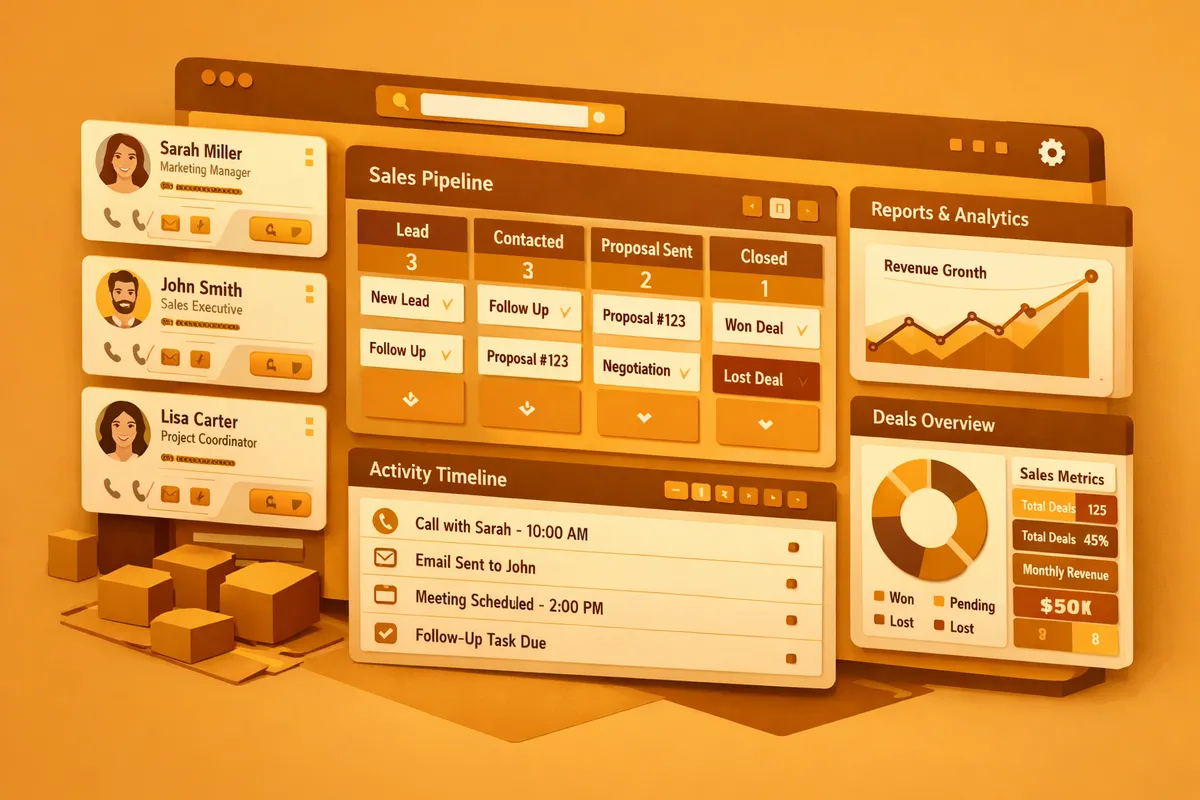
Interface design creates the screens and workflows your team will use. We design based on the interviews, not from a generic CRM template. If the first thing the gallery director needs when looking up a collector is their purchase history and last interaction date, that information appears at the top of the contact record without scrolling. If the service business needs to create a project record directly from a customer contact record, that action is one click away.
Integration development connects the custom CRM to the other systems in your operation. Email platform integration creates interaction records automatically when emails are sent or received. Calendar integration logs meetings to the customer record. POS integration populates purchase history without manual entry. Each integration reduces the manual data entry that makes CRM adoption fail.
Reporting and analytics build the customer intelligence views your leadership team needs. Which customers have not interacted in 90 days? Which show attendance patterns predict purchases? Which service type has the highest customer lifetime value? Custom reporting answers the questions that are specific to your business model.
Industries We Serve in Pilsen
Galleries and arts organizations in the Chicago Arts District use custom CRMs to manage collector relationships across years of interactions, exhibitions, and purchases, with data models designed for the specific nature of art buying relationships rather than the generic sales pipeline model.
Community organizations serving Pilsen's residents use custom CRMs to track participant journeys across multiple programs, staff relationships, and years of service, with data models that reflect the multi-dimensional nature of community service relationships.
Service businesses across Pilsen use custom CRMs to manage client relationships from initial inquiry through project completion and beyond, with integration to project management and invoicing systems that keeps the full relationship picture accessible in one place.
Restaurants and hospitality businesses use custom CRMs to manage VIP customer relationships, track preferences and occasions, and enable the personalized recognition that turns regulars into advocates.
Professional services businesses use custom CRMs to manage the complex, long-term client relationships where relationship continuity is a primary driver of client retention and referrals.
What to Expect Working With Us
Relationship audit. We interview your team, observe your current customer interaction workflows, and document the requirements for a CRM that fits your actual process.
Design review. We present the data model design and interface wireframes for your review before building anything. You see and approve the system design before development begins.
Development and testing. We build the CRM, seed it with sample data representing your customer types, and test every workflow against realistic usage scenarios.
Migration. We migrate your existing customer data from spreadsheets, previous CRMs, and other sources into the new system, cleaning and normalizing as we go.
Training and adoption. We train your team on the new system, designed around the workflows they already use so adoption friction is minimized.